Wednesday, November 11, 2015

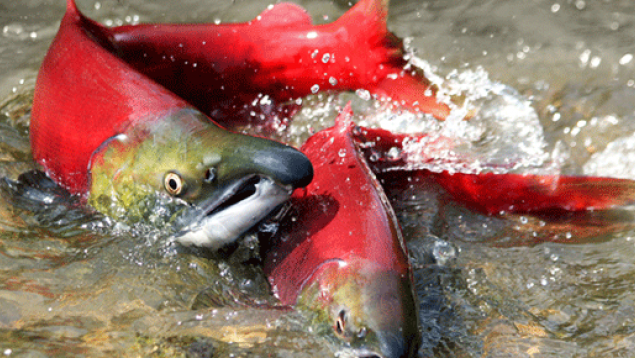
11/11 Train safety, salmon volunteers, rain study, landslides, Navy testing

Atlantic puffins (Steve Gravie/BirdNote)
Restoring Bird Colonies with Social Attraction
What does relocating Caspian Terns from an island in the Columbia River have to do with luring Short-tailed Albatrosses away from an active volcano in Japan? They both use methods of social attraction pioneered by Dr. Stephen Kress. Social attraction utilizes visual cues such as decoys and audio recordings of birdcalls. Using these, scientists can entice bird colonies out of harm’s way. These Atlantic Puffins represent another successful use of social attraction: Kress and his team established new colonies of puffins on the coast of Maine! (BirdNote)

Feds reject industry challenges to oil train safety rule
The U.S. Department of Transportation has rejected several appeals by industry groups to its rule issued in May on the safety of trains carrying large quantities of crude oil and ethanol. The department also agreed with tribal groups in the Pacific Northwest that had expressed concern about proposed changes to notification requirements to states for large rail shipments of crude oil. The trade groups, which represented railroads, refiners, and chemical companies, had objected to a variety of components of the rule relating to its scope, to the timeline for completing a retrofit and replacement of tank cars used to carry flammable liquids, what level of fire protection the cars should have and whether they should be equipped with advanced electronic brakes. Curtis Tate reports. (McClatchy)

Qualicum Beach couple part of Pacific Salmon Foundation's 'mosquito fleet'
A Qualicum Beach couple are good examples of the crucial fleet of locals who are making the Pacific Salmon Foundation's Citizen Science Program a success. Ryan and Nicole Frederickson are two of the many volunteers taking part in the foundation's Salish Sea Marine Survival Project, trying to understand the causes of declines in coho and chinook salmon in the Strait of Georgia and wider Salish Sea. Auren Ruvinsky reports. (Parksville Qualicum Beach News)

UW, NASA deploy scientific blitz to study rainy Olympic Peninsula
The OLYMPEX project will use aircraft, radar, weather stations and volunteers with rain gauges to improve local forecasts and ground-truth satellite data. Sandi Doughton reports. (Seattle Times)

Washington Updates Guidelines For Landslide-Prone Slopes
Washington forestry officials have updated state guidelines for evaluating unstable slopes that, if logged, could contribute to landslides. The Washington Forest Practices Board took up the issue Tuesday. It has been a topic of some controversy following the 2014 landslide that killed 43 people in the community of Oso in Washington’s North Cascades. Land above the Oso slide zone was logged in 2004 and replanted in 2005 — prompting some critics to blame the removal of trees for the disaster. After lengthy debate and several breaks, the board unanimously approved updates to the guidelines that were favored by the timber industry. However, the board also took steps to address conservationists’ concerns before it meets in February. Ashley Ahearn reports. (EarthFix)

Navy ends consultation on historic resources in sonar, explosives testing zone that includes Strait of Juan de Fuca
The federal Advisory Council on Historic Preservation is getting involved in a dispute between state and Navy officials over cultural and historical resources in a broad area, including the Strait of Juan de Fuca, that has been targeted for sonar and explosives training and testing. The testing area also includes Puget Sound and the Behm Canal in southeastern Alaska. The Navy notified state Historic Preservation Officer Allyson Brooks — referred to as the SHPO — last Thursday that military officials had finished consulting with her on potential adverse effects to the resources, according to a Nov. 5 letter from Larry M. Foster, director of environmental readiness for the U.S. Pacific Fleet in Pearl Harbor, Hawaii. Brooks' response was that she was “stunned.” …. Brooks said Monday she had been consulting with Navy personnel from Naval Air Station Whidbey Island, not Pearl Harbor. “It was shocking to get the letter from Pearl Harbor when all the work was being done with Whidbey Naval Air Station,” Brooks said. Paul Gottlieb reports. (Peninsula Daily News)

Salish Sea News and Weather will not be posted on Thursday and Friday. Mahalo.

Now, your tug-weather--
WEST ENTRANCE U.S. WATERS STRAIT OF JUAN DE FUCA- 304 AM PST WED NOV 11 2015
SMALL CRAFT ADVISORY IN EFFECT UNTIL 1 PM PST THIS AFTERNOON
TODAY
W WIND 20 TO 30 KT...EASING TO 5 TO 15 KT IN THE AFTERNOON. WIND WAVES 3 TO 5 FT...SUBSIDING TO 1 TO 2 FT IN THE AFTERNOON. W SWELL 12 FT AT 11 SECONDS. A CHANCE OF SHOWERS.
TONIGHT
SW WIND TO 10 KT...BECOMING S 10 TO 20 KT AFTER MIDNIGHT. WIND WAVES 1 FT OR LESS...BUILDING TO 1 TO 3 FT AFTER MIDNIGHT. W SWELL 11 FT AT 12 SECONDS...SUBSIDING TO 9 FT AT 12 SECONDS AFTER MIDNIGHT. A SLIGHT CHANCE OF SHOWERS IN THE EVENING...THEN A CHANCE OF SHOWERS AFTER MIDNIGHT.

--
"Salish Sea News & Weather" is compiled as a community service by Mike Sato. To subscribe, send your name and email to msato@salishseacom.com. Your email information is never shared and you can unsubscribe at any time.

Salish Sea News: Communicate, Educate, Advocate

Follow on Twitter.

Salish Sea Communications: Truth Well Told

Tuesday, November 10, 2015

11/10 SeaWorld, BC LNG, tribe climate, winter prep, Vic sewer trees, night tide walk, cruiser trippers

SeaWorld San Diego (John Gastaldo/San Diego Union Bulletin)
Killer Whales to Take Final Bows at SeaWorld San Diego
SeaWorld said on Monday that it planned to phase out next year its San Diego killer whale performance, a central point for criticism of how its animals are treated. The company, which also has parks in Orlando, Fla., and San Antonio, said in a company document posted on Monday that it would replace its theatrical Shamu show in San Diego with an “informative” experience that has a “conservation message inspiring people to act.” The announcement does not affect shows with orcas at the parks in Texas and Florida, said Fred Jacobs, a company spokesman. Daniel Victor reports. (NY Times) See also: Washington Senator Plans To Reintroduce Orca, Dolphin Captivity Ban  …. Democratic state Senator Kevin Ranker cautiously welcomed the news about SeaWorld phasing out its orca shows in San Diego.Austin Jenkins reports. (NW PUblic Radio)

Activist group urges Trudeau to block LNG project to protect B.C. salmon
A new alliance formed by aboriginal leaders and environmental activists wants the newly elected Liberal government to block a liquefied natural gas project in northwestern British Columbia. Donnie Wesley, a Lax Kw’alaams tribal chief who started a protest camp in August on the site of the proposed LNG terminal, is urging Prime Minister Justin Trudeau and Environment Minister Catherine McKenna to take action to protect juvenile salmon habitat. Mr. Wesley has enlisted the backing of nearly 80 native groups, environmental organizations, unions and an array of other supporters.  Brent Jang reports. (Globe and Mail)

Washington Tribe Confronts Climate Change, Sea Level Rise
A big question will confront international leaders in the next round of climate talks in Paris: How do they help poor, island and coastal nations threatened by rising oceans, extreme weather and other climate change-related risks? In the Northwest, sea-level rise is forcing a Native American tribe to consider abandoning lands it has inhabited for thousands of years. Ashley Ahearn reports. (KUOW)

Snow coming to Cascades, storms to Western Washington  Jack Broom reports. (Seattle Times) More rain on the way for Metro Vancouver after record-setting weekend storm  Bethany Lindsay reports. (Vancouver Sun)

Vancouver prepares for winter flooding, 'King Tides'
Vancouver city crews sandbagged a two-block stretch of sidewalk along Locarno Beach on Monday, to guard against the possibility of storm-driven flooding during seasonal high tides later this month. The sandbags have become an annual precaution along the low-lying stretch of Northwest Marine Drive between Tolmie and Trimble streets. But city officials say a more permanent solution is planned in anticipation of a future of increasingly intense and more frequent storms, and higher sea levels due to climate change. Glen Schaefer reports. (Vancouver Sun)

How rejecting a sewage plant led to removing 5,000 trees
The impending cut of nearly 5,000 trees on Watkiss Way to make way for a hay farm complies with Saanich and B.C. regulations, but has raised questions about the unintended consequences of recent council decisions, as well as concerns about climate change…. The vast majority of the fir and cedar trees on 24 acres behind Victoria General Hospital — purchased two years ago by Allen Vandekerkhove — will be taken down…. Given the loss of so many trees, it would have been wiser had council voted last summer to forward the site to Capital Region District directors for consideration for a sewage treatment plant, said Mayor Richard Atwell. That motion was defeated twice, 5-4 and on a 4-4 tie, largely because of opposition voiced by councillors to using a property in B.C.’s Agricultural Land Reserve for a sewage project, he said. Katherine Dednya reports. (Times Colonist)

Nighttime low tide walk an otherworldly experience
After a hiatus of a few years, a pair of local naturalists are offering a guided tide-pool walk during an extreme low tide next month — an event that occurs at night in winter. Scouring the shallows during an extreme low tide can be an otherworldly experience. Tide pool exploration is even more fascinating at night, said Holly Roger of Wild Whatcom, a local nonprofit dedicated to outdoors education. Robert Mittendorf reports. (Bellingham Herald)

More cruise visitors expected next year on bigger ships
The Greater Victoria Harbour Authority marked the end of a record cruise-ship season with the arrival of Princess Cruises’ Star Princess at Ogden Point on Monday. Overall, the harbour authority welcomed 227 ship visits and about 533,000 passengers in 2015 — up from 206 ship visits and about 465,000 passengers the previous year. “It’s a record year,” said Ian Robertson, chief executive officer of the harbour authority…. Robertson said the harbour authority expects the same number of ships in 2016, but even more passengers as cruise lines continue to increase the size of their ships. Lindsay Kines reports. (Times Colonist)

Now, your tug weather--
WEST ENTRANCE U.S. WATERS STRAIT OF JUAN DE FUCA- 300 AM PST TUE NOV 10 2015
GALE WARNING IN EFFECT FOR TONIGHT AND WEDNESDAY
TODAY
SW WIND 5 TO 15 KT BECOMING S 15 TO 25 KT IN THE AFTERNOON. WIND WAVES 1 OR 2 FT BUILDING TO 2 TO 4 FT IN THE AFTERNOON. W SWELL 8 FT AT 12 SECONDS. AREAS OF FOG IN THE MORNING. CHANCE OF RAIN IN THE AFTERNOON.
TONIGHT
SW WIND 25 TO 35 KT BECOMING W AFTER MIDNIGHT. COMBINED SEAS 10 FT WITH A DOMINANT PERIOD OF 12 SECONDS. RAIN.

--
"Salish Sea News & Weather" is compiled as a community service by Mike Sato. To subscribe, send your name and email to msato@salishseacom.com. Your email information is never shared and you can unsubscribe at any time.

Salish Sea News: Communicate, Educate, Advocate

Follow on Twitter.

Salish Sea Communications: Truth Well Told


Monday, November 9, 2015

11/9 Keystone, BC unmuzzled, NW tribes, Asarco, port races, Wisconsin derail, bag ban, Navy jets, Elwha

Citing Climate Change, Obama Rejects Construction of Keystone XL Oil Pipeline
President Obama announced on Friday that he had rejected the request from a Canadian company to build the Keystone XL oil pipeline, ending a seven-year review that had become a symbol of the debate over his climate policies. Mr. Obama’s denial of the proposed 1,179-mile pipeline, which would have carried 800,000 barrels a day of carbon-heavy petroleum from the Canadian oil sands to the Gulf Coast, comes as he seeks to build an ambitious legacy on climate change. Coral Davenport reports. (NY Times) See also: Justin Trudeau 'disappointed' with U.S. rejection of Keystone XL  Kathleen Harris reports. (CBC)

Keystone pipeline rejection means oil tankers could multiply in Strait of Juan de Fuca
President Obama’s decision Friday to reject the Keystone XL pipeline puts a fresh spotlight on other efforts to bring Canadian crude to market, including a $5.4 billion project to boost oil flows to British Columbia. The oil piped from Alberta would be targeted for maritime export, dramatically increasing the number of oil tankers traversing the Strait of Juan de Fuca and raising environmental concerns among Washington state Department of Ecology (DOE) officials.  Hal Bernton reports. (Seattle Times)

Kristi Miller, muzzled fisheries scientist, felt like a second-class citizen
A federal edict that prevented government scientists from talking publicly about their work turned them into "second-class citizens", a B.C. based molecular geneticist told CBC news Friday. Kristi Miller, a scientist with Fisheries and Oceans Canada, told CBC News Friday that she was excited at news the newly elected federal government had lifted the muzzle from its researchers. Kristi Miller was prevented from talking to media about the results of her study. (CBC) See also: Scientists, ministers get green light to speak under Trudeau  Pauline Dakin reports. (CBC)

Exxon Mobil accused of climate change cover-up
Oil giant Exxon Mobil is being investigated for misleading the public about the impact of climate change. The New York attorney general has sent a request for emails and financial records to the company. Allegations surfaced last month that the company's own scientists raised concerns about global warming decades ago and that Exxon had worked to suppress that information. (BBC) See also: Oil companies and climate change: who should pay?  Environmentalists say an investigation into ExxonMobil may open the door to tobacco-style lawsuitsJason Proctor reports. (CBC)

UW Symposium: Ocean Acidification Pushing Boundaries Of Environmental Law
The University of Washington held its first annual symposium on environmental law last week. The idea is to choose a topic and examine how it fits into current and future regulations. This year’s focus—ocean acidification.  It is sometimes called the evil twin of global warming. Ocean acidification is caused when carbon pollution from fossil fuels dissolves into our waterways. Scientists say it may cause serious harm to life on the planet; some say it is already damaging the local shellfish industry. It is also pushing the envelope of current environmental law. Bellamy Pailthorp reports. (KPLU)

Northwest tribal leaders fight for government to uphold treaties
A proposed coal terminal and affiliated railway for Cherry Point, Wash., has sparked concern about treaty violations and environmental degradation for many Pacific Northwest tribal leaders, 10 of whom rallied together in Washington, D.C., on Thursday morning against what they said is government disregard for their treaties. Grace Toohey reports. (McClatchy)

Three decades after the Asarco smelter shutdown, its toxic legacy surprises Tacoma newcomers
Tacoma’s industrial history confronted Alex Stillman on a late spring morning while she was up to her wrists in front-yard dirt. A neighbor saw the 27-year-old school nurse, part of the city’s influx of new homeowners, digging to plant a hedge outside her North 40th Street house and walked over to share some friendly insight about the neighborhood. The conversation sent Stillman inside to start learning things no real-estate agent or inspector had explained to Alex or her husband, Bryce, when they bought the place in fall 2014. It fell to Google to tell her about the long-gone Asarco copper smelter that operated less than a mile from where her tidy 1940s bungalow stands, and that the lead and arsenic emitted from its 571-foot-tall smokestack for several decades had polluted her yard and thousands of others with agents linked to cancer and other serious health problems. Derrick Nunnally reports. (Tacoma News Tribune)

Dangerous, tasty fishery resumes off B.C. coast
One of British Columbia's most unusual and dangerous fisheries is poised for a comeback. Gooseneck barnacles, which grow on the rocks below the high tide line off the west coast of Vancouver Island,.are prized in Spain and served as appetizers by high-end restaurants across North America. With a shell-like top and stubby stalks of rich meat beneath, goosenecks resemble clumps of asparagus. However, the best ones are hard to reach and risky to harvest. Chris Brown reports. (CBC)

Port Commissioner: The Race We Can No Longer Afford To Ignore
As election results continue to filter in, most eyes focus on the big-ticket races—city council members, state ballot measures, and levies. Yet way down near the bottom of the ballot is one of the most important votes that we cast in the Northwest: the races for port commissioner. Historically overlooked by voters and pundits alike, the Northwest’s recent controversies over coal and oil have begun to shift some attention to the leadership of public ports. It’s an entirely appropriate shift, because the elected leaders of the region’s ports play a more important role—for good or for ill—in determining the fate of the thin green line than almost anybody else. (…. Running for an empty seat vacated by outgoing Commissioner Bill Bryant, environmental advocate Fred Felleman, who was an outspoken critic of the Port’s decision to host Shell’s Arctic drilling fleet this summer, defeated Marino Yoshino. Felleman raised $86,000 to Yoshino’s $29,000.) Eric de Place and Nick Abraham report. (Sightline)

2nd Train Derails in Wisconsin in 2 Days, Spills Crude Oil
Canadian Pacific Railway says less than 1,000 gallons of crude oil has spilled after a train derailment that prompted evacuations in southeastern Wisconsin. Thirteen cars derailed around 2 p.m. Sunday in Watertown. Canadian Pacific said in a statement late Sunday night one car was punctured and it leaked some oil. The company says it's working to determine the exact amount, but it's no more than 1,000 gallons…. The derailment Sunday was the second in the state in as many days. On Saturday, a freight train derailed near Alma in western Wisconsin, spilling thousands of gallons of ethanol. (ABC)

California lawmaker plans law to end killer whale captivity
A California congressman announced Friday that he is planning federal legislation that aims to phase out the captivity of killer whales by banning breeding, importing and exporting the animals for public display. Democratic Rep. Adam Schiff said he will introduce the Orca Responsibility and Care Advancement Act to ensure that orcas now at aquatic parks such as SeaWorld are the last ones and that when they die, no other whales will replace them. The bill also would ban taking any whales from the wild. Although no orca has been captured in U.S. waters since 1976, Schiff says captive killer whales are bred. (Associated Press)

Construction site washout kills salmon on Burnaby Mountain
Water thick with sand and sediment has fouled a fish-bearing creek after heavy rain washed out an active construction site on Burnaby Mountain last week. The silty water poured into Stoney Creek from a tributary, killing spawning Chum and Coho salmon and smolts, said John Preissl, a local streamkeeper. Salmon had been absent from the once polluted creek for half a century, but returned about a decade ago, thanks to decades of rehabilitation work by foundations, government agencies and hundreds of volunteers, Preissl said. Before the accident, streamkeepers had counted nearly 200 salmon in the creek. Matthew Robinson reports. (Vancouver Sun) See also: Rain causes more problems at Burnaby Mountain construction site  Joanne Lee-Young and Matthew Robinson reports. (Vancouver Sun)

Victoria council backs ban on single-use plastic bags, staff to study
The days of plastic bags in Victoria could be numbered. Victoria councillors Thursday took the first steps in developing a bylaw that would ban retailers from providing single-use plastic bags. Several councillors said they support the proposal provided the public is properly consulted and the city works in concert with retailers so that the change, if implemented, is even-handed. Bill Cleverely reports. (Times Colonist)

Navy, National Park Service to work together to monitor jet noise over Olympic National Park
The Navy and National Park Service are coordinating efforts to monitor jet noise over Olympic National Park during training missions. “I'm glad the Park Service — the staff who are charged with protecting the visitor experience at Olympic National Park — and the Navy will work together to monitor noise issues and evaluate any increase in noise from Navy training activities,” said U.S. Rep. Derek Kilmer in a news release issued Thursday. A Democrat from Gig Harbor, Kilmer represents the 6th Congressional District, which includes the North Olympic Peninsula. He had requested that the Park Service and the Navy work together on monitoring jet noise. Chris McDaniel reports. (Peninsula Daily News)

Taking the pulse of Puget Sound
The state’s effort to improve the health of Puget Sound is moving slowly, even with a variety of fish-focused projects in motion throughout the Skagit River watershed, from major dike setbacks to minor culvert replacements. In a State of the Sound Report released last week, the Puget Sound Partnership describes the progress to restore this inlet of the Pacific Ocean as largely stagnant. Kimberly Cauvel reports. (Skagit Valley Herald) See also:  Puget Sound restoration: two steps forward, one back — or vice versa?  Chris Dunagan blogs. (Watching Our Water Ways)

With dams down, restored Elwha River mouth 'a treasure'
No one, not even among those studying the ecology of the Elwha River mouth, expected the degree of change seen there after the dams came down, according to a woman who has researched it for years. An area that once was little more than large cobbles is now a vast tract of quiet, sandy beach speckled with hundreds of seabirds and brushed by ocean waves. It contains pools constantly dimpled by the jumping of fish. Sometimes, looking at the acres of new beach — and the new life it now supports — she nearly cries, said Anne Shaffer, a marine biologist and the executive director of the Coastal Watershed Institute of Port Angeles. Arwyn Rice and Leah Leach report. (Peninsula Daily News) See also:  Who owns new Elwha River land? Discussions begin about ownership, responsibility  Arwyn Rice reports. (Peninsula Daily News)

Now, your tug weather--
WEST ENTRANCE U.S. WATERS STRAIT OF JUAN DE FUCA- 228 AM PST MON NOV 9 2015
SMALL CRAFT ADVISORY FOR HAZARDOUS SEAS IN EFFECT UNTIL 9 AM PST THIS MORNING
TODAY
NE WIND 5 TO 15 KT. WIND WAVES 2 FT OR LESS. W SWELL 10 FT AT 14 SECONDS...SUBSIDING TO 8 FT AT 14 SECONDS IN THE AFTERNOON. A CHANCE OF SHOWERS IN THE MORNING.
TONIGHT
NW WIND TO 10 KT IN THE EVENING...BECOMING LIGHT. WIND WAVES 1 FT OR LESS. W SWELL 6 FT AT 12 SECONDS.

--
"Salish Sea News & Weather" is compiled as a community service by Mike Sato. To subscribe, send your name and email to msato@salishseacom.com. Your email information is never shared and you can unsubscribe at any time.

Salish Sea News: Communicate, Educate, Advocate

Follow on Twitter.

Salish Sea Communications: Truth Well Told

Thursday, November 5, 2015

11/5 BC salmon, fish farms, Snydar Farm, clean water rule, Keystone, Beth Doglio

Wild BC sockeye (Olga N. Vasik/istockphoto)
Millions of B.C. salmon mysteriously ‘just disappear’ in troubling year
Although spawning salmon are still returning to British Columbia’s rivers – including some, surprisingly, to urban streams – early returns indicate another troubling year, despite some bright spots…. There were good sockeye salmon returns to the Great Central Lake system on Vancouver Island and to the Nass River on the North Coast, he said. But contrasting that were very poor returns on the Fraser River, where only about two million sockeye returned, far short of the more than six million predicted in preseason forecasts. Even more dramatic was the collapse of the pink salmon on the Fraser, with only about five million fish showing up when more than 14 million had been forecast. Mark Hume reports. (Globe and Mail)

Lawsuit Claims Commercial Salmon Farms Harm Native Fish In Puget Sound
The Wild Fish Conservancy is suing federal environmental and fisheries agencies for inadequately monitoring the impact of commercial salmon farms in Puget Sound. The lawsuit filed Wednesday says commercial farms pose many risks to wild salmon. In 2011 the Environmental Protection Agency and the National Marine Fisheries Service found the opposite. They concluded that commercial salmon farms are unlikely to harm wild salmon. Kate O'Connell Walters (KUOW)

Fecal matter pollution in public water: The case of Snydar Farm
The Snydar Farm had a real problem with “raw manure,” that mix of feces and urine produced by livestock. Namely, the farm’s cows were creating a lot of it – in excess of 5,000 pounds every day. According to the Department of Ecology, it was ending up in public waterways, where it could impact everything from drinking water to the shellfish industry. The farm is located in Ferndale, a town 10 miles north of Bellingham in Whatcom County. Recently, its owners – Jim and Victoria Snydar – received Ecology’s first livestock-related water pollution fine in over three years. But the Snydars’ alleged environmental crimes were not new. Drew Atkins reports. (Crosscut)

Senate blocks legislation to undercut EPA clean water rules
Democrats have blocked a Senate bill that would have forced the Obama administration to withdraw new federal rules to protect smaller streams, tributaries and wetlands from development and pollution. Supporters of the legislation — and opponents of the rules — did not get the 60 votes needed Tuesday to stop debate and consider the bill. The vote was 57-41, meaning Democrats have blocked the bill, for now. Most Democrats argue that the Obama administration rules will safeguard drinking water for 117 million Americans and say they should remain in place. The White House threatened a veto of the bill, saying the regulations are "essential to ensure clean water for future generations." Mary Clare Jalonick reports. (Associated Press)

TransCanada's request to pause Keystone XL review rejected by U.S.
he U.S. State Department has rejected TransCanada's request to put the review of the proposed Keystone XL pipeline on hold. Spokesman John Kirby said the department wrote to TransCanada on Wednesday and "communicated our decision to continue our review." Mark Cooper, a spokesman for TransCanada, said that the company respects the State Department's decision. (CBC)

Environmental advocate running for state House
Olympia environmental activist Beth Doglio has launched a campaign for the state House. Democrat Doglio made her 2016 bid official with an announcement Thursday that she’s running for the seat opened by Rep. Sam Hunt’s decision to run for Senate. Doglio has been involved in Washington environmental advocacy for decades. She is the campaign director for Climate Solutions and directs the Power Past Coal coalition opposing coal exports. She said she previously worked as the first executive director of Washington Conservation Voters. Jordan Schrader reports. (Olympian)

Editor’s Note: Salish Sea News and Weather will not be posted on Friday, November 6.

Now, your tug weather--
WEST ENTRANCE U.S. WATERS STRAIT OF JUAN DE FUCA- 230 AM PST THU NOV 5 2015
TODAY
W WIND 10 TO 20 KT EASING TO 5 TO 15 KT THIS AFTERNOON. WIND WAVES 1 TO 3 FT. W SWELL 6 FT AT 13 SECONDS. SCATTERED
 SHOWERS.
TONIGHT
W WIND TO 10 KT...BECOMING E 5 TO 15 KT AFTER MIDNIGHT. WIND WAVES 2 FT OR LESS. W SWELL 5 FT AT 12 SECONDS. A CHANCE OF
 SHOWERS.

--
"Salish Sea News & Weather" is compiled as a community service by Mike Sato. To subscribe, send your name and email to msato@salishseacom.com. Your email information is never shared and you can unsubscribe at any time.

Salish Sea News: Communicate, Educate, Advocate

Follow on Twitter.

Salish Sea Communications: Truth Well Told

Wednesday, November 4, 2015

11/4 State of Puget Sound, climate change kids, rising rivers, algae bloom, tangled orca

(Matthew G. Hull/BirdNote)
The Oystercatcher's World
Black Oystercatchers prey on shellfish in the wave zone, especially mussels and limpets. The waves cause mussels to open often, making them easier to eat. The Black Oystercatcher nests on ledges just off shore, and its eggs and young suffer far less predation by mammals. Contrary to their name, oystercatchers rarely eat oysters. (BirdNote)

2015 State of the Sound report: Analysis of ecosystem recovery shows mixed progress
The 2015 State of the Sound, released [Nov. 3] by the Puget Sound Partnership, indicates that while the Puget Sound recovery community is making progress in effectively restoring habitat, measures for Chinook salmon, Southern Resident Killer Whales, herring, and other native species show a decline, and local improvements in water quality still don’t add up to improvements at the regional scale…. The State of the Sound presents the latest findings on Puget Sound recovery by evaluating the progress of several aspects of the ecosystem called Puget Sound Vital Signs. The report also shows how successful regional partners are in implementing Puget Sound Action Agenda, the shared plan for recovering the ecosystem. (Puget Sound Partnership News Release)

Kids Sue Over Climate Change And A Judge In Wash. State Is Listening
Kids packed a courtroom in Seattle on Tuesday to hear oral arguments in a case about their future. Eight young teenagers are the plaintiffs in a lawsuit against the state Department of Ecology. They want to force action on climate change. “It just feels like there’s not enough people who care about, like, animals and other things that can’t talk for themselves – babies who haven’t been born yet, people from the future, basically,” said 13-year-old Lara Fain. She’s one of the plaintiffs in the lawsuit, which says the State Department of Ecology isn’t doing enough to limit the carbon pollution that causes global warming. 15-year-old Aji Piper agrees. Bellamy Pailthorp reports. (KPLU)

Skagit, Samish rivers rise with rain
The rains that dampened the Skagit Valley over the weekend sent the Skagit River surging over Young’s Bar in downtown Mount Vernon and caused a shellfish harvest closure in Samish Bay. The increased water level and river flow, however, did not cause the Skagit River to cross the flooding threshold. Kimberly Cauvel reports. (Skagit Valley Herald)

Algae Bloom Off Pacific Coast Blamed For Marine Mammal Poisoning
Scientists have found dozens of poisoned dolphins, whales and sea lions off the coast of Washington, Oregon and California this year. They tested positive for a toxin caused by a massive algae bloom this summer in the Pacific Ocean.  Toxic domoic acid is produced by algae in the ocean, and this year the algae are thriving in the largest bloom ever recorded here. Marine mammals are poisoned when they eat fish that are contaminated. Jes Burns reports. (EarthFix)

Orca may be entangled in rope and buoy near Nanaimo
A killer whale that may be entangled with a rope and buoy has prompted Fisheries and Oceans Canada  to ask whale watchers in the South Salish Sea to alert them if they spot the orca. Transient killer whale 77A was spotted with the gear from the Thetis Island-Chemainus ferry in Stuart Channel near Nanaimo, B.C. on Sunday. Fisheries and Oceans Canada marine mammal coordinator Paul Cotrell told CBC said it has an expert team ready to go to the whale if it's still entangled. (CBC)

Now, your tug weather--
WEST ENTRANCE U.S. WATERS STRAIT OF JUAN DE FUCA- 240 AM PST WED NOV 4 2015
TODAY
E WIND TO 10 KT. WIND WAVES 1 FT OR LESS. W SWELL 5 FT AT 9 SECONDS. A CHANCE OF SHOWERS THIS AFTERNOON.
TONIGHT
E WIND TO 10 KT...BECOMING W AFTER MIDNIGHT. WIND WAVES 1 FT OR LESS. W SWELL 4 FT AT 9 SECONDS. A CHANCE OF SHOWERS.

--
"Salish Sea News & Weather" is compiled as a community service by Mike Sato. To subscribe, send your name and email to msato@salishseacom.com. Your email information is never shared and you can unsubscribe at any time.

Salish Sea News: Communicate, Educate, Advocate

Follow on Twitter.

Salish Sea Communications: Truth Well Told


Tuesday, November 3, 2015

11/3 Elwha, Keystone, BC LNG, Qwuloolt Estuary, Still Cr., Snake salmon, pesticide ban, Bowman Bay, Vic bags

Elwha River 11/2/15 (Tom Roorda/CWI)
Elwha River November 2, 2015
Anne Shaffer at Coastal Watershed Institute writes: "The day after the weekend rain event during which the Elwha flows jumped from 2000 to over 12000 cfs in less than 8 hours. Flows then dropped back to pre-storm cfs overnight. Classic Elwha. The high flow combined with fall high tide and the entire Elwha west estuary (not blocked by a dike) was reactivated. The result? Juvenile steelhead, coho, and Chinook were abundant. Also, (for the first time in over a decade of sampling), we caught a number of large, powerful, adult chum in our sets. We’ve said it before: chum are absolutely critical for the restoration of the watershed ecosystem."

TransCanada asks US to suspend pipeline application review
TransCanada, the company behind the controversial Keystone XL pipeline from Canada to the U.S Gulf Coast, has asked the U.S. State Department to pause its review of the project. The move comes as the Obama administration increasingly appears likely to reject the pipeline permit application before leaving office in January 2017. TransCanada said Monday it had sent a letter to Secretary of State John Kerry requesting that the State Department suspend its review of the pipeline application. The pipeline company said such a suspension would be appropriate while it works with Nebraska authorities to secure approval of its preferred route through the state that is facing legal challenges in state courts. TransCanada anticipated it would take seven to 12 months to get route approval from Nebraska authorities. Rob Gillies reports. (Associated Press)

Steelhead LNG must cross the Salish Sea before its proposed facilities can be built
The list of obstacles before liquefied natural gas project proponents in British Columbia is long and daunting. The laundry list includes the need to secure off-take agreements with Asian customers, to sign rights of way for pipelines through First Nations territory and to lock in financing for their multi-billion-dollar facilities in a capital-constrained energy market. But for Nigel Kuzemko, CEO of Steelhead LNG, there’s an additional obstacle: the Salish Sea.... Before Steelhead LNG sanctions the construction of either of its two proposed LNG facilities on the south end of Vancouver Island, which many observers say is an unlikely location for such a project, the company will need to build a pipeline across and under that sea. Geoffrey Morgan reports. (Financial Times)

After levee breach, marine life returns to Qwuloolt Estuary
It's been two months since the levee at the Qwuloolt Estuary was breached, letting the tides return to the lowlands for the first time in a century. There are early signs that the action is having its intended effect. “We're already seeing marine species like smelt come in,” said Morgan Ruff, the Snohomish Basin Capital Program Coordinator for the Tulalip Tribes. Biologists monitoring the changes to the landscape have also caught an adult coho salmon in the new estuary. Chris Winters reports. (Everett Herald)

Vancouver's Still Creek sees salmon for fourth year running
Chum salmon have returned to spawn in an urban creek in East Vancouver for the fourth year in a row, leaving biologists feeling "pretty excited" about the potential to return city landscapes to their natural states.  "It really indicates that if we can improve these systems more, if we can work on the watershed, if we can open up stream channels that are buried now, we can get these kinds of fish back into our city," said Vancouver Park Board biologist Nick Page. The city has been working since 2002 to restore the Still Creek corridor to its natural habitat, a process sometimes referred to as "rewilding." (CBC)

Feds Release Plan For Recovering Snake River Salmon
The National Oceanic and Atmospheric Administration released a draft plan Monday for recovering threatened Snake River fall chinook salmon – fish that have to pass eight Columbia and Snake River dams to reach their spawning grounds. In the past, nearly a half million of these fish returned to the Snake River each year. But with overfishing, dam construction and habitat loss, those numbers dropped to just a few hundred by 1992, when the fish were listed as threatened under the Endangered Species Act. The construction of the three Hells Canyon Complex dams wiped out one of only two populations of the species and blocked the fish from reaching about 80 percent of their historic spawning grounds in Idaho and Eastern Oregon. Cassandra Proffita reports. (EarthFix)

EPA may ban common pesticide used on fruits and vegetables
A common pesticide used on citrus fruits, almonds and other crops would be banned under a proposal announced Friday by the Environmental Protection Agency. The proposal would prohibit use of chlorpyrifos, a widely used insecticide that is sprayed on a variety of crops including oranges, apples, cherries, grapes, broccoli and asparagus. The pesticide, in use since 1965, has sickened dozens of farmworkers in recent years. Traces have been found in waterways, threatening fish, and regulators say overuse could make targeted insects immune to the pesticide. Matthew Daly reports. (Associated Press)

Bowman Bay project personal for park manager
 As Bowman Bay glittered under the sun Monday, massive orange machinery dug, dumped and distributed dirt along the shoreline. Trimaxx Construction Inc. of Sedro-Woolley is in the midst of a Northwest Straits Foundation beach restoration project, where about 1,300 cubic yards of rocks are being removed to improve fish habitat and open up the area to more recreation. The beach at Bowman Bay is part of Deception Pass State Park. It is on the south end of Fidalgo Island. For Deception Pass State Park Manager Jack Hartt, the project is something he dreamed up 40 years ago, and at a place he has known since he was 4 years old. Kimberley Cauvel reports. (Skagit Valley Herald)

Victoria eyes ban on single-use plastic bags
Victoria councillors are considering whether to bring in a bylaw banning city retailers from providing single-use plastic bags. Councillors Ben Isitt and Jeremy Loveday are sponsoring a motion that calls on the city to implement the ban and on Mayor Lisa Helps to write to all the other municipalities and electoral areas in the Capital Regional District urging them to follow suit. If the city gave first reading to such a bylaw, it would be the first city on Vancouver Island and the first Canadian capital city to do so.  Bill Cleverely reports. (Times Colonist)

Now, your tug weather--
WEST ENTRANCE U.S. WATERS STRAIT OF JUAN DE FUCA- 230 AM PST TUE NOV 3 2015
TODAY
W WIND TO 10 KT. WIND WAVES 1 FT OR LESS. W SWELL 6 FT AT 10 SECONDS.
TONIGHT
W WIND TO 10 KT...BECOMING E AFTER MIDNIGHT. WIND WAVES 1 FT OR LESS. W SWELL 6 FT AT 10 SECONDS.
--
"Salish Sea News & Weather" is compiled as a community service by Mike Sato. To subscribe, send your name and email to msato@salishseacom.com. Your email information is never shared and you can unsubscribe at any time.

Salish Sea News: Communicate, Educate, Advocate

Follow on Twitter.

Salish Sea Communications: Truth Well Told

Monday, November 2, 2015

11/2 Galloping Gertie, whale-watch boat, Vic sewer, green chemicals, Triangle Cove, Hood Canal awards

Galloping Gertie (Tacoma Public Library/News Tribune)
The man blamed for the fall of Tacoma’s Galloping Gertie
On the day the first bridge over Puget Sound collapsed 75 years ago this week, a mixed-breed cocker spaniel named Tubby was the only life lost with the Tacoma Narrows Bridge in what now is known as one of history’s most spectacular engineering failures. Photos and film of the last moments of Galloping Gertie are iconic to this day. The bridge’s fall on the windy morning of Nov. 7, 1940, is still taught in schools. It is regarded as the birthing event of the field of wind engineering in building design. Derrick Nunnally reports. (Tacoma News Tribune) See also:  Video: Galloping Gertie's collapse is an enduring Tacoma narrative  (Tacoma News Tribune) And also: Black and blue and lucky to be alive, the last person to escape Galloping Gertie tells his story  Howard Clifford recalls. (Tacoma News Tribune)

Tofino whale-watching vessel had passed stability test: Transport Canada
The whale-watching ship that capsized off British Columbia’s coast, killing five people, passed a stability test after an observation deck was added when it was converted from a tugboat, Transport Canada said Thursday. MV Leviathan II, originally built in 1981, was once a forest-industry tug and was lengthened and had a deck added 15 years later for the whale-watching industry. “The owner prepared a stability assessment, including an incline experiment, at that time. Transport Canada approved this work and certified the vessel,” said a Transport Canada statement. The ship capsized on Sunday with 27 people on board, about 15 kilometres from the tourist community of Tofino, which is located on the west coast of Vancouver Island. Dirk Meissner reports. (Canadian Press)

Victoria mayor muses on combining casino, sewage plant
It could give a whole new meaning to a royal flush. Victoria Mayor Lisa Helps has mused publicly about the possibility of combining a casino with a new regional sewage treatment plant. The B.C. Lottery Corporation is considering a second casino closer to downtown Victoria than the existing one in View Royal and has asked six communities — Victoria, Esquimalt, Saanich, Oak Bay and the Esquimalt and Songhees First Nations — if they would host a casino smaller than View Royal’s. Bill Cleverley reports. (Times Colonist)

After 25 Years Of Pollution Prevention, Wash. State Working Toward Greener Chemicals
It has been 25 years since the federal government passed the Pollution Prevention Act. The 1990 law is credited with reducing industrial waste by as much as 60 percent since it was enacted, by getting companies and governments to look upstream at what goes into the manufacturing process and stopping pollution at the source. But the effectiveness of that approach appears to have limits. With many toxic chemicals remaining, especially in consumer products, additional strategies are needed. And that’s where states come in. Washington is considered a pioneer. Ken Zarker, a section manager for pollution prevention with the State Department of Ecology,  says Washington has 8 or 9 laws on the books that are looked to by experts as model legislation for the reduction of toxic chemicals. Bellamy Pailthorp reports. (KPLU)

Margaret Atwood's tweet 'spooks' Surrey truck parking lot proposal
Canadian literary icon Margaret Atwood has tweeted out a spooky warning to sign a petition against a semi-truck parking lot in Surrey or be haunted by her "in the form of a dead salmon." … The outspoken author is the latest critic of the 77-acre parking lot for big rigs that critics say jeopardizes a nearby salmon hatchery. (CBC)

Camano Island 3-year watershed improvement project a winner
A three-year project to clean up the Triangle Cove watershed brought hundreds of property owners together for lessons on protecting their water supply. As grant funding for the work comes to an end, organizers say results have exceeded expectations. The Snohomish Conservation District and Island County Public Health received a $400,000 Pollution and Identification Correction grant to improve water quality in Triangle Cove, specifically dealing with bacteria, oxygen levels and acidity. Work started in 2013 and the grant is up at the end of this year. Kari Bray reports. (Everett Herald)

Hood Canal council names winners of environmental awards
Beards Cove Community Organization and Newberry Hill Heritage Park Stewards are this year’s winners of the Hood Canal Environmental Achievement Awards. The awards, sponsored by the Hood Canal Coordinating Council, recognize people and groups that have taken actions and fostered relationships to improve the health of the Hood Canal environment. Chris Dunagan writes. (Watching Our Water Ways)

State committee approves new geographic names
The Washington State Committee on Geographic Names has approved new names for geographic features in Grays Harbor, Jefferson and Pierce counties. At its regular semi-annual meeting this past week, the committee approved proposals from Washington residents to officially designate three previously unnamed geographic features in the state. Their selections will go before the Board of Natural Resources for a final decision at one of its regular public meetings. (Associated Press)

Now, your tug weather--
WEST ENTRANCE U.S. WATERS STRAIT OF JUAN DE FUCA- 300 AM PST MON NOV 2 2015
SMALL CRAFT ADVISORY FOR HAZARDOUS SEAS IN EFFECT UNTIL NOON PST TODAY
TODAY
LIGHT WIND...BECOMING NW TO 10 KT. WIND WAVES 1 FT OR LESS. W SWELL 11 FT AT 13 SECONDS...SUBSIDING TO 9 FT AT 12 SECONDS IN THE AFTERNOON. A CHANCE OF SHOWERS.
TONIGHT
NW WIND 5 TO 15 KT...BECOMING N AFTER MIDNIGHT. WIND WAVES 2 FT OR LESS. W SWELL 8 FT AT 11 SECONDS. A CHANCE OF SHOWERS.

--
"Salish Sea News & Weather" is compiled as a community service by Mike Sato. To subscribe, send your name and email to msato@salishseacom.com. Your email information is never shared and you can unsubscribe at any time.

Salish Sea News: Communicate, Educate, Advocate

Follow on Twitter.

Salish Sea Communications: Truth Well Told