Showing posts with label farming. Show all posts

Monday, November 30, 2015

11/30 Vic sewer, climate summit, orcas, BNSF spill, BC LNG, karst, fishers, water trade, pay-to-read

Mr. Floatie is engaged (KCTS9)
Victoria's Royal Flush: Lack of Sewage Treatment Still Creating a Cross-Border Stink
After three decades of promises, Victoria, British Columbia, is still pumping raw sewage into shared waters and is nowhere near a treatment solution. In November, heavy rains hit Vancouver Island, and the beaches in and around Victoria, British Columbia, became health hazards. Storm water and sewage overflowed, which happens in Seattle, too. But in Victoria, it’s a more urgent situation because the metropolitan area of 340,000 citizens doesn’t treat its sewage. This is not the vision that people have of Victoria, the elegant and proper capital of British Columbia. “Most people, when they visit Victoria and they are told we don’t have sewage treatment, are shocked,” says Jim McIssac, who heads up the T Buck Suzuki Environmental Foundation. Jenny Cunningham reports. (KCTS)

Bill Gates to commit billions for clean energy
Bill Gates will announce the creation of a multibillion-dollar clean-energy fund Monday at the opening of a Paris summit intended to forge a global accord to cut planet-warming emissions, according to people with knowledge of the plans. The fund, which one of the sources described as the largest such effort in history, is meant to pay for research and development of new clean-energy technologies. It will include contributions from other billionaires and philanthropies, and a commitment by the United States to double its budget for clean-energy research and development, according to the sources, who asked not to be identified. Coral Davenport reports. (NY Times) See also: Gov. Inslee takes climate-change campaign to Paris conference  Hal Bernton reports. (Seattle Times) And: Olympia mayor headed to Paris for climate summit  (Olympian)

Vancouver's Climate March takes over downtown with thousands
British Columbians turned out in the thousands to walk in Vancouver's Global Climate March. The grassroots movement was led by various environmental groups and First Nations. (CBC) See also: Gregor Robertson talks climate change strategy with Justin Trudeau in Paris  (CBC)

Killer whale salmon catches all in the family, B.C. study finds
A single salmon may represent a mere morsel to a killer whale, but it is still worth sharing with the family, according to a federal Fisheries study of B.C.’s northern resident orcas. “We watched these animals take salmon, break them apart and then share them with one another,” said Brianna Wright, a federal fisheries technician with the Pacific Biological Station in Nanaimo. “That increases your overall fitness because your DNA is shared with everyone and is being passed on. You’re helping your relatives to reproduce and survive.” Speaking at a weekend marine mammal symposium at the University of B.C., Wright noted that neither sex of the killer whales leaves the matriarchical line into which they are born. “It’s highly unusual,” she said. “They’re one of the most … stay-with-family groups of animals that exist.” Larry Pynn reports. (Vancouver Sun)

Deal cuts BNSF’s potential hazardous spill fines by 90 percent
Burlington Northern Santa Fe would be fined $71,700 for failing to timely report several hazardous materials spills, including two in Everett, under a settlement reached with Utilities and Transportation Commission staff. Under the proposed deal, commissioners would suspend $40,000 of the penalty as long as the company commits no new violations of the statewide accident reporting rules in the next year. A final order accepting the agreement and imposing the penalty could be issued by the commission before the end of the year. The proposed penalty would be a fraction of the $700,000 in potential fines the company originally faced following an investigation of 14 spills which occurred between Nov. 1, 2014 and Feb. 24, 2015. Jerry Cornfield reports. (Everett Herald)

Malahat First Nation's new leadership mulls LNG plant
It is still unclear what a new Malahat First Nation chief and council will mean for a contentious floating liquefied natural gas plant proposed for its land on Saanich Inlet. A few weeks after electing Caroline Harry as chief, the First Nation isn’t saying much about any new direction or concern it has about the project that was undertaken in partnership with Steelhead LNG by the previous leadership. Malahat chief executive officer Lawrence Lewis said the new chief and council are being briefed. Andrew Duffy reports. (Times Colonist) See also: B.C. LNG sector opposes fast increase in carbon tax Gordon Hoekstra reports. (Vancouver Sun)

Inside a fragile landscape
A network of magnificent canyons of marble and limestone known as karst dot B.C.’s coastline — and advocates worry logging is putting them in danger. Justine Hunter reports. (Globe and Mail)

Endangered fisher to be reintroduced into Cascade Mountains
A weasel-like predator that disappeared from Washington state decades ago will soon be reintroduced to the Cascade Mountains. State and federal wildlife officials are preparing to re-establish fishers into Mount Rainier and North Cascades national parks and surrounding areas as part of an effort to restore the state-listed endangered animals to their previous range. The dark brown forest-dwelling mammals historically were found throughout much of the forested areas of the state. Phuong Le reports. (Associated Press)

Cantwell measure allows more irrigation in return for fish, land protections
Getting U.S. Sen. Maria Cantwell’s bill through committee was definitely a milestone — but whether it marked progress forward toward a more rational and cooperative future or back toward a discredited past will get you an argument. Either way, S. 1694, the Yakima Basin Water Enhancement Project Phase III Act of 2015, sponsored by Cantwell and co-sponsored by Sen. Patty Murray, has been passed by the Senate Energy and Natural Resources Committee, a significant step toward enactment. Daniel Jack Chasan reports. (Crosscut)

Can we be persuaded to pay for online news?
Got any idea of how to make money from news in the online era? Well prepare for the media giants to beat a path to your door, as they struggle with plunging print advertising revenues and an audience that seems to think news should be free. Rory Cellan-Jones reports. (BBC)

Now, your tug weather--
WEST ENTRANCE U.S. WATERS STRAIT OF JUAN DE FUCA- 300 AM PST MON NOV 30 2015
SMALL CRAFT ADVISORY IN EFFECT THROUGH LATE TUESDAY NIGHT
TODAY
SE WIND 15 TO 25 KT. WIND WAVES 2 TO 4 FT. W SWELL 7 FT AT 15 SECONDS. AREAS OF FOG IN THE MORNING. A CHANCE OF RAIN IN THE AFTERNOON.
TONIGHT
SE WIND 15 TO 25 KT EASING TO 10 TO 20 KT AFTER MIDNIGHT. WIND WAVES 1 TO 4 FT. W SWELL 9 FT AT 14 SECONDS BUILDING TO SW 11 FT AT 11 SECONDS. RAIN LIKELY.
--
"Salish Sea News & Weather" is compiled as a community service by Mike Sato. To subscribe, send your name and email to msato@salishseacom.com. Your email information is never shared and you can unsubscribe at any time.

Salish Sea News: Communicate, Educate, Advocate

Follow on Twitter.

Salish Sea Communications: Truth Well Told

Thursday, November 5, 2015

11/5 BC salmon, fish farms, Snydar Farm, clean water rule, Keystone, Beth Doglio

Wild BC sockeye (Olga N. Vasik/istockphoto)
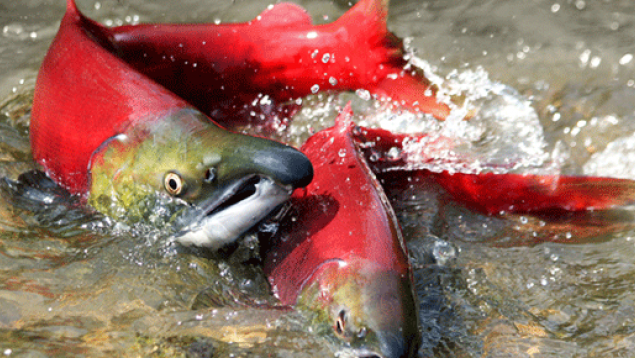
Millions of B.C. salmon mysteriously ‘just disappear’ in troubling year
Although spawning salmon are still returning to British Columbia’s rivers – including some, surprisingly, to urban streams – early returns indicate another troubling year, despite some bright spots…. There were good sockeye salmon returns to the Great Central Lake system on Vancouver Island and to the Nass River on the North Coast, he said. But contrasting that were very poor returns on the Fraser River, where only about two million sockeye returned, far short of the more than six million predicted in preseason forecasts. Even more dramatic was the collapse of the pink salmon on the Fraser, with only about five million fish showing up when more than 14 million had been forecast. Mark Hume reports. (Globe and Mail)

Lawsuit Claims Commercial Salmon Farms Harm Native Fish In Puget Sound
The Wild Fish Conservancy is suing federal environmental and fisheries agencies for inadequately monitoring the impact of commercial salmon farms in Puget Sound. The lawsuit filed Wednesday says commercial farms pose many risks to wild salmon. In 2011 the Environmental Protection Agency and the National Marine Fisheries Service found the opposite. They concluded that commercial salmon farms are unlikely to harm wild salmon. Kate O'Connell Walters (KUOW)

Fecal matter pollution in public water: The case of Snydar Farm
The Snydar Farm had a real problem with “raw manure,” that mix of feces and urine produced by livestock. Namely, the farm’s cows were creating a lot of it – in excess of 5,000 pounds every day. According to the Department of Ecology, it was ending up in public waterways, where it could impact everything from drinking water to the shellfish industry. The farm is located in Ferndale, a town 10 miles north of Bellingham in Whatcom County. Recently, its owners – Jim and Victoria Snydar – received Ecology’s first livestock-related water pollution fine in over three years. But the Snydars’ alleged environmental crimes were not new. Drew Atkins reports. (Crosscut)

Senate blocks legislation to undercut EPA clean water rules
Democrats have blocked a Senate bill that would have forced the Obama administration to withdraw new federal rules to protect smaller streams, tributaries and wetlands from development and pollution. Supporters of the legislation — and opponents of the rules — did not get the 60 votes needed Tuesday to stop debate and consider the bill. The vote was 57-41, meaning Democrats have blocked the bill, for now. Most Democrats argue that the Obama administration rules will safeguard drinking water for 117 million Americans and say they should remain in place. The White House threatened a veto of the bill, saying the regulations are "essential to ensure clean water for future generations." Mary Clare Jalonick reports. (Associated Press)

TransCanada's request to pause Keystone XL review rejected by U.S.
he U.S. State Department has rejected TransCanada's request to put the review of the proposed Keystone XL pipeline on hold. Spokesman John Kirby said the department wrote to TransCanada on Wednesday and "communicated our decision to continue our review." Mark Cooper, a spokesman for TransCanada, said that the company respects the State Department's decision. (CBC)

Environmental advocate running for state House
Olympia environmental activist Beth Doglio has launched a campaign for the state House. Democrat Doglio made her 2016 bid official with an announcement Thursday that she’s running for the seat opened by Rep. Sam Hunt’s decision to run for Senate. Doglio has been involved in Washington environmental advocacy for decades. She is the campaign director for Climate Solutions and directs the Power Past Coal coalition opposing coal exports. She said she previously worked as the first executive director of Washington Conservation Voters. Jordan Schrader reports. (Olympian)

Editor’s Note: Salish Sea News and Weather will not be posted on Friday, November 6.

Now, your tug weather--
WEST ENTRANCE U.S. WATERS STRAIT OF JUAN DE FUCA- 230 AM PST THU NOV 5 2015
TODAY
W WIND 10 TO 20 KT EASING TO 5 TO 15 KT THIS AFTERNOON. WIND WAVES 1 TO 3 FT. W SWELL 6 FT AT 13 SECONDS. SCATTERED
 SHOWERS.
TONIGHT
W WIND TO 10 KT...BECOMING E 5 TO 15 KT AFTER MIDNIGHT. WIND WAVES 2 FT OR LESS. W SWELL 5 FT AT 12 SECONDS. A CHANCE OF
 SHOWERS.

--
"Salish Sea News & Weather" is compiled as a community service by Mike Sato. To subscribe, send your name and email to msato@salishseacom.com. Your email information is never shared and you can unsubscribe at any time.

Salish Sea News: Communicate, Educate, Advocate

Follow on Twitter.

Salish Sea Communications: Truth Well Told

Tuesday, November 3, 2015

11/3 Elwha, Keystone, BC LNG, Qwuloolt Estuary, Still Cr., Snake salmon, pesticide ban, Bowman Bay, Vic bags

Elwha River 11/2/15 (Tom Roorda/CWI)
Elwha River November 2, 2015
Anne Shaffer at Coastal Watershed Institute writes: "The day after the weekend rain event during which the Elwha flows jumped from 2000 to over 12000 cfs in less than 8 hours. Flows then dropped back to pre-storm cfs overnight. Classic Elwha. The high flow combined with fall high tide and the entire Elwha west estuary (not blocked by a dike) was reactivated. The result? Juvenile steelhead, coho, and Chinook were abundant. Also, (for the first time in over a decade of sampling), we caught a number of large, powerful, adult chum in our sets. We’ve said it before: chum are absolutely critical for the restoration of the watershed ecosystem."

TransCanada asks US to suspend pipeline application review
TransCanada, the company behind the controversial Keystone XL pipeline from Canada to the U.S Gulf Coast, has asked the U.S. State Department to pause its review of the project. The move comes as the Obama administration increasingly appears likely to reject the pipeline permit application before leaving office in January 2017. TransCanada said Monday it had sent a letter to Secretary of State John Kerry requesting that the State Department suspend its review of the pipeline application. The pipeline company said such a suspension would be appropriate while it works with Nebraska authorities to secure approval of its preferred route through the state that is facing legal challenges in state courts. TransCanada anticipated it would take seven to 12 months to get route approval from Nebraska authorities. Rob Gillies reports. (Associated Press)

Steelhead LNG must cross the Salish Sea before its proposed facilities can be built
The list of obstacles before liquefied natural gas project proponents in British Columbia is long and daunting. The laundry list includes the need to secure off-take agreements with Asian customers, to sign rights of way for pipelines through First Nations territory and to lock in financing for their multi-billion-dollar facilities in a capital-constrained energy market. But for Nigel Kuzemko, CEO of Steelhead LNG, there’s an additional obstacle: the Salish Sea.... Before Steelhead LNG sanctions the construction of either of its two proposed LNG facilities on the south end of Vancouver Island, which many observers say is an unlikely location for such a project, the company will need to build a pipeline across and under that sea. Geoffrey Morgan reports. (Financial Times)

After levee breach, marine life returns to Qwuloolt Estuary
It's been two months since the levee at the Qwuloolt Estuary was breached, letting the tides return to the lowlands for the first time in a century. There are early signs that the action is having its intended effect. “We're already seeing marine species like smelt come in,” said Morgan Ruff, the Snohomish Basin Capital Program Coordinator for the Tulalip Tribes. Biologists monitoring the changes to the landscape have also caught an adult coho salmon in the new estuary. Chris Winters reports. (Everett Herald)

Vancouver's Still Creek sees salmon for fourth year running
Chum salmon have returned to spawn in an urban creek in East Vancouver for the fourth year in a row, leaving biologists feeling "pretty excited" about the potential to return city landscapes to their natural states.  "It really indicates that if we can improve these systems more, if we can work on the watershed, if we can open up stream channels that are buried now, we can get these kinds of fish back into our city," said Vancouver Park Board biologist Nick Page. The city has been working since 2002 to restore the Still Creek corridor to its natural habitat, a process sometimes referred to as "rewilding." (CBC)

Feds Release Plan For Recovering Snake River Salmon
The National Oceanic and Atmospheric Administration released a draft plan Monday for recovering threatened Snake River fall chinook salmon – fish that have to pass eight Columbia and Snake River dams to reach their spawning grounds. In the past, nearly a half million of these fish returned to the Snake River each year. But with overfishing, dam construction and habitat loss, those numbers dropped to just a few hundred by 1992, when the fish were listed as threatened under the Endangered Species Act. The construction of the three Hells Canyon Complex dams wiped out one of only two populations of the species and blocked the fish from reaching about 80 percent of their historic spawning grounds in Idaho and Eastern Oregon. Cassandra Proffita reports. (EarthFix)

EPA may ban common pesticide used on fruits and vegetables
A common pesticide used on citrus fruits, almonds and other crops would be banned under a proposal announced Friday by the Environmental Protection Agency. The proposal would prohibit use of chlorpyrifos, a widely used insecticide that is sprayed on a variety of crops including oranges, apples, cherries, grapes, broccoli and asparagus. The pesticide, in use since 1965, has sickened dozens of farmworkers in recent years. Traces have been found in waterways, threatening fish, and regulators say overuse could make targeted insects immune to the pesticide. Matthew Daly reports. (Associated Press)

Bowman Bay project personal for park manager
 As Bowman Bay glittered under the sun Monday, massive orange machinery dug, dumped and distributed dirt along the shoreline. Trimaxx Construction Inc. of Sedro-Woolley is in the midst of a Northwest Straits Foundation beach restoration project, where about 1,300 cubic yards of rocks are being removed to improve fish habitat and open up the area to more recreation. The beach at Bowman Bay is part of Deception Pass State Park. It is on the south end of Fidalgo Island. For Deception Pass State Park Manager Jack Hartt, the project is something he dreamed up 40 years ago, and at a place he has known since he was 4 years old. Kimberley Cauvel reports. (Skagit Valley Herald)

Victoria eyes ban on single-use plastic bags
Victoria councillors are considering whether to bring in a bylaw banning city retailers from providing single-use plastic bags. Councillors Ben Isitt and Jeremy Loveday are sponsoring a motion that calls on the city to implement the ban and on Mayor Lisa Helps to write to all the other municipalities and electoral areas in the Capital Regional District urging them to follow suit. If the city gave first reading to such a bylaw, it would be the first city on Vancouver Island and the first Canadian capital city to do so.  Bill Cleverely reports. (Times Colonist)

Now, your tug weather--
WEST ENTRANCE U.S. WATERS STRAIT OF JUAN DE FUCA- 230 AM PST TUE NOV 3 2015
TODAY
W WIND TO 10 KT. WIND WAVES 1 FT OR LESS. W SWELL 6 FT AT 10 SECONDS.
TONIGHT
W WIND TO 10 KT...BECOMING E AFTER MIDNIGHT. WIND WAVES 1 FT OR LESS. W SWELL 6 FT AT 10 SECONDS.
--
"Salish Sea News & Weather" is compiled as a community service by Mike Sato. To subscribe, send your name and email to msato@salishseacom.com. Your email information is never shared and you can unsubscribe at any time.

Salish Sea News: Communicate, Educate, Advocate

Follow on Twitter.

Salish Sea Communications: Truth Well Told

Wednesday, September 30, 2015

9/30 Pesticides, Erich Hoyt, fish waste, eco-bylaw, Chesapeake Bay, more vessels, BC LNG, citizen science

Little owl (Athene noctua)
Reader’s note: ‘A gathering of species of the Strigiformes order is commonly referred to as a "parliament of owls."’ (Tony Angell)

EPA Toughens Pesticide Rules To Protect Farmworkers
Stronger rules for pesticides sprayed on farms and in forests, greenhouses and nurseries can cut health risks for workers, the federal government said in rolling out new safety standards this week…. The Environmental Protection Agency announced the new rules on Monday. EPA Administrator Gina McCarthy says the change are long overdue…. One major change is the setting of a federal age requirement for the first time. Workers who handle pesticides will need to be at least 18. Other states already have implemented a similar rule – in Washington, the minimum age is 18. EPA also will now require that workers get training on pesticide risks - every year. Currently workers have to be trained only every five years. Other changes include whistleblower protections, better notification around work sites and stricter enforcement of rules. The EPA expects to phase in the changes next year. Liz Jones reports. (KUOW)

Erich Hoyt returns to Puget Sound; whale sign goes up near Hansville
Chris Dunagan writes: "Erich Hoyt, who has spent most of his life studying whales, returns to Puget Sound in October for talks in Olympia, Tacoma and Seattle. I enjoyed interviewing Erich last year before he visited this region. (See Water Ways, May 3, 2014.) We talked about the ongoing capture of killer whales in Russia, where government officials refuse to learn a lesson from the Northwest about breaking up killer whale families and disrupting their social order. (Watching Our Water Ways)

What Americans do with fish is shocking
…. Of all the food that Americans waste — and Americans waste a lot of food — it's the seafood that never gets eaten that should trouble us most. Few sources of nutrition, after all, are as coveted as fish. They're high in protein, and low in fat. Eating them is associated with all sorts of beneficial health outcomes. And yet, few foods are discarded so frequently. Between 2009 and 2013, as much as 47 percent of all edible seafood in the United States went to waste, according to a new study from the Johns Hopkins Center for a Livable Future (CLF). Roberto A. Ferdman reports. (Washington Post)

Saanich mayor outvoted on ditching eco-bylaw
Saanich Mayor Richard Atwell has tried unsuccessfully to scrap the district’s controversial environmental bylaw with councillors solidly outvoting him. After a nearly four-hour torrent of negative comments about the Environmental Development Permit Area, Atwell said that “what I’m hearing tonight is that the burden is unbearable and overwhelming.”…. Coun. Vic Derman said scrapping the bylaw at this stage would be “beyond the pale” and Coun. Judy Brownoff said “chaos” would be the result. They said ditching the bylaw would fly in the face of an open house on the issue Saturday and a public meeting in October. “It’s a matter of a few months before we come back with our results, which is fair to everyone,” Brownoff said. The bylaw states that “alteration of land, subdivision and construction are prohibited within an environmental development permit area, according to the Local Government Act, unless an exemption applies or a development permit is issued.” It is meant to protect from development areas that the municipality calls “rare ecosystems and vital habitat.” Katherine Dedyna reports. (Times Colonist)

Tour shows journalists Chesapeake’s good, bad & plans for future
…. Many of the 14 other journalists on the Institute for Journalism and Natural Resources tour had much of the same reaction as the group embarked on the IJNR’s first Chesapeake Bay Institute in more than a decade…. Tristan Baurick, who covers the environment beat for the Kitsap Sun in Bremerton, WA, said he applied to the institute because he wanted to see the parallels between the Chesapeake Bay and the Puget Sound. The sound struggles with some of the same issues as the Bay: algae blooms, sewage spills and a combined stormwater and sewage system in Seattle and King County that often overflows. And yet, Baurick said, he was surprised to learn about swim advisories after rainfalls and about riverkeepers and counties that put out fecal coliform warnings. “Nobody ever says ‘you can’t swim.’ That was amazing to me,’” Baurick said…. “We’re dealing with some of these same problems,” Baurick said of the Puget Sound and the Bay. “I don’t think either of us have the solutions to those problems.” Rona Kobell reports. (Bay Journal)

Storms for Salish Sea
Royal Dutch Shell said it will end oil exploration in offshore Alaska “for the forseeable future’’ after an exploratory well in the Chukchi Sea failed to yield the hoped for oil and gas, but that doesn’t mean the impacts of energy expansion projects will end on the Salish Sea. Our region is targeted for export projects that could dwarf the XL Pipeline. If all the new and expanding terminal and refinery projects in the Salish Sea are permitted and developed, including projects that became operational in 2014, there would be a 43 percent increase in large, commercial marine vessel traffic. Tim Johnson reports. (Cascadia Weekly)

Metlakatla signs agreement in support of Prince Rupert Gas Transmission
The Metlakatla First Nation has become the eighth aboriginal group to support TransCanada Corp.’s Prince Rupert Gas Transmission, a B.C. pipeline project that would transport natural gas to a West Coast export terminal. TransCanada’s $5-billion pipeline venture aims to supply a proposed plant that would export liquefied natural gas from Lelu Island to customers in Asia. The Metlakatla, one of five Tsimshian First Nations consulted during a provincial environmental review last year of Pacific NorthWest LNG, signed a project agreement with TransCanada. The pact details financial, employment and other benefits for the Metlakatla. Brent Jang reports. (Globe and Mail)

Olympia middle school launches Citizen Science Institute
About 45 Marshall students spent three days at the YMCA’s camp on Case Inlet on the Puget Sound near Longbranch last week for its Outdoor Environmental Education Program. They’re part of the newly launched Citizen Science Institute, a grade 6-8 alternative program that combines science, research and community service activities…. During the next school year, CSI students will spend about a half day each week conducting field investigations for a variety of environmental and community organizations, such as the Pacific Shellfish Institute, Garden Raised Bounty and the Nisqually Wildlife Refuge. Projects include migratory bird counting, water quality testing in local streams and assisting a research project that’s measuring nitrogen levels found in mussels. Lisa Pemberton reports. (The Olympian)

Now, your tug weather--
WEST ENTRANCE U.S. WATERS STRAIT OF JUAN DE FUCA- 248 AM PDT WED SEP 30 2015
TODAY
W WIND 5 TO 15 KT. WIND WAVES 2 FT OR LESS. W SWELL 4 FT AT 10 SECONDS.
TONIGHT
W WIND 5 TO 15 KT...BECOMING TO 10 KT AFTER MIDNIGHT. WIND WAVES 2 FT OR LESS. W SWELL 4 FT AT 11 SECONDS.
--
"Salish Sea News & Weather" is compiled as a community service by Mike Sato. To subscribe, send your name and email to msato@salishseacom.com. Your email information is never shared and you can unsubscribe at any time.

Salish Sea News: Communicate, Educate, Advocate

Follow on Twitter.

Salish Sea Communications: Truth Well Told

Tuesday, August 4, 2015

8/4 Obama clean power, BC climate, Inslee carbon cap, BC crops in drought, Pt Townsend water

Purple martin (Mike Hamilton/BirdNote)
How Birds Stay Cool
On a hot summer’s day, watch a bird such as a crow — or this Purple Martin — very carefully. You’ll never see them sweat, because birds don’t have sweat glands. So how do they keep cool? One way is panting. As the bird breathes rapidly, heat is carried out of its body through the lungs and air sacs. Bare skin on the legs, face, and beak also help with cooling. So do puffing out feathers, fluttering wings, or splashing in a puddle or birdbath. And soaring birds like hawks can simply ride the updrafts far above ground to cooler air. (BirdNote)

Washington officials cheer Obama plan to reduce carbon pollution: House Speaker Boehner calls it “nuts”  
Washington state officials cheered on Monday as President Obama unveiled the most aggressive greenhouse gas reduction plan in American history.  Allies of Big Oil and Big Coal in the Rust Belt were groaning…. The Obama plan could have immediate impacts in the Northwest, starting with aging, dirty coal plants located about 100 miles southeast of Billings in Montana. Puget Sound Energy should be required to show why it should continue to get electricity from the 1975-vintage Colstrip 1 and 2 power plants, conservation groups told the state Utilities and Transportation Commission on Friday.  They suggested in a brief that Washington and Montana get ready to pull the plug on the old power plants “in the not-too-distant future.” Joel Connelly reports. (SeattlePI.Com) See also: State already in step with Obama clean-power plan  Hal Bernton reports. (Seattle Times)

Climate change is a growing concern in B.C., says scientist
Climate change is a growing concern in British Columbia as drought and wildfires continue to parch much of the province. It was the hottest June on record for many places around the world, including here in B.C. where at least 64 temperature records were shattered during an intense heat wave. Climate scientists say we may have to get used to it. (CBC)

Inslee’s carbon cap won’t happen soon
It may take Gov. Jay Inslee longer to circumvent lawmakers and impose a cap on carbon emissions than he’s expecting. The governor directed the Department of Ecology last week to begin developing a hard limit on emissions using his rule-making power under existing state laws. He pledged the process would be open with plenty of opportunity for interested parties to weigh in — and he expected to be finished in about a year. But the man leading the effort says it could take twice as long because of the complexity and controversy enveloping the issue. Jerry Cornfield reports. (Everett Herald)

B.C., Alberta farmers fear for crops amid crippling drought
Small-scale growers in British Columbia are scrambling to meet market needs because of a months-long drought that is causing gaps in the growing season. A lasting drought in B.C.’s Lower Mainland and Alberta is leading crops to shoot up weeks before their due dates at rates faster than they can be consumed. And organic farms, of which produce is purchased by half of the province’s consumers and of which land makes up 16.3 per cent of its farms, are feeling the heat. Verity Stevenson reports. (Globe and Mail)

Port Townsend City Council puts water restrictions into effect
The Port Townsend City Council on Monday night unanimously approved Stage 1 water restrictions that include requiring outdoor watering on alternate days. Restrictions came into effect immediately. Stage 1 of the three-stage water conservation plan aims to reach targets of a 10 percent reduction in water use within the city and a 15 percent cutback in consumption for the Port Townsend Paper Corp. Charlie Bermant reports. (Peninsula Daily News)

Now, your tug weather--
WEST ENTRANCE U.S. WATERS STRAIT OF JUAN DE FUCA- 300 AM PDT TUE AUG 4 2015
TODAY
SW WIND TO 10 KT...BECOMING W 5 TO 15 KT IN THE AFTERNOON. WIND WAVES 2 FT OR LESS. W SWELL 5 FT AT 7 SECONDS.
TONIGHT
W WIND 10 TO 20 KT...BECOMING 5 TO 15 KT AFTER MIDNIGHT. WIND WAVES 1 TO 3 FT. W SWELL 4 FT AT 7 SECONDS.

--
"Salish Sea News & Weather" is compiled as a community service by Mike Sato. To subscribe, send your name and email to msato@salishseacom.com. Your email information is never shared and you can unsubscribe at any time.

Salish Sea News: Communicate, Educate, Advocate
http://salishseanews.blogspot.com/

Follow on Twitter. http://twitter.com/#!/savepugetsound/

Salish Sea Communications: Truth Well Told
http://salishseacommunications.blogspot.com/2011/10/salish-sea-communications-truth-well.html