Showing posts with label wildlife. Show all posts

Friday, September 18, 2015

9/18 Wildlife watch,,BC oysters, PA crabs, ferry link, salamanders, CA ESA, oil export ban, rail safety

Wolf, Pacific Wild (Ian McAllister/CBC)
If you like to watch: Great Bear Rainforest live cams capture wolves, seals and salmon at play
Now you can catch sea wolves playing, seals scratching themselves or salmon jumping from a stream through three live stream cameras set up in the Great Bear Rainforest. The Great Bear LIVE program has installed what it describes as non-invasive technology that captures the animals in their element. "It's a unique opportunity for people to see first hand what is happening here and see animals behaving in a natural way," explained Diana Chan, conservation biologist with Pacific Wild. Watch the live stream. (CBC)

If you like to watch: Transient orcas catch sea lion near Lopez Island
A private whale watching tour witnesses a group of transient orcas hunting for a meal. In this case, members of the T-137 group attacked a thousand-pound Stellar sea lion. According to Mystic Sea Charters, passenger Mike caught the hunt near Lopez Island on camera. Elizabeth Wiley reports. (KING)

B.C. raw oyster ban lifted by Vancouver Coastal Health
Oyster growers in B.C. are back in business after Vancouver Coastal Health lifted the ban on serving raw oysters that's been in place since August. All restaurants under VCH's jurisdiction have been required to cook any oysters served up to customers after an outbreak of Vibrio parahaemolyticus infection. (CBC)

Study: Eating large amounts of Port Angeles Harbor crab could raise risks of cancer
Eating a lot of crab from Port Angeles Harbor could increase the risk of cancer, according to 13-year-old research presented to the Clallam County Board of Health on Tuesday. The report issued in February 2005 stems from samples taken in 2002 mostly off the old Rayonier mill site, a firmer pulp mill that became a cleanup site in 2000. In 2007, a health warning against eating crab or shellfish from the harbor was issued. James Casey reports. (Peninsula Daily News)

New ferry would link Victoria and Vancouver downtowns
A foot passenger ferry service between Vancouver and Victoria could soon be operating out of the Inner Harbour’s historic CPR Steamship Terminal, along with a deep ocean education centre affiliated with the University of Victoria. The Greater Victoria Harbour Authority said Wednesday that it is negotiating long-term leases with two potential tenants: Riverside Marine, a major Australian marine operator and Ocean Networks Canada, which operates the NEPTUNE and VENUS cabled ocean observatories. Not only would the two potential tenants make the money-losing harbour authority viable, said CEO Ian Robertson, but help return the building to its maritime origins dating to 1905. He hopes tenancy agreements will be worked out by mid-November. Katherine Dedyna reports. (Times Colonist)

Pacific Northwest Salamanders May Qualify For Protection
The U.S. Fish and Wildlife Service says two salamanders in Oregon and Washington may qualify for Endangered Species Act protection. The findings on Tuesday about the Cascade torrent salamander and Columbia torrent salamander mean the agency will initiate full status reviews for the species to see if they warrant protection. The findings come in response to a petition by the Center for Biological Diversity. The Center first asked for protection for the salamanders in 2012. The petition said they are increasingly rare because of habitat loss due primarily to logging and road building. The four-inch brown salamanders live in forest streams and are found only in a small stretch of the Cascades and Coast range. (Associated Press)

Canada sidesteps protection of endangered fish, study finds
Endangered and threatened marine fish species in Canada are routinely refused protection by the federal government, contrary to scientists' recommendations, a new study has found. In fact, the more endangered the fish are, the less likely they are to get protection under Canada's endangered species legislation, researchers at the University of Victoria and the Ecology Action Centre in Halifax report. "It's a bit of a perverse outcome," Julia Baum, a University of Victoria biologist who co-authored the report, said during an interview with CBC Radio's Quirks & Quarks that airs Saturday…. And while the federal government says that species that aren't listed under the Species at Risk Act (SARA) will still get protection under the Fisheries Act, Baum and her colleagues found "absolutely no evidence" that that has ever happened. (CBC)

Chambers Creek dog park, beach reopen Friday
The off-leash dog park and access to the beach at Chambers Creek Regional Park will open Friday (Sept. 18)…. Close to 800 creosote piles and two dilapidated docks were removed from the water and beach area. Removal work began last fall but was completed during the park’s extended closure after the U.S. Open golf championship June 15-21 at the county-owned park and golf course. The piles and cement structures removed from the waterfront were left over from the site’s former operation as a gravel mine. Brynn Grimley reports. (Tacoma News Tribune)

House moves one step closer to lifting ban on crude oil exports
The House Energy and Commerce Committee took a major step Thursday toward allowing crude oil exports from the United States. Three Democrats joined all of the Republicans on Thursday in voting for a bill that would lift the decades-old ban on exports. The tally was 31-19. The vote sends the legislation to the full House for final passage, something that Majority Leader Kevin McCarthy (R-Calif.) said would happen in the coming weeks. Republicans said the bill would benefit the economy, jobs, national security and other areas, while most Democrats decried it as a giveaway to oil companies that would threaten energy prices. Timothy Cama reports. (The Hill) See also: Does Anyone Even Want to Buy Crude Oil From the U.S.?  Sheela Tobben and Mark Shenk report. (Bloomberg)

Rail service crisis looms as Congress looks to modify safety law
President Barack Obama’s nominee to lead the nation’s rail safety agency told lawmakers Thursday that the agency would hold railroads to a year-end deadline to install collision-avoidance technology even if it meant that freight and passengers could be left stranded. Congress set a Dec. 31, 2015, deadline for railroads to implement positive train control back in 2008. The Government Accountability Office reported Wednesday that few companies would actually make the deadline. That conclusion was no surprise: The GAO had warned Congress of it in another report two years ago. While lawmakers sought guidance from Sarah Feinberg, the Federal Railroad Administration’s acting administrator, on what she thought they should do about it, she told them that whether and how to extend the deadline was up to them. Curtis Tate reports. (McClatchy)

Court date set for Cape Roger Curtis dock lawsuit
A hearing date has been set for November 16 and 17 for a lawsuit filed by two property owners on Cape Roger Curtis against the municipality. The landowners want the courts to set aside Bylaw No. 381, 2015 which does not allow the building of any further docks at Cape Roger Curtis. They received permission from the province to build their docks 10 days prior to the adoption of the bylaw. Martha Perkins reports. (Bowen Island Undercurrent)

Now, your weekend tug weather--
WEST ENTRANCE U.S. WATERS STRAIT OF JUAN DE FUCA- 300 AM PDT FRI SEP 18 2015
TODAY
E WIND 5 TO 15 KT...BECOMING SE 10 TO 20 KT IN THE AFTERNOON. WIND WAVES 1 TO 3 FT. SW SWELL 4 FT AT 14 SECONDS. A
 CHANCE OF RAIN IN THE MORNING...THEN RAIN LIKELY IN THE AFTERNOON.
TONIGHT
S WIND 10 TO 20 KT...BECOMING SW 5 TO 15 KT AFTER MIDNIGHT. WIND WAVES 1 TO 3 FT. W SWELL 4 FT AT 8 SECONDS. A CHANCE
 OF SHOWERS IN THE EVENING.
SAT
S WIND 10 TO 20 KT...RISING TO 15 TO 25 KT IN THE AFTERNOON. WIND WAVES 2 TO 4 FT. W SWELL 4 FT AT 10 SECONDS. A CHANCE OF SHOWERS.
SAT NIGHT
S WIND 15 TO 25 KT...BECOMING SW 10 TO 20 KT AFTER MIDNIGHT. WIND WAVES 2 TO 4 FT. W SWELL 5 FT AT 10 SECONDS.
SUN
SW WIND 15 TO 25 KT...BECOMING W 15 TO 20 KT IN THE AFTERNOON. WIND WAVES 2 TO 4 FT. W SWELL 7 FT AT 9 SECONDS.

--
"Salish Sea News & Weather" is compiled as a community service by Mike Sato. To subscribe, send your name and email to msato@salishseacom.com. Your email information is never shared and you can unsubscribe at any time.

Salish Sea News: Communicate, Educate, Advocate

Follow on Twitter.

Salish Sea Communications: Truth Well Told

Tuesday, September 1, 2015

9/1 Naming names, Gorge cleanup, Wild Future, oil terminals review, Fidalgo Bay Days

Koma Kulshan (WikiCommons)
Here Are Seven Northwest Mountains Named For White Men
North America's highest mountain has a new name. Or rather, an old one. President Obama has announced that Alaska's Mount McKinley will now be called Denali, which is what natives call the peak. Like Denali, mountains in the Pacific Northwest had names before white settlers re-named them. [How many can you name in WA, OR & BC?] Chris Lehman reports. (KUOW)

European settlers renamed many Washington mountains, too
If President Barack Obama starts a trend to change the name of a mountain back to the one used by a region’s original inhabitants, there’s plenty of possibilities in Washington state. European late-comers to the Northwest made it a habit of sticking new names on many of the state’s peaks, from Mount Spokane to Mount Rainier. Jim Camden reports. (Spokesman-Review)

Shoreline focus of cleanup after barge spills flattened cars
A shoreline cleanup specialist started picking debris from the Gorge shoreline on Monday, three days after a listing barge sent dozens of flattened cars into the Gorge Waterway…. The shoreline specialist was contracted by Schnitzer Steel, a scrap-metal recycling company in the Rock Bay area which was operating the barge. Brach said the cleanup effort couldn’t start until the barge was stabilized. (Times Colonist)

State invites comments on fishing, hunting, rec programs and policies
The state Department of Fish and Wildlife is asking the public for help in identifying conservation and recreation priorities for the next several years. Fish and Wildlife is calling the new, multiyear initiative “Washington’s Wild Future: A Partnership for Fish and Wildlife,” according to a news release. The partnership is an effort to strengthen the department’s relationships with communities, increase support for conservation and recreation on public lands, and help ensure the state’s services meet the public’s needs. Kimberly Cauvel reports. (Skagit Valley Herald)

Draft Environmental Review Released For Oil Terminals On Washington Coast
The Washington State Department of Ecology has just released its draft environmental review of two proposed oil terminals on the Washington coast. A third proposed terminal has not yet begun the environmental review process. The terminals could be built in Grays Harbor, near Aberdeen, doubling current vessel and train traffic levels there. (KUOW)

Fidalgo Bay Day lets kids play, learn about marine life
A power outage caused by high winds Saturday didn’t dampen spirits at Fidalgo Bay Day. And though the weather forced organizers to move some activities indoors, including educational discovery stations that were to be installed along the Tommy Thompson Trail, visitors interested in the aquatic environment spent the afternoon learning about sea life and marine habitat. Evan Marczynsk reports. (Skagit Valley Herald)

Now, your tug weather--
WEST ENTRANCE U.S. WATERS STRAIT OF JUAN DE FUCA- 300 AM PDT TUE SEP 1 2015
TODAY
LIGHT WIND...BECOMING S TO 10 KT IN THE AFTERNOON. WIND WAVES 1 FT OR LESS. W SWELL 6 FT AT 11 SECONDS. A CHANCE OF RAIN IN
 THE MORNING...THEN RAIN LIKELY IN THE AFTERNOON.
TONIGHT
SW WIND TO 10 KT. WIND WAVES 1 FT OR LESS. W SWELL 6 FT AT 11 SECONDS. SHOWERS IN THE EVENING...THEN SHOWERS LIKELY AFTER
 MIDNIGHT.

--
"Salish Sea News & Weather" is compiled as a community service by Mike Sato. To subscribe, send your name and email to msato@salishseacom.com. Your email information is never shared and you can unsubscribe at any time.

Salish Sea News: Communicate, Educate, Advocate

Follow on Twitter.

Salish Sea Communications: Truth Well Told

Tuesday, August 18, 2015

8/18 Fraser salmon closure, raw oyster ban, Shell drill, wildlife plan, tsunami, fin whales

Oystercatcher (Laurie MacBride)
Slowing Down for the Details
Laurie MacBride in Eye on Environment writes: "It seems like we’re often so busy rushing about, trying to get the “most” out of life, that we miss out on the delightful little details around us. The folks in the boat above, for instance, didn’t seem to notice the Black oystercatcher as they sped by. I’m not judging them – I’ve been in the same metaphorical boat myself, way too many times. But this was one occasion when I was grateful to be in the slow lane…."

Fraser River salmon fishing closes
The Fraser River has been closed to salmon fishing from its mouth all the way to the Alexandra Bridge north of Hope, thanks in part to record-high water temperatures. The closure came into effect Friday at midnight, according to notices from Fisheries and Oceans Canada. First Nations fisheries have also been closed. Bethany Lindsay reports. (Vancouver Sun)

Mainland raw-oyster ban slams industry
The Vancouver Coastal Health Authority, which encompasses most of the Lower Mainland and a large chunk of the Sunshine Coast, instructed restaurants to stop serving oysters raw. It also warned consumers to cook oysters before eating them. B.C. shellfish farmers are reeling after Lower Mainland health officials ordered restaurants to stop serving raw oysters. Richard Watts reports. (Times Colonist)

Feds allow Shell to drill for oil in Arctic Ocean off Alaska
The federal government on Monday gave Royal Dutch Shell the final permit it needs to drill for oil in the Arctic Ocean off Alaska’s northwest coast for the first time in more than two decades. The Bureau of Safety and Environmental Enforcement announced that it approved the permit to drill below the ocean floor after the oil giant brought in a required piece of equipment to stop a possible well blowout…. Shell is free to drill into oil-bearing rock, estimated at 8,000 feet below the ocean floor, for the first time since its last exploratory well was drilled in 1991. Dan Joling reports. (Associated Press)

State’s wildlife action plan open for comment
The state Department of Fish and Wildlife is accepting comments on a proposed update to the State Wildlife Action Plan, which identifies 268 fish and wildlife species with the greatest conservation needs. The plan is open for comment through Sept. 11. The document is available online at wdfw.wa.gov/conservation/cwcs/. Kimberly Cauvel reports. (Skagit Valley Herald)

UW researchers model tsunami hazards on the Northwest coast
…. Dozens of UW scientists are part of the M9 Project, a research endeavor funded by the National Science Foundation to study the Cascadia subduction zone and communicate information about potential hazards to government officials and the public. Key goals of the M9 Project include mathematical modeling of tsunami waves, which tries to predict where and how an earthquake-triggered wave will affect the coast. Two University of Washington scientists — applied mathematics professor Randy LeVeque and affiliate professor of Earth and space sciences Frank Gonzalez — recently talked about how they model tsunami hazards along the Northwest coast. James Urton reports. (UW Today)

A care package for a lonely B.C. whale researcher
James Pilkington glances wistfully at Ulric Point as the John P. Tully motors past Aristazabal Island on B.C.’s north coast. From 2008 to 2011, he worked there on contract to the non-profit North Coast Cetacea Society, spending up to 100 days from spring to fall observing whales and seabirds. “It was incredible. Caamano Sound is so alive, one of the few areas you see fin whales consistently close to shore, inland waters.” Larry Pynn reports. (Vancouver Sun)

Now, your tug weather--
WEST ENTRANCE U.S. WATERS STRAIT OF JUAN DE FUCA- 300 AM PDT TUE AUG 18 2015
TODAY
LIGHT WIND. WIND WAVES LESS THAN 1 FT. W SWELL 5 FT AT 8 SECONDS.
TONIGHT
W WIND TO 10 KT IN THE EVENING...BECOMING LIGHT. WIND WAVES 1 FT OR LESS. W SWELL 5 FT AT 9 SECONDS.

--
"Salish Sea News & Weather" is compiled as a community service by Mike Sato. To subscribe, send your name and email to msato@salishseacom.com. Your email information is never shared and you can unsubscribe at any time.

Salish Sea News: Communicate, Educate, Advocate
http://salishseanews.blogspot.com/

Follow on Twitter. http://twitter.com/#!/savepugetsound/

Salish Sea Communications: Truth Well Told
http://salishseacommunications.blogspot.com/2011/10/salish-sea-communications-truth-well.html


Monday, August 10, 2015

8/10 Humpbacks, BC salmon, pinks, tribal fish, derelict gear, Hood Canal deal, shrimp spray, no tankers, mine waste

Humpback whale (NOAA)
If you like to listen: It Took A Musician's Ear To Decode The Complex Song In Whale Calls
Humpback whales don’t just sing songs — they compose with the whales around them, singing a song that changes, and evolves over time. Scientists didn’t know that until they started recording whale sounds in the 1960s and spent years listening…. Katy Payne, a researcher in acoustic biology at the Cornell Lab of Ornithology, and her husband Roger were the first scientists to realize that the intricate and eerie calls of some humpback whales are actually songs. Bill McQuay and Christopher Joyce report. (NPR)

Mountain School makes the magic of the wilderness real for kids
The three-day mountain camp strives to give school children a visceral connection to the Northwest wilderness. Ron Judd reports on the 25-year-old program by the North Cascades Institute. (Seattle Times) See also: Kids get outdoors in ‘Experience The Wild’ camp There is a summer camp where campers climb to the top of a mountain, then descend to the shores of the sea over the course of five days. Vince Richards reports. (Skagit Valley Herald)

New blog: Into The (Sort Of) Wild
"I spent parts of this past weekend at Deception Pass State Park with a thousand or more campers. But with the right camera angles, it can still be remembered as a few days in a wildness of sorts. But what was the experience?…"

Salmon on Vancouver Island threatened by heat wave
River levels in Southern B.C. are at record lows and water temperatures are at record highs. This is threatening the millions of salmon coming home to spawn and the billion-dollar freshwater fishing industry that depends on healthy rivers. Greg Rasmussen reports. (CBC News)

Crews to prep Dungeness River this week for huge run of pink salmon
Work could begin this week on creating as hospitable an environment as possible for hordes of pink salmon expected to return to the Dungeness River later this month. A preseason prediction that 1.3 million pinks will return to the Dungeness this year may not come to pass, said Mike Gross, biologist with the state Department of Fish and Wildlife, who is based in Montesano. That estimate was based on a run of 400,000 pinks in the Dungeness two years ago. (Peninsula Daily News)

Court upholds Suquamish’s right to share fishing with Tulalips
A federal appeals court has upheld a lower court’s decision that recognized the Suquamish Tribe’s rights to fish in Port Gardner and other nearby waters. The result is that the Tulalip Tribes, who had filed the appeal, will have to share those fishing grounds with the Suquamish, who are based across Puget Sound in Port Madison. A three-judge panel of the 9th U.S. Circuit Court of Appeals ruled July 27 that the Tulalip Tribes did not provide ample evidence that fishing grounds on the east side of Puget Sound should not be shared with the Suquamish. Chris Winters reports. (Everett Herald)

Traditional fishing revival launched by First Nations man
Almost a century after fishing practices unique to First Nations in B.C.'s Salish Sea were outlawed, members paddled canoes back to traditional waters and dropped their full-sized reef net. It was the start of a long-term mission to revitalize the once-celebrated technique for gathering food and bonding community for the Strait Salish people. The web-like net — about the length of a city bus — was suspended between two canoes in an endeavour by a University of Victoria doctoral student who envisions bringing his nation's fishing style "back to life." Tamsyn Burgmann reports. (Canadian Press)

Initiative’s feat: Ridding waters of nets
Knowing the deadly consequences abandoned fishing nets pose for marine life, a nonprofit has worked to remove 550 from Puget Sound this year alone. That brings to 5,600 the number of derelict nets the Northwest Straits Initiative and its partners have dragged out since 2002. The effect: restoring 800 acres of marine habitat. The group’s efforts to remove nets identified in shallow Puget Sound waters concluded in June. A celebration is scheduled Thursday in Everett to commemorate the milestone. Noah Haglund reports. (Everett Herald)

State won’t audit shoreline deal Navy got at half the $1.7M value
The acting state auditor has turned down a request by two state senators asking for an audit of a Hood Canal land-lease deal between the Department of Natural Resources (DNR) and the Navy. As her reason, Auditor Jan Jutte cited a Jefferson County Superior Court judge’s opinion in May that said DNR had authority to grant the shoreline lease and that the way the agency determined its $720,000 value “was not arbitrary, capricious or unlawful.” (Seattle Times)

Back to the drawing board for control of oyster-killing shrimp
They’ve tried smashing, cementing, shocking and shaking them, but now that pesticides are off the table — at least temporarily — what’s the option for ridding oyster beds of ghost shrimp? Sandi Doughton reports. (Seattle Times) Meanwhile: Shellfish spraying in Willapa Bay continues — on clam beds  After neurotoxin controversy, oyster growers aren’t spraying to kill shrimp. But herbicide applications to kill nonnative eel grass are still allowed. Sandi Doughton reports. (Seattle Times)

Gabriola Island residents rally against tanker moorage proposal
Concerned residents of B.C.'s Gulf Islands are planning to round up their boats near Gabriola Island today to draw attention to a proposal to moor large vessels in the area….. The proposal comes from the Pacific Pilotage Authority of Canada, which says the new anchorage space is needed, partly because ships are getting larger… the authority's CEO Kevin Obermeyer says the authority is currently gathering more research on the issue and will hold a meeting with Gabriola Island residents in early 2016, after which they'll have 90 days to respond. (CBC)

EPA Says It Released 3 Million Gallons Of Contaminated Water Into River
In an event that has led to health warnings and turned a river orange, the Environmental Protection Agency says that one of its safety teams accidentally released contaminated water from a mine into the Animas River in southwest Colorado. The spill, which sent heavy metals, arsenic, and other contaminants into a waterway that flows into the San Juan National Forest, occurred on Wednesday. The EPA initially said that 1 million gallons of wastewater had been released, but that figure has risen sharply.  (NPR, KUNC)

Now, your tug weather--
WEST ENTRANCE U.S. WATERS STRAIT OF JUAN DE FUCA- 300 AM PDT MON AUG 10 2015
TODAY
VARIABLE WIND TO 10 KT. WIND WAVES 1 FT OR LESS.  W SWELL 3 FT AT 8 SECONDS.
TONIGHT AND TUE
VARIABLE WIND TO 10 KT. WIND WAVES 1 FT OR LESS. W SWELL 3 FT AT 9 SECONDS.
--
"Salish Sea News & Weather" is compiled as a community service by Mike Sato. To subscribe, send your name and email to msato@salishseacom.com. Your email information is never shared and you can unsubscribe at any time.

Salish Sea News: Communicate, Educate, Advocate

Follow on Twitter.

Salish Sea Communications: Truth Well Told


Thursday, August 6, 2015

8/6 Hot weather, clean power, coal port, Kinder Morgan, OR LNG, orcas, BC wildlife

Hiroshima, Aug. 6, 1945
If you like to watch: Video: A dangerously hot Puget Sound
So what will a hot world look like, especially here in the Puget Sound region? Well, check out this video built around a news conference put on by Washington’s Department of Ecology July 30 in Seattle for your answer:
So what will a hot world look like, especially here in the Puget Sound region? Well, check out this video built around a news conference put on by Washington’s Department of Ecology July 30 in Seattle for your answer. Jake Ellison reports. (SeattlePI.Com)  See also: Jellyfish boom prompts research by plane and boat  Biologists with NOAA and the Department of Ecology are teaming up by plane and boat to track a jellyfish boom in Puget Sound. Alison Morrow reports. (KING)

New blog: Heat and Drought. Is This The New Northwest?
"Some summer: Consecutive days of record high temperatures, little rain and low river runoff, rising water temperatures in rivers and Puget Sound... You staying or planning to leave?…. "

Clean Power Plan and our proposed coal terminal
The fate of the coal industry is uncertain at best, due to multiple factors. Oversupply in both coal markets — the kind used to make steel and the kind used to fire electricity plants — has depressed prices and deeply wounded coal companies’ bottom lines. Internationally, major coal users in Asia are trying to give an advantage to domestic mines by reducing exports from suppliers in Australia and Indonesia, not to mention the more far-flung ports in Canada and the U.S. Coal demand in China, the No. 1 coal user in the world, is down for environmental reasons — to improve urban air quality and reduce carbon emissions. In the U.S. we have the Obama administration’s Clean Power Plan, which sets the stage for reducing carbon output 32 percent by 2030. Ralph Schwartz recaps. (Bellingham Herald)

Kinder Morgan’s Trans Mountain expansion plan faces renewed opposition as crude oil price drops
As the National Energy Board (NEB) gears up to hear final arguments on Aug. 24 into its embattled review of the proposed Kinder Morgan Trans Mountain Pipeline expansion, opposition is mounting as the price of oil drops, making the project less attractive. Local economists say that, barring a major war in the Middle East directly impacting top oil producers like Saudi Arabia, Canada’s oilsands might be in for a prolonged period of lower crude prices. Brian Morton reports. (Vancouver Sun)

Feds Release Draft Environmental Review Of Oregon LNG Project
Oregon LNG’s $6 billion terminal and pipeline project would cause adverse impacts to the environment, a draft environmental review has found, but most could be reduced if the energy company takes steps to minimize harm to fish and wildlife habitat and water quality, and uses adequate safety features in design and operation. The Federal Energy Regulatory Commission, which released the draft review this week, is still completing an assessment of how the project might impact threatened or endangered species and critical habitat. But the draft is an important benchmark in the decade-long drive for the project, which involves a terminal along the Skipanon Peninsula in Warrenton and an 87-mile pipeline from Washington state through Columbia, Tillamook and Clatsop counties. Derrick DePledge reports. (Daily Astorian)

Good news, bad news for Puget Sound orcas and salmon
What has been a great year for whale watching got an extra wave of excitement last week when transient orcas came into Guemes Channel, mingling with boats off the Anacortes shoreline. “They’ve been wandering all over all summer. It’s a banner year for transients,” whale expert Ken Balcomb said. “The transients are booming. Their population is probably growing at about 6 percent per year, which is better than the stock market.” It also appears to be a good year for the southern resident orca population as the Center for Whale Research’s annual summer census tally of 81 whales — including four calves — is up from 78 last year. But Balcomb, the executive director of the Center for Whale Research, cautions the excitement may not last. Kimberly Cauvel reports. (Skagit Valley Herald)

Poor salmon run could have ‘devastating’ effects on B.C. wildlife
B.C.’s bald eagle population has already had a rough year, and it could turn into a catastrophic one if dire predictions about the fall salmon runs come true. Scientists have warned that our hot and dry summer has caused unusually warm river temperatures, which means many fish could either avoid returning to their home waters to spawn, or die trying to make the journey. Bald eagles depend upon the carcasses of spawned salmon to fill their bellies for six months of the year, according to wildlife biologist David Hancock. Bethany Lindsay reports. (Vancouver Sun)

Now, your tug weather--
WEST ENTRANCE U.S. WATERS STRAIT OF JUAN DE FUCA- 232 AM PDT THU AUG 6 2015
TODAY
W WIND TO 10 KT. WIND WAVES 1 FT OR LESS. W SWELL 3 FT AT 8 SECONDS.
TONIGHT
NW WIND 5 TO 15 KT. WIND WAVES 1 OR 2 FT. W SWELL 3 FT AT 9 SECONDS.
--
"Salish Sea News & Weather" is compiled as a community service by Mike Sato. To subscribe, send your name and email to msato@salishseacom.com. Your email information is never shared and you can unsubscribe at any time.

Salish Sea News: Communicate, Educate, Advocate

Follow on Twitter.

Salish Sea Communications: Truth Well Told

Tuesday, March 31, 2015

3/31 Orca baby, herring protest, hatcheries, creosote removal, oil tank cars, Pt Roberts eagles

(Jeanne Hyde, Maya’s Legacy Whale Watching/KIRO)
New baby orca born to Puget Sound J-Pod
A new baby orca was born to the Puget Sound J-Pod over the weekend, confirmed officials with the Center for Whale Research. This is the fourth calf born in three months.  Naturalist and researcher Jeanne Hyde of Maya’s Legacy Whale Watching captured images of the newborn calf near Active Pass in British Columbia Monday afternoon. (KIRO) See also: Orca pod off Cape Disappointment Monday (Chinook Observer)

Heiltsuk Nation members occupy DFO office to protest herring fishery
Members of the Heiltsuk Nation have begun occupying a federal government office to protest a herring fishery on B.C.’s Central Coast. The lockdown began at 5:30 p.m. on Sunday at the Department of Fisheries and Oceans office near Bella Bella, according to a press release issued by the First Nation. “We will be here until DFO announces that Area 7 is closed to a gillnet fishery,” Chief Councillor Marilyn Slett said in the release. Bethany Lindsay reports. (Vancouver Sun)

Hatcheries flow on despite the evidence they harm salmon recovery
So, why are hatcheries still an issue? Because, decades after they gained notoriety as one of the factors that threaten salmon recovery,  people still catch salmon for fun and profit, and for most of them, catching a hatchery fish is just as much fun and just as profitable as catching one that didn’t start life in a concrete tank. Besides, to the uninformed eye, there’s not much difference. Daniel Jack Chasan reports. (Crosscut)

Another 50 tons hauled away in ongoing campaign against creosote
Over the past month, restoration crews from the Washington Department of Natural Resources removed more than 50 tons of toxic creosote-treated wood from public and private beaches on Lopez, Orcas and San Juan islands. Special thanks to the Puget Sound Conservation Corps members who did the hard work and to the concerned individuals who reported creosote debris to Friends of the San Juans for their support of improved beach conditions for people, fish and wildlife. (San Juan Journal)

Fixing railroad tank cars gains traction after recent derailments
While some government and industry officials have repeatedly said there’s no silver bullet to improve the safety of oil trains, a persistent problem runs through every new derailment: the tank cars…. Railroads have already spent heavily in recent years to improve their track for all kinds of freight and have pledged to spend more. Meanwhile, the companies that own and lease tank cars for transporting oil and other flammable liquids have been waiting for regulators to approve a more robust design to account for the exponential increase in energy traffic on the rails before they invest an additional cent. Curtis Tate reports. (McClatchy) See also: Railroad wants to talk in private to fire chiefs about oil cars  The BNSF Railroad has pumped cold water on Washington Fire Chiefs request that it hand over worst-case scenarios and comprehensive emergency response plans for dealing with an oil train accident. The railroad has offered a private talk and an “overview” of its plans. Joel Connelly reports. (SeattlePI.Com)

Environmental Policy Fail For Eagles
In the case of Seabright Farms in Point Roberts, Washington, the SEPA application was so poorly written as to deliberately leave out most of the wildlife that uses the property, including leaving out an active eagles nest.  It’s all part of the development game where the property owner leaves out information that he knows will cost him time and money to deal with. (Eagle i Report)

Now, your tug weather--
WEST ENTRANCE U.S. WATERS STRAIT OF JUAN DE FUCA- 300 AM PDT TUE MAR 31 2015
SMALL CRAFT ADVISORY IN EFFECT THROUGH THIS AFTERNOON
TODAY
W WIND 15 TO 25 KT. WIND WAVES 2 TO 4 FT. W SWELL 9 FT AT 13 SECONDS. SHOWERS. A CHANCE OF THUNDERSTORMS IN THE AFTERNOON.
TONIGHT
W WIND 5 TO 15 KT. WIND WAVES 2 FT OR LESS. W SWELL 8 FT AT 13 SECONDS. SHOWERS LIKELY.
--
"Salish Sea News & Weather" is compiled as a community service by Mike Sato. To subscribe, send your name and email to msato@salishseacom.com. Your email information is never shared and you can unsubscribe at any time.

Salish Sea News: Communicate, Educate, Advocate

Follow on Twitter.

Salish Sea Communications: Truth Well Told


Thursday, February 26, 2015

2/26 WA pipe, oil train queries, Shell woes, BC LNG, salmon status, non-tangible fish, OR marine life, Howe Sound ship, Barnaby Reach, grizzlies, H2O2, Matlock farm

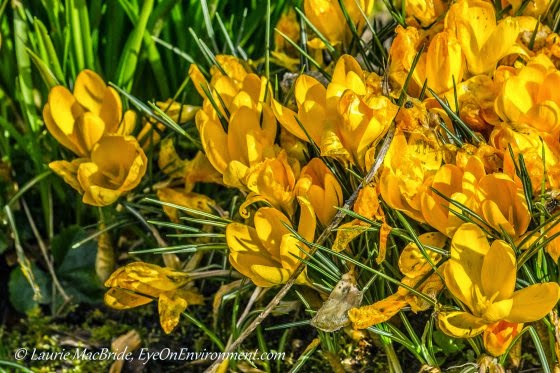
(PHOTO: Laurie MacBride)
Emerging from the Decay
Laurie MacBride in Eye on Environment writes: "I love crocuses. They pop up all over the garden every February, bright and cheerful no matter what the weather might be doing. Our yellow crocuses come first, followed a week or two later by their paler, but no less beautiful purple cousins. Both serve as a reminder that spring is just around the corner, helping to bring a smile and a lighter step after the wet, dreary months of winter…."

Senate bill would look to install crude oil pipeline across Washington state
A state senator introduced a bill today that would require Washington to look at building pipeline to move crude oil through the state. “We need to move oil across our state and there is a lot of concern about oil-by-rail,” said Sen. Michael Baumgartner, R-Spokane, in an announcement Wednesday, Feb. 25. “It’s time to look at a trans-Washington oil pipeline.” Sen. Doug Ericksen, R-Ferndale, is a co-sponsor of the bill, which would require a study of the safest pipeline route to the state’s oil refineries from the Midwest, e.g. the Bakken region in North Dakota and Montana. Samantha Wohlfeil reports. (Bellingham Herald)

Unanswered questions about oil trains
Two questions popped up Tuesday at a Washington House committee hearing on an oil train safety bill. No one could answer them. The first came from Bob Rudolph, a resident of Steilacoom, a Pierce County city where a railroad line lies next to Puget Sound. He asked: Are there any plans to deal with a possible train accident spilling oil into Puget Sound? The hearing room held railroad, oil industry and government emergency officials, none of whom could answer. The other question at the House Finance Committee hearing came from Rep. Larry Springer, D-Kirkland. He asked: If an oil train wrecked in an area crisscrossed by the jurisdictions of several local and state agencies, how long would it take to get a unified command in place? Six hours? Three days? Barnaby Dow, representing the King County Office of Emergency Management department, said the county has the resources to deal with such an emergency. But he did not know how long it would take to set up a unified command structure. John Stang reports. (Crosscut)

Anacortes refinery plan may hit another roadblock
An environmental review isn't the only challenge Shell faces with its Anacortes refinery. Betting on the long-term viability of Bakken oil is risky. Jon Talton reports. (Seattle Times) See also: Shell Puget Sound getting new general manager Tom Rizzo, site general manager of Shell Puget Sound Refinery, will leave his position March 1 and will be replaced by Shirley Yap, who comes to Anacortes with 20 years of experience. Shannen Kuest reports. (Skagit Valley Herald)

B.C. LNG projects unlikely to produce by 2020: analysts
Just a week into the new year, Natural Gas Development Minister Rich Coleman declared British Columbia’s nascent liquefied natural gas industry would “take flight” in 2015. He said he expected to see three plants in production by 2020 as the province had set the “playing field” for development of the new industry. Measures included a new LNG income tax that had been cut in half and rules that set benchmarks for greenhouse gas emissions. Last week, the federal government sweetened the pot, announcing it would introduce an accelerated capital tax allowance measure that would provide savings to companies. But despite the latest tax measure from Ottawa, there is little likelihood that three plants will be in operation by 2020, say industry analysts. Gordon Hoekstra reports. (Vancouver Sun)

New Report Shows Status of Salmon Recovery
Salmon recovery efforts in Washington are making a difference – more salmon are returning home in some areas, although significant work remains – according to a new report released by the Governor’s Salmon Recovery Office. The newly released State of Salmon in Watersheds Executive Summary and interactive Web site show Washington’s progress in trying to recover the 15 populations declared as at risk of extinction by the federal government and listed under the Endangered Species Act. The Web site puts online live data from many sources around the state and offers interactive story maps from efforts statewide. (San Juan Islander)

In Overturning Conviction, Supreme Court Says Fish Are Not Always Tangible
A narrowly divided Supreme Court on Wednesday sided with a Florida fisherman, throwing out his conviction for tossing evidence — undersize grouper — back into the Gulf of Mexico under a federal law aimed mostly at white-collar crime. The fisherman, John L. Yates, was convicted of violating the Sarbanes-Oxley Act of 2002, which imposes a maximum sentence of 20 years for the destruction of “any record, document or tangible object” in order to obstruct an investigation. In two opinions, five justices accepted Mr. Yates’s argument that fish were not the sort of tangible objects with which the law was concerned. Their analysis was based on a close reading of the words and structure of the law. Adam Liptak reports. (NY Times)

Japanese Fish Found Alive In Oregon Waters
Oregon scientists are trying to figure out how a fish, native to Japan, was pulled out of a crab pot on the Oregon coast - alive. “I’ve been thinking about it ever since I heard about it,” says John Chapman, an invasive species expert at the Hatfield Marine Science Center. He says there’s only a handful of ways the striped knifejaw could make it here: in the ballast water of a ship; someone could have dumped their aquarium into the ocean; or the fish survived under debris washed out to sea after the Japanese tsunami. Kristian Foden-Vencil reports. (OPB) And, oooh: Great white shark lurking near Washington State's Ocean Shores (CBC)

Permit to sink former warship in Howe Sound questioned in Federal Court
A lawyer for a group opposed to the sinking of a former warship off the coast of British Columbia says Environment Canada failed to adequately consider whether the vessel contained toxic chemicals. Martin Peters represents the Save Halkett Bay Marine Park Society, which is fighting in Federal Court to quash a permit that Environment Canada issued last October to the Artificial Reef Society of B.C., allowing it to sink the ship. The reef society is aiming to tow the 1960s vessel from Long Bay to Halkett Bay Marine Park on Gambier Island, where it would be sunk to create an artificial reef for divers and marine life. (Canadian Press)

Concerns raised over Barnaby fish proposal on Skagit
A proposal to restore fish passage in a section of the upper Skagit River was met with heated discussion at a public meeting Monday evening. While landowners and families that live in the potential project vicinity say they have abundant concerns and frustrations with the proposal’s direction so far, project proponents say Monday’s discussion was a good place to start. Their goal over the long term is to improve fish habitat in the area near Rockport, known as the Barnaby Reach, with the least impact to nearby residents. But for now they aim to work with the people who live there to develop a project all parties can support. Kimberly Cauvel reports. (Skagit Valley Herald)

Agencies are working to restore grizzlies to their natural range
There's an effort under way to help ensure grizzly bears don't become extinct in the North Cascades. The National Park Service and the U.S. Fish and Wildlife Service are working with other agencies on a plan to bring grizzly bears back to this part of their natural range. That includes many of Snohomish County's prominent peaks, such as Mount Pilchuck and Whitehorse Mountain. The grizzly bear restoration effort comes 40 years after the animals were listed in 1975 under the Endangered Species Act as threatened in the lower 48 states. Amy Nile reports. (Everett Herald)

Ecology: 9,600 gallons of hydrogen peroxide spilled from tank at Port of Olympia
A recent chemical spill at the Port of Olympia was larger than first reported, according to state Department of Ecology documents obtained through a public records request. The documents also shed light on the strength of hydrogen peroxide that spilled from a tank at the port’s marine terminal about noon on Jan. 28. The spill led to a large emergency response. S everal businesses within a quarter-mile of the marine terminal were evacuated; some employees were asked to stay indoors. Rolf Boone reports. (Olympian)

In Record-setting Deal, More Than 153 Acres Of Farmland Preserved In Pierce County
More than 153 acres along the Puyallup River will be preserved forever as farmland and wildlife habitat. It's the biggest agriculture conservation deal in the history of Pierce County. The farmland has been in the Matlock family since the mid-1940s. During the height of operation they grew more than one million pounds of berries a year and hired thousands of school children to help bring in the harvest and learn what a day’s work on a farm felt like. For the last 16 years, the family has leased out the land to other farmers. A few years ago, Ivan Matlock, who is now 81, was looking to get the family out of the agriculture business for good and put in a call to Forterra, a nonprofit conservation group. Jennifer Wing reports. (KPLU)

Now, your tug weather--
WEST ENTRANCE U.S. WATERS STRAIT OF JUAN DE FUCA- 232 AM PST THU FEB 26 2015
TODAY
SE WIND TO 10 KT...BECOMING E 10 TO 15 KT IN THE AFTERNOON. WIND WAVES 2 FT OR LESS. W SWELL 5 FT AT 12 SECONDS. SHOWERS LIKELY.
TONIGHT
SE WIND 5 TO 15 KT. WIND WAVES 2 FT OR LESS. W SWELL 5 FT AT 11 SECONDS. SHOWERS.
--
"Salish Sea News & Weather" is compiled as a community service by Mike Sato. To subscribe, send your name and email to msato@salishseacom.com. Your email information is never shared and you can unsubscribe at any time.

Salish Sea News: Communicate, Educate, Advocate

Follow on Twitter.

Salish Sea Communications: Truth Well Told

Friday, February 20, 2015

2/20 BC pipe, J51 & J50, deer cull, razor clamming, LIDs

Lunar New Year: Predictions for Year of the Sheep (or Ram, or Goat)
The Year of the Sheep has arrived. Or is it the ram? Or the goat? The Chinese character representing the animal of year could mean any of the above. Which leaves the animal of the year open to interpretation. Margaret Gallagher reports. (CBC)

Washington State can view spill-response plans for pipeline that B.C. cannot
Washington State has documents outlining emergency response plans for a Kinder Morgan pipeline – plans similar to those British Columbians have been told by Canada’s National Energy Board they’re not allowed to see due to security concerns. The B.C. government lost a battle with the National Energy Board in January to have greater access to Kinder Morgan’s Trans Mountain pipeline emergency response plan (ERP). Kinder Morgan had already provided B.C. with a version of the plan, but significant portions were blacked out…. A link to the Washington State ERP was available online recently at DeSmog Canada, but has since been deactivated by state officials. David Geselbracht reports. (Globe and Mail)

J51 and J50 Spotted Swimming With Their Moms
"It was an epic day on the water, what any whale watcher hopes for,” reports Naturalist Heather MacIntyre of Legacy Charters on San Juan Island. “We saw both of the newest Southern Resident orca calves. The wide range of behavior, from spunky J50 porpoising to J51 nursing, truly gives us hope.” Pacific Whale Watch Association (PWWA) crews observed the the two newest members of Jpod in Trincomali Channel north of Active Pass in British Columbia on February 19. (San Juan Islander)

SPCA firm on opposition to Oak Bay deer cull
Following a confidential meeting with Oak Bay’s deer cull contractor on Wednesday, the B.C. Society for the Prevention of Cruelty to Animals remains against trapping and killing 25 deer. Dr. Sara Dubois, the B.C. SPCA’s chief scientific officer, met with Oak Bay and Capital Regional District staff to reiterate the animal welfare group’s concerns about the cull and ensure awareness of the SPCA’s responsibility to respond if complaints of animal distress are filed. Oak Bay was granted a permit by the provincial government in January to cull 25 deer. The contractor will use large net boxes reinforced with wood and shots from a bolt gun to the deer’s head. The method has been deemed humane by the provincial wildlife veterinarian. Katherine Dedyna and Amy Smart report. (Times Colonist)

If you like to watch: All in a good night’s work: searching for razor clams 

Photographer Erika Schultz captures recreational digging for razor clams on Grayland Beach in Grays Harbor County this week. (Seattle Times)

State wants greener surfaces in future
Skagit County and area cities are gearing up for an environmentally friendly change to development rules. Under certain types of state Department of Ecology-issued stormwater permits, low-impact development techniques will become more of a requirement for new development and less of an option in 2016, as long as cost is not a burden. Kimberly Cauvel reports. (Skagit Valley Herald)

Now, your weekend tug weather--
WEST ENTRANCE U.S. WATERS STRAIT OF JUAN DE FUCA- 300 AM PST FRI FEB 20 2015
TODAY
W WIND TO 10 KT BECOMING NW 5 TO 15 KT IN THE AFTERNOON. WIND WAVES 2 FT OR LESS. W SWELL 5 FT AT 10 SECONDS. A CHANCE OF
 SHOWERS.
TONIGHT
NW WIND 10 TO 15 KT BECOMING E 5 TO 15 KT. WIND WAVES 2 FT OR LESS. W SWELL 5 FT AT 11 SECONDS.
SAT
E WIND 10 TO 20 KT. WIND WAVES 1 TO 3 FT. W SWELL 4 FT AT 12 SECONDS.
SAT NIGHT
SE WIND 10 TO 20 KT. WIND WAVES 1 TO 3 FT. W SWELL 5 FT AT 13 SECONDS.
SUN
SE WIND 10 TO 20 KT BECOMING E 10 TO 15 KT IN THE AFTERNOON. WIND WAVES 1 TO 3 FT. W SWELL 5 FT AT 16 SECONDS.
--
"Salish Sea News & Weather" is compiled as a community service by Mike Sato. To subscribe, send your name and email to msato@salishseacom.com. Your email information is never shared and you can unsubscribe at any time.

Salish Sea News: Communicate, Educate, Advocate
http://salishseanews.blogspot.com/

Follow on Twitter. http://twitter.com/#!/savepugetsound/

Salish Sea Communications: Truth Well Told
http://salishseacommunications.blogspot.com/2011/10/salish-sea-communications-truth-well.html

Wednesday, February 11, 2015

2/11 J-pod, ocean acid, tanker stop, oil future, Grays Harbor, crude export, Puyallup R., logging rules, wolf kill, Pineapple Express

Elwha 2/8 (Anne Schaffer/Coastal Watershed Institute)
Research cruise will observe J pod orcas for the next 21 days
A team of marine mammal biologists and other researchers will set out tomorrow morning on a 21-day cruise to study Southern Resident killer whales from aboard the 209-foot Bell M. Shimada research vessel. The researchers are fortunate that a satellite tag is still attached to J-27 and remains operable, making it possible to locate J pod without searching far and wide. Chris Dunagan reports. (Watching Our Water Ways)

Lawsuit over ocean acidification in Oregon, Washington gets a hearing in Seattle
A lawsuit against the federal Environmental Protection Agency over the impacts of ocean acidification on Oregon and Washington's oysters and other sea life will get a hearing Thursday (Feb. 12) in Seattle. U.S. District Court Judge James Robart will hold a motion hearing in the suit brought by the Center for Biological Diversity, a nonprofit organization that aims to protect endangered species and habitat. The center says it's challenging a 2012 decision in which the EPA ruled that Oregon and Washington's sea water meets water-quality standards meant to protect marine life despite increasing acidity. Susannah Bodman reports. (Oregonian)

Coast Guard detains tanker in Port Angeles Harbor
Coast Guard personnel has detained the oil tanker Overseas Jademar in Port Angeles Harbor over alleged safety violations. The 748-foot, double-hulled tanker was traveling along the Strait of Juan de Fuca from Malaysia to Anacortes to offload cargo at the time of an inspection Monday, the Coast Guard said Tuesday. Port state control officers from Coast Guard Sector Puget Sound said they discovered several significant safety violations during a port state control exam of the Marshall Island-flagged tanker, which will remain detained in Sector Puget Sound's captain of the port zone until the safety violations are corrected. The deficiencies found onboard included non-functioning distress signaling equipment and fire safety systems. (Peninsula Daily News)

Oil on wild ride: How will it end?
Predicting oil prices is especially tricky now because the oil market has never quite looked like this. Oil-price collapses of the past were triggered either by plummeting demand or an increase in supplies. This latest one had both. Jonathan Fahey reports. (Associated Press) See also: UBC divestment vote calls on university to end fossil fuel investment  (CBC)

A Coastal Community In Washington Contemplates Oil Terminals
Grays Harbor, with its deep-water berths and fast access to Pacific Ocean shipping routes, has all the ingredients to be a world-class port. In some respects, it already is. The Port of Grays Harbor once bustled with shipments of lumber from nearby forests. Next came cars, grains and biofuel. Now, local leaders are warming up to the idea of adding crude oil to the mix. Roughly 3 billion gallons of crude move from the Bakken oil fields of North Dakota into Washington state by rail each year. As oil companies look for the fastest and most cost-effective way to get their product to West Coast refineries, proposals for new oil facilities are popping up around the region. Ashley Ahearn reports. (EarthFix)

Groups Say Changing Crude Oil Exports Could Change Role Of Northwest Refineries
The changing composition of crude oil could have big consequences for the future of the Pacific Northwest economy. That’s one of the key ideas behind a Freedom of Information Act request filed Tuesday by three environmental nonprofit groups. It has to do with exceptions being made to the nation’s 40-year policy of banning most exports of crude oil. Seattle’s Sightline Institute has joined the Earthjustice law firm and a group called Oil Change International in asking the U.S. Department of Commerce for documentation of new exemptions quietly issued to companies including Pioneer Natural Resources Company and Royal Dutch Shell. The groups want such decisions to get more public scrutiny. Bellamy Pailthorp reports. (KPLU)

Guest: A new way to tame rivers is better for humans and salmon
WHEN the rain-swollen waters of the Puyallup River rose rapidly this winter, the town of Orting braced itself for flooding. In 2006, and again in 2009, the river topped its levees and sent people fleeing from homes, businesses and schools in cities all the way to the Port of Tacoma. But this time, something different happened. The river found new man-made channels created when the old levees were torn out and replaced with new earthen berms set farther back. The river had room to spread out, slow down, and it stayed within the levees, leaving Orting safe and dry. Joachim Pestinger writes. (Seattle Times Opinion)

State adopts new logging rule for landslide-prone areas
A new state rule approved Tuesday makes clear that anyone seeking to log in landslide-prone areas might have to provide additional scientific data to show the safety of the public is adequately protected. The state Forest Practices Board, an independent panel that regulates logging, voted unanimously to adopt the rule that's been in the works since May 2014. That's when the state Department of Natural Resources revised its timber harvest application to clarify that the agency may require additional geotechnical reports before being allowed to log near potentially unstable slopes or landforms. Commissioner of Public Lands Peter Goldmark ordered the change following the deadly Oso mudslide and Tuesday's action cements it into place. Jerry Cornfield reports. (Everett Herald)

B.C. wolf cull will likely last 5 years, deputy minister says
The point man for the British Columbia's effort to save endangered mountain caribou says a controversial wolf cull will likely be necessary for the next five years. Assistant deputy minister Tom Ethier told CBC News the 180 wolves being shot from helicopter in the South Peace and South Selkirk regions this winter are just the beginning. (CBC)

What does Pineapple Express actually mean for B.C.?
1. Pineapple Express is the catchy name for what is known to scientists as an “atmospheric river,” says SFU professor and climate researcher Karen Kohfeld. And some years — such as this year — these water-laden storms can supply as much as a quarter of B.C.’s annual rainfall in as little as seven days. 2. SFU professor John Clague, a natural hazards expert, says these storms bring potentially damaging rockfalls and debris flows that can block highways and rail lines and threaten lives when they roll over mountainous terrain. They also strip snow off local mountains. Gerry Bellett reports. (Vancouver Sun)

Now, your tug weather--
WEST ENTRANCE U.S. WATERS STRAIT OF JUAN DE FUCA- 300 AM PST WED FEB 11 2015
SMALL CRAFT ADVISORY WINDS EXPECTED THURSDAY
TODAY
SE WIND 10 TO 20 KT. WIND WAVES 1 TO 3 FT. SW SWELL 4 FT AT 11 SECONDS...BUILDING TO W 6 FT AT 13 SECONDS.
TONIGHT
E WIND 5 TO 15 KT. WIND WAVES 2 FT OR LESS. W SWELL 9 FT AT 13 SECONDS. RAIN AT TIMES.
--
"Salish Sea News & Weather" is compiled as a community service by Mike Sato. To subscribe, send your name and email to msato@salishseacom.com. Your email information is never shared and you can unsubscribe at any time.

Salish Sea News: Communicate, Educate, Advocate

Follow on Twitter.

Salish Sea Communications: Truth Well Told
Wednesday, January 28, 2015

1/28 Climate bill, train bill, oil drill, Vic sewage, wolf cull, Snake dams, canoe journeys

D & D Duck (Disney/BirdNote)
If you like to listen: The Duck in the Sailor Suit
Today, we celebrate Donald Fauntleroy Duck, first sighted in Hollywood in 1934. Despite nearly 80 years on the big screen and more than 150 films and countless comic books to his credit, Donald's plumage has never changed. Donald doesn't migrate, but resides year round in Duckburg. To our knowledge, longtime sweetheart Daisy has never made Donald a father. But he does show a strong paternal instinct for a trio of unruly nephews. While he means well, he tends to get in over his head, but he somehow overcomes the odds. And that perhaps is why Donald Duck is still loved after all these years. (BirdNote)

Washington Gov. Jay Inslee's Climate Legislation Gets A Hearing
Gov. Jay Inslee has been pushing for a “polluters pay” carbon reduction plan for the majority of his time in office. Tuesday marked the first time that plan went before the state legislature, when the House Environment Committee held a hearing of HB 1314. The bill, which was drafted by the governor’s office, has 37 sponsors, all Democrats.  It would set a cap on statewide emissions that would be gradually ratcheted down over the coming years. Facilities, fuel suppliers and electricity importers whose annual greenhouse gas emissions exceed 25,000 metric tons of carbon dioxide equivalent would have to buy emissions allowances, or credits, beginning July 1, 2016. Ashley Ahearn reports. (EarthFix)

Ericksen’s oil train bill moves one step closer to floor vote
Sen. Doug Ericksen’s oil train safety bill was approved by the committee he chairs on Tuesday, Jan. 27. It will now move to the Senate Rules Committee before possibly getting a vote on the floor. The Senate Energy, Environment and Telecommunications Committee amended Senate Bill 5057 Tuesday, to include provisions that would expand state authority to inspect rail crossings and form a workgroup that would look to see if more regulations are necessary for marine oil transport on the Columbia River and in Grays Harbor, according to an announcement from Ericksen’s office. Samantha Wohlfeil reports. (Bellingham Herald)

Obama opens Atlantic Coast to oil drilling, puts Alaskan Alaskan waters off limits
The Obama administration is opening up waters off the Atlantic Coast and Gulf of Mexico to oil and gas drilling, while putting big swaths of the Arctic waters of Alaska’s Chukchi and Beaufort Seas off-limits to oil development. A new five-year program for offshore oil and gas leasing, announced Tuesday by the U.S. Department of Interior, includes 10 sales in the Gulf of Mexico and proposes one big sale in the South Atlantic off the coastlines of Virginia, North and South Carolina and Georgia. U.S. Interior Secretary Sally Jewell, former CEO at Recreational Equipment Inc., wants to put Arctic Refuge lands and offshore waters off limits to oil and gas drilling. The “regionally tailored approach” offers a big victory for the oil industry off the East Coast and a major win for environmentalists in Alaska waters. Joel Connelly reports. (SeattlePI.Com)

Victoria mayor to chair east-side sewage group
Victoria Mayor Lisa Helps will guide east-side municipalities in development of sewage treatment options. Helps was acclaimed Tuesday as chairwoman of the newly formed east-side wastewater treatment and resource recovery select committee. Saanich Coun. Vic Derman was elected vice-chairman, beating out Saanich Mayor Richard Atwell for the position in a secret ballot. The committee was formed to allow Victoria, Saanich and Oak Bay to explore wastewater treatment options together.

Wolf cull supported by conservation group Wildsight
Kootenay-based conservation group Wildsight is backing a controversial wolf cull in the South Peace and South Selkirks that would kill 184 wolves….. [C]onservation director John Bergenske told The Early Edition's Rick Cluff…"we've run into a situation with mountain caribou in specific places." He said in the South Selkirks the population has dropped to only 18 caribou down from 49 animals in 2009. Other conservation groups have criticized the cull saying loss of habitat is at the root of the caribou's decline — and the government needs to protect land rather than kill the wolves. (CBC) See also: Oregon Wolf Population Meets Level To Consider Delisting

Local dam removal initiative finds footing in Washington D.C.
What started as a petition to be submitted to Washington state congressional representatives will soon find its way to the nation’s capital. Southern Resident Killer Whale Chinook Salmon Initiative, an organization formed recently by San Juan islanders, is petitioning for removal of the lower four Snake River dams. The group wants the dams removed to help recover the beleaguered southern resident orca population that rely heavily on Chinook salmon for food. The dams are located in Southeast Washington. The population of the southern residents sits at 78 whales, a 30-year low. “The orcas are starving,” said Sharon Grace, organizer of Salmon Initiative. “Breaching the Snake River dams is the most effective means to provide food to the orcas.” Emily Greenberg reports. (San Juan Journal)

Introducing this year’s Canoe ‘Journeys’
The 2015 Canoe Journey will actually consist of several regional Canoe Journeys. When no indigenous nation stepped forward and offered to host in 2015 after the 2014 Canoe Journey/Paddle to Bella Bella, the annual gathering of Northwest canoe cultures appeared to be headed toward a hiatus. But canoe skippers wanted to see the Journey continue without skipping a beat, and so a new approach emerged: Instead of one large Canoe Journey, there will be several Journeys hosted in various regions of the Salish Sea. Richard Walker reports. (Kingston Community News)

Now, your tug weather--
WEST ENTRANCE U.S. WATERS STRAIT OF JUAN DE FUCA- 300 AM PST WED JAN 28 2015
TODAY
LIGHT WIND...BECOMING SE 10 TO 15 KT IN THE AFTERNOON. WIND WAVES 2 FT OR LESS. W SWELL 4 FT AT 12 SECONDS. A CHANCE OF
 SPRINKLES.
TONIGHT
SE WIND 10 TO 20 KT. WIND WAVES 1 TO 3 FT. W SWELL 3 FT AT 18 SECONDS. A CHANCE OF SPRINKLES.
--
"Salish Sea News & Weather" is compiled as a community service by Mike Sato. To subscribe, send your name and email to msato@salishseacom.com. Your email information is never shared and you can unsubscribe at any time.

Salish Sea News: Communicate, Educate, Advocate

Follow on Twitter.

Salish Sea Communications: Truth Well Told

Friday, January 16, 2015

1/16 Warming, Snake dams, free Lolita, Grace Islet, safe trains, BC wolf hunt, Blyn sewer line, bird flu, Icicle farms

Overall, last year was very warm in Washington state 
Last year, Washington state experienced its fifth-hottest year in 120 years of records maintained by the National Oceanic and Atmospheric Administration. Chris Dunagan reports. (Watching Our Water Ways) See also: Scientists: Human activity has pushed Earth beyond four of nine ‘planetary boundaries’  At the rate things are going, the Earth in the coming decades could cease to be a “safe operating space” for human beings. That is the conclusion of a new paper published Thursday in the journal Science by 18 researchers trying to gauge the breaking points in the natural world. Joel Achenbach reports. (Washington Post)

Send a message to the "other" Washington: Remove The Four Lower Snake River Dams To Save The Southern Resident Killer Whale From Being Dammed To Extinction
Patagonia, Save Our Wild Salmon and the folks who made the film "DamNation" are in Washington DC the last week of January lobbying Administration officials, agencies like the Army Corps, and our NW delegation. It would be great to show the “other” Washington that the petition to save our endangered orcas by removing the damn dams had at least 10,000 supporters. Sign the petition and keep in touch on Facebook.

New blog: Having A Drink With Bill Gates
“Starting out a new year writing with a blank sheet of paper requires examining the kinds of things I’d enjoy writing about. Oh, there’s the obligatory flogging of elected officials and regulators, black-hatted oil and coal and railroad guys, obscene profit-taking developers and bankers. But we’ll save that for another time because today, at the end of the first week of our national Congressional session and our state legislative session, here are three stories I’d rather tell you about:...”

March for Orcas: Free a Whale From Solitary Confinement
Brenda Peterson writes: "This Saturday there are worldwide marches for the wild-born Lolita, the orca who has spent 44 years in captivity in a Miami Seaquarium, performing three shows a day for us -- as if we have not grown up…. Join the Miracle March to Free Lolita, including one on Alki Beach, in Seattle. [March for about a mile along Alki, starting at 1:15 pm at Alki Statue of Liberty Plaza, 61st/Alki] (Huffington Post)

Grace Islet controversy ends as B.C. steps in to buy land
A controversial development on Grace Islet, the site of a a First Nations burial ground, has been stopped after the province stepped in with a plan to purchase the land. The islet, which is located just off Saltspring Island, B.C., drew attention last year as the private owner began building a house on land that contains at least 16 ancient burial cairns. According to a government statement, the province has partnered with local First Nations and the Nature Conservancy of Canada to create a "framework agreement" to purchase the land from the current owner. (CBC)

Oil train safety draws quick attention in Olympia
Two competing oil-train safety bills have come into quick play in the Washington Senate. A Republican measure, proposed by Sen. Doug Ericksen of Ferndale, received a hearing on Thursday before the Senate Environment, Energy & Telecommunications Committee, which he chairs. Also on Thursday, Democratic Sens. Christine Rolfes of Bainbridge Island and Kevin Ranker of Orcas Island introduced a bill to cover what Gov. Jay Inslee wants to do. John Stang reports. (Crosscut)

People warned to avoid water at Titlow Beach after sewage spill
Health officials suggested Thursday that people stay out of the water at Tacoma’s Titlow Beach after a sewage spill there. It wasn’t immediately clear where the sewage came from, or when the spill happened. Alex Krell reports. (Tacoma News Tribune)

B.C. to hunt wolves by helicopter in order to save endangered mountain caribou herds
Government-contracted hunters were in helicopters over two regions of British Columbia on Thursday as the province launched a controversial culling program that will sacrifice as many as 184 wolves this year alone in an attempt to save endangered caribou. The province announced a plan to immediately start killing wolves during the next four years in the South Peace region, located in northern B.C., and in the South Selkirk region along the border with Washington state and Idaho. (Vancouver Sun)

New wastewater line may fuel resort plans near Blyn casino
A humble wastewater main line could pour revenue into the coffers of both the Jamestown S’Klallam tribe and the city of Sequim. Building the 6.5-mile-long pipe may pump new life into the tribe’s dream of a resort near 7 Cedars Casino and drain off some of the city’s excess sewage-treatment capacity. The project will cost the tribe $8.3 million, according to the city. The resort was estimated to cost $7.5 million in 2010, when the tribe temporarily shelved the idea. James Casey reports. (Peninsula Daily News)

Avian Flu Detected In Oregon Wild Duck
Wildlife officials in Oregon say a mallard duck shot by a hunter near Eugene has tested positive for avian flu.   The strain of influenza (H5N2) is relatively common in Europe and Asia and has not caused any human sickness.  The flu does not appear to cause illness in wild waterfowl, which have evolved with the virus.  But it could kill falcons and hawks.   The real concern, though, is an outbreak in domesticated birds. Jes Burns reports. (EarthFix) See also: Backyard poultry owners in Whatcom County urged to get their flocks tested for bird flu

Cooke likely to look at Icicle salmon farms
The acquisitive Canadian salmon, seabass and seabream farmer and processor Cooke Aquaculture is likely to be interested in up-for-grabs Icicle Seafoods’ salmon farms, located on the West Coast of the US, where the Canadian firm is not present, sources said. With private equity group Paine & Partners looking to sell US harvester and processor Icicle, which it acquired in 2007, the seafood sector is rife with speculation as to whether Icicle will be sold as a whole or broken up into its various pieces…. The business produces over 6,000 metric tons of salmon a year in Puget Sound, with farms at Bainbridge Island, Cypress Island, Port Angeles and Hope Island, Washington. Tom Seaman reports. (Undercurrent News)

Lynden-based fishing boat owner fined $11,000 for spill
The Lynden-based owner of a fishing vessel has been fined $11,000 because one of its boats spilled diesel into Elliott Bay in Seattle, the Washington state Department of Ecology announced Thursday, Jan. 15. The Sept. 13, 2013, spill occurred while the Bristol Leader was refueling from a tank truck at Terminal 91. The spill totaled 181 gallons. Kie Relyea reports. (Bellingham Herald)

Now, your weekend tug weather--
WEST ENTRANCE U.S. WATERS STRAIT OF JUAN DE FUCA- 244 AM PST FRI JAN 16 2015
SMALL CRAFT ADVISORY IN EFFECT UNTIL NOON PST TODAY
TODAY
W WIND 15 TO 25 KT...EASING TO 10 KT IN THE AFTERNOON. WIND WAVES 2 TO 4 FT...SUBSIDING TO 1 FT OR LESS IN THE AFTERNOON.
 W SWELL 12 FT AT 12 SECONDS...SUBSIDING TO 9 FT AT 13 SECONDS IN THE AFTERNOON. A CHANCE OF SHOWERS IN THE MORNING.
TONIGHT
S WIND 10 KT...BECOMING SE 10 TO 20 KT AFTER MIDNIGHT. WIND WAVES 1 FT OR LESS...BUILDING TO 1 TO 3 FT AFTER MIDNIGHT. W
 SWELL 9 FT AT 13 SECONDS.
SAT
SE WIND 15 TO 25 KT...EASING TO 5 TO 15 KT IN THE AFTERNOON. WIND WAVES 2 TO 4 FT...SUBSIDING TO 2 FT OR LESS IN THE AFTERNOON.
 W SWELL 7 FT AT 13 SECONDS. RAIN.
SAT NIGHT
SE WIND 5 TO 15 KT...RISING TO 15 TO 25 KT AFTER MIDNIGHT. WIND WAVES 2 FT OR LESS...BUILDING TO 2 TO 4 FT AFTER
 MIDNIGHT. W SWELL 8 FT AT 13 SECONDS.
SUN
SW WIND 20 TO 25 KT...BECOMING 20 TO 30 KT IN THE AFTERNOON. WIND WAVES 3 TO 5 FT. W SWELL 9 FT AT 13 SECONDS...BUILDING TO
 11 FT AT 11 SECONDS IN THE AFTERNOON.
--
"Salish Sea News & Weather" is compiled as a community service by Mike Sato. To subscribe, send your name and email to msato@salishseacom.com. Your email information is never shared and you can unsubscribe at any time.

Salish Sea News: Communicate, Educate, Advocate

Follow on Twitter.

Salish Sea Communications: Truth Well Told