Tuesday, June 23, 2015

6/23 Stink bug, coal port, orcas, Squalicum Cr., ocean watch, sewer pot, saving salmon


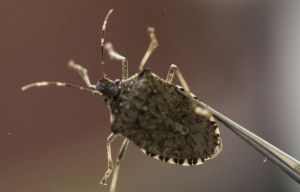
Stink bug  (Steve Ringman/The Seattle Times)
Farmers worry about harvest as stink bugs make a mess in NW region
On a hot June day, Joe Beaudoin ducked into the shade of his orchard to check for peaches with shallow dimples — the telltale signs left by the brown marmorated stink bug. This invader from Asia has a formidable appetite for the berries, tree fruits and vegetables that Beaudoin grows on his 80-acre farm. This spring, even before the trees sprouted all their leaves, the bug already had begun to pierce the tiny peaches to suck out juice. Hal Bernton reports. (Seattle Times)

Panel: Coal port would lift Whatcom economy
People at an invitation-only meeting hosted by pro-business groups on Monday, June 22, heard a message most of them agreed with. If the growth of Whatcom County’s post-recession economy is going to catch up to the rest of the state, it would help if a proposed 54 million-metric-ton export terminal for coal and other bulk goods was built at Cherry Point. That was the message during a panel discussion at the meeting held in Fox Hall at Hampton Inn…. U.S. Rep. Rick Larsen, D-Everett, one of the speakers at the luncheon, reiterated his support for Gateway Pacific Terminal, saying it was one solution to Whatcom’s weak employment numbers. Ralph Schwartz reports. (Bellingham Herald)

Burrard Inlet visited by killer whales, just in time for Aquarium app announcement
A pod of killer whales has been spotted in Burrard Inlet. The group of at least four orcas was first reported off the Stanley Park Seawall Monday morning, and has since been seen crossing back under the Lions Gate Bridge and out of the inlet. The black and white visitors came just as the Vancouver Aquarium announced a new smartphone app meant to help marine mammal scientists learn more about whales, dolphins and sea turtles on the B.C. coast. The B.C. Cetacean Sightings Network, an aquarium conservation program, launched its new WhaleReport app on Monday, allowing boaters and ecotourists to report sightings with the touch of a button. Users can view a species identification guide and then upload photos of the animal and automatically enter accurate GPS. Bethany Lindsay reports. (Vancouver Sun)

Project to move Squalicum Creek will help water quality
A $1.8 million project will re-route Squalicum Creek around Sunset Pond to improve water quality and otherwise make the creek more habitable for salmon and other wildlife. The project is expected to start July 6. It will put the creek into 5,100 feet of new stream channel to bypass Sunset Pond. Squalicum Creek doesn’t meet state standards for water quality and is listed as impaired by the Washington state Department of Ecology. Problems include fecal coliform bacteria, too-warm temperatures and dissolved oxygen levels that are inadequate. Declining salmon stocks also are a concern. Kie Relyea reports. (Bellingham Herald)

B.C. ocean observation project useful for oil industry: report
A subsea observation system being built by Ocean Networks Canada at the University of Victoria lets Girl Guides explore the ocean floor and will let scientists detect underground earthquakes or predict tsunamis. The federal government has sunk more than $30-million into the project, and not just for pure science: An internal government document shows Ottawa is interested primarily because it can help “responsible resource development.” In particular, it says, information from the Smart Oceans project could support the development of pipelines linking the Alberta oil sands to the Pacific coast. Dene Moore reports. (Globe and Mail)

Feds Paying for Sewer Analysis of Pot Usage in Washington
The federal government is chipping in money for a three-year pilot study using sewage samples to determine levels of marijuana use in two Washington cities — research that could help answer some key questions about pot legalization, the University of Puget Sound announced Monday. The National Institutes of Health has agreed to pay $120,000 so Dan Burgard, an associate chemistry professor, can conduct a three-year study that will look at how per-capita pot use changed after Washington's first legal pot shops opened last July. The research, based on methods first developed by scientists in Italy in 2005, involves analyzing wastewater samples for levels of metabolites produced when the body processes drugs. Gene Johnson reports. (Associated Press)

How to save wild salmon with a fork and knife
If we demand wild salmon on our plates, we are demanding healthy habitat where wild salmon can thrive in perpetuity. Mark Titus and Tom Douglas opine. (Seattle Times)

Now, your tug weather--
WEST ENTRANCE U.S. WATERS STRAIT OF JUAN DE FUCA- 900 PM PDT MON JUN 22 2015
TONIGHT
W WIND 5 TO 15 KT. WIND WAVES 1 OR 2 FT. W SWELL 2 FT AT 15 SECONDS.
TUE
W WIND 5 TO 15 KT. WIND WAVES 1 OR 2 FT. W SWELL 2 FT AT 14 SECONDS.
TUE NIGHT
W WIND 10 TO 20 KT. WIND WAVES 1 TO 3 FT. W SWELL 2 FT AT 15 SECONDS.

--
"Salish Sea News & Weather" is compiled as a community service by Mike Sato. To subscribe, send your name and email to msato@salishseacom.com. Your email information is never shared and you can unsubscribe at any time.

Salish Sea News: Communicate, Educate, Advocate

Follow on Twitter. http://twitter.com/#!/savepugetsound/

Salish Sea Communications: Truth Well Told


Monday, June 22, 2015

6/22 Spotted owl, Dungeness crab, Brian Cladoosby, Sally Lider, BC pipe, toxic algae, pumpout

Lapland longspur (BirdNote)
If you like to listen-- The Longest Day of the Year
On the summer solstice, birds nesting near Juneau, Alaska take advantage of almost 18 1/2 hours between sunrise and sunset. This day in south Texas is considerably shorter, so the Altamira Oriole has only 14 hours to sing. Seattle's Song Sparrows see 16 hours of daylight; Sacramento's only 15. Birds nesting north of the Arctic Circle have six weeks with almost 24 hours of daylight every day. So this Lapland Longspur has a work-day that's about as long as it gets.  (BirdNote)

25th anniversary of spotted owl listing: fewer owls, less timber industry
The heated debate over whether to curtail the logging of old-growth forests to protect the northern spotted owl was at full throttle when the federal government declared the bird a threatened species June 22, 1990. At the time, environmentalists worried that the federal plan would fall short of saving the spotted owl.  Timber interests worried that a wave of environmental rules would gut the Olympic Peninsula’s wood-products industry and devastate communities. Twenty-five years later, the effects of the landmark decision can be seen in the reams of economic, industry and environmental data routinely gathered by state and federal governments. The outcomes are by turns expected, disheartening and surprising. George Erb reports. (Peninsula Daily News)

Record year possible for Dungeness crab enthusiasts
Signs indicate numbers up to 3 million pounds of crab could exceed last year’s record harvest. Mark Yuasa reports. (Seattle Times)

Swinomish leader Brian Cladoosby fights for salmon and sovereignty
From his days as a scrappy ballplayer for La Conner High, the Swinomish chairman has achieved national prominence as casinos fuel tribal wealth and influence Brian J. Cantwell reports. (Seattle Times)

Sally Lider, face of city’s environmental education programs, retiring July 2
After 24 years, the face of environmental education in the City of Edmonds – and the founder of annual city-sponsored Bird Fest — is retiring. Sally Lider was first hired by the city in 1991 as a part-time beach ranger, a job that fit her background and interests. (My Edmonds News)

District votes against pipeline plan
Add the District of North Vancouver to the list of communities that have formally opposed Kinder Morgan's application to twin the Trans Mountain pipeline to Burrard Inlet. District council passed a motion similar to ones passed by the councils in Burnaby and Vancouver, following a lengthy presentation from staff Monday night on the environmental, health and economic concerns raised by increased tanker traffic or a potential spill at Westridge Terminal. Brent Richter reports. (North Shore News)

Toxic algae bloom west of Island threatens salmon
A toxic algae bloom west of Vancouver Island has prompted shellfish harvest bans and may affect salmon stocks, federal scientists say.The bloom stretches along the Pacific coast from California to B.C., making it possibly the largest one on record in the area, scientists have said. Amy Smart reports. (Times Colonist)

Vancouver offers free sewage pump-out at civic marinas
In an effort to reduce high E. coli bacteria levels in English Bay the Vancouver park board is opening up the sewage pump-out stations at its two False Creek civic marinas to all boaters The pump-out stations at Burrard Civic and Heather Street marinas were free for marina members, but other boaters were charged a $10 fee to pump out their on-board sewage holding tanks. But on Friday at the launch of the board’s Clean Water Campaign, park board vice-chair Sarah Kirby-Yung announced that free pump out will be available to all pleasure boat users. Gerry Bellett reports. (Vancouver Sun)

Now, your tug weather--
WEST ENTRANCE U.S. WATERS STRAIT OF JUAN DE FUCA- 830 PM PDT SUN JUN 21 2015
MON
SW WIND TO 10 KT. WIND WAVES 1 FT OR LESS. SW SWELL 2 FT AT 18 SECONDS.
MON NIGHT AND TUE
W WIND TO 10 KT. WIND WAVES 1 FT OR LESS. SW SWELL 3 FT AT 15 SECONDS.

--
"Salish Sea News & Weather" is compiled as a community service by Mike Sato. To subscribe, send your name and email to msato@salishseacom.com. Your email information is never shared and you can unsubscribe at any time.

Salish Sea News: Communicate, Educate, Advocate

Follow on Twitter.

Salish Sea Communications: Truth Well Told


Friday, June 19, 2015

6/19 Oil transport, oil trains, US Open, cleanup, sturgeons, rockfish, Vic sewer, goose cull

 Play Chambers Bay (Mike Ehrmann/Getty Images/CBS)
Increasing oil transport threatens orcas with extinction, Vancouver conference told
Increased transport of oil in the Salish Sea — including from the planned expansion of Kinder Morgan’s Trans Mountain pipeline — is putting endangered southern resident killer whales at risk of extinction from a spill, a Washington state official said Thursday. Don Noviello, a biologist with the Washington department of fish and wildlife, said the worst-case scenario would be a spill occurring when three pods get together to form a “superpod” representing the majority of the estimated population of 80. “They’re on the brink and need all the protection they can get,” he told the Clean Pacific conference, a spill-prevention and response convention in Vancouver. “One ill-timed oil spill could be the event that pushes this population over the brink to extinction. Larry Pynn reports. (Vancouver Sun)

Battle Over New Oil Train Standards Pits Safety Against Cost
The federal government's new rules aimed at preventing explosive oil train derailments are sparking a backlash from all sides. The railroads, oil producers and shippers say some of the new safety requirements are unproven and too costly, yet some safety advocates and environmental groups say the regulations aren't strict enough and still leave too many people at risk. David Schaper reports. (NPR)

Environmentalist Group Plans To Protest Chambers Bay U.S. Open
….Besides the criticism about the actual layout of the golf course, much fodder has been drawn from the fact that freight trains run through the golf course on a popular route along the Puget Sound. Reports have stated that an average of 60 trains per day make their way through the course and will continue to do so at their usual rate throughout the duration of one of golf’s biggest tournaments. While this might be quirky of flat out funny for some, it’s troublesome and a major point of contention for others. The People’s Climate Action Fleet, an environmentalist group based in Seattle, Washington, have organized a protest, specifically targeting the trains that carry oil and other potentially damaging materials through the the area. The protest is scheduled to take place in the Puget Sound on Sunday, June 21. Bryan Altman repots. (CBS)

If you like to watch: Western Canada Marine shows how it cleans up oil spills in B.C.  
There have already been two oil spills this year in and around B.C., and the unfortunate reality is it will likely happen again.  CBC got a look at Western Canada Marine, the company commissioned with cleanup of environmentally dangerous slicks, as it showed off some of its technology. (CBC) See also: Anacortes refineries practice oil spill response  Kimberly Cauvel reports. (Skagit Valley Herald)

Sturgeon scientist battles huge fish in Fraser River to implant tracking device
You might call Erin Stoddard the surgeon to the sturgeon. The B.C. government biologist often finds himself chest deep in the mighty Fraser River, scalpel in hand, carrying out operations on live fish weighing hundreds of kilograms. It's all part of his job solving the mysteries of the province's largest freshwater sport fish. The white sturgeon and its relatives are remarkable survivors. They've endured 200 million years of global climate change and continue to eke out an existence in the face of serious modern day threats. Greg Rasmussen reports. (CBC)

Research on rockfish in Puget Sound reveals intriguing findings
Chris Dunagan writes; "This week’s announcement that the coastal population of canary rockfish had dramatically rebounded got me to wondering what new information might be coming from research on the threatened and endangered rockfish of Puget Sound. Dayv Lowry, research scientist at the Washington Department of Fish and Wildlife, shared some intriguing new information about Puget Sound rockfish that could link into the coastal population. In fact, if limited genetic findings hold up, a delisting of one type of Puget Sound rockfish could be in order." (Watching Our Water Ways)

Now the westside: 20 potential sewage-plant sites selected
Twenty “technically feasible” sewage treatment sites on the westside were identified on Thursday by Esquimalt Mayor Barb Desjardins and Colwood Mayor Carol Hamilton, who now want the public to weigh in on the options. The mix of private, public and First Nations properties includes two sites in Langford, 12 in Colwood, one in View Royal, four in Esquimalt and one on Esquimalt First Nations property. Bill Cleverley reports. (Times Colonist)

Capital region’s goose cull a first — but probably not the last
This month’s planned cull of 250 resident Canada geese represents a first for Vancouver Island and the Lower Mainland, Capital Regional District directors have been told. But if some of them have their way, it won’t be the last. Some are so keen to clear Canada geese from parks and playing fields, they are willing to use gas tax grants to pay for culls. Bill Cleverley reports. (Times Colonist)

Now, your weekend tug weather--
WEST ENTRANCE U.S. WATERS STRAIT OF JUAN DE FUCA- 230 AM PDT FRI JUN 19 2015
TODAY
W WIND 5 TO 15 KT. WIND WAVES 1 OR 2 FT. W SWELL 2 FT AT 9 SECONDS. CHANCE OF SHOWERS.
TONIGHT AND SAT
W WIND 5 TO 15 KT. WIND WAVES 1 OR 2 FT. W SWELL 2 FT AT 8 SECONDS.
SAT NIGHT
W WIND 10 TO 20 KT. WIND WAVES 1 TO 3 FT. W SWELL 3 FT AT 5 SECONDS.
SUN
VARIABLE WIND 10 KT. WIND WAVES 1 FT. W SWELL 3 FT AT 5 SECONDS.

--
"Salish Sea News & Weather" is compiled as a community service by Mike Sato. To subscribe, send your name and email to msato@salishseacom.com. Your email information is never shared and you can unsubscribe at any time.

Salish Sea News: Communicate, Educate, Advocate

Follow on Twitter.

Salish Sea Communications: Truth Well Told

Thursday, June 18, 2015

6/18 Pope's revolution, seastars, Shell drill, geoducks, killer whales, Orca Network, restore Shannon Pt.

Buzzy the hummingbird (Laurie MacBride)
Time for Buzzing Off
Laurie MacBride in Eye on Environment writes: "It seems quieter around our house than usual, and I think I know the reason: in the last day or two, Buzzy and the other adult male Rufous hummingbirds appear to have taken off on their southern journey. They’ll be heading over to the Rockies, where they’ll tank up on wildflower nectar, then on to Mexico – completing a 4000+ mile-long, clockwise circuit of the continent…"

Pope urges revolution to save Earth, fix ‘perverse’ economy
Pope Francis called Thursday for a bold cultural revolution to correct what he calls the “structurally perverse” economic system of the rich exploiting the poor that is turning Earth into an “immense pile of filth.” In a sweeping manifesto aimed at spurring action in U.N. climate negotiations, domestic politics and everyday life, Francis explains the science of global warming, which he blames on an unfair, fossil fuel-based industrial model that he says harms the poor most. Citing Scripture and past popes’ and bishops’ appeals, he urges people of all faiths and no faith to undergo an awakening to save God’s creation for future generations. It’s an indictment of big business and climate doubters alike. Nicole Winfield, Rachel Zoll and Seth Borenstein report. (Associated Press)

Starfish Are Still Disappearing From Northwest Waters
A couple of years ago, divers in Puget Sound began to notice something odd: Starfish were disappearing. The sea creatures would get sores and then melt into piles of mush. Sea star wasting syndrome is a gruesome disease and it spread to starfish all along the West Coast. Scientists still don’t know a lot about it. Katie Campbell, a reporter for EarthFix and KCTS9, says that although scientists have isolated the cause, the creatures continue to die.  Katie Campbell and Isolde Raftery report. (EarthFix)

Greenpeace protesters confront Shell Arctic drilling rig off B.C. coast
Protests against Royal Dutch Shell's Arctic drilling program continued Wednesday, with Greenpeace activists confronting the drilling rig off the coast of B.C. on its trip north from Seattle, Wash. First Nations activist Audrey Siegl, who lives in Vancouver, wore traditional Musqueam regalia while drumming in front of the 90-metre tall rig, according to photos and video provided by Greenpeace. (CBC)


Washington state auctions deepwater quotas amid wider geoduck farming push
The Washington State Department of Natural Resources this month has auctioned 14 quotas for geoduck farming, the Seattle Globalist reported. The deepwater plots are on privately owned areas around Central Puget Sound, the Hood Canal and Hood Head East, the news outlet reported. The industry has also been attempting to increase harvests on private tidelands, and this year is the first time that state-owned lands will be leased for aquaculture, the news outlet reported. (Undercurrent News)

'Of Orcas and Men' review: Killer whales could teach us a few things
If you live in Seattle, you may be peripherally aware that a fellow form of intelligent life is somewhere out on Puget Sound, communicating away while dodging the ferries, freight ships and other maritime traffic. But you probably won't know much more about Orcinus orca than that. David Neiwert's passionate, informative "Of Orcas and Men: What Killer Whales Can Teach Us" fills some of the gaps. Michael Upchurch reviews. (Oregonian)

Whidbey Audubon honors orca protectors
Howard Garrett and Susan Berta received Whidbey Audubon’s Excellence Award at the group’s biennial recognition dinner June 11 in Coupeville. Garrett and Berta founded Orca Network to raise awareness and promote conservation of Pacific Northwest whales. Orca Network programs include the increasingly popular Whale Sighting Network and Central Puget Sound Marine Mammal Stranding Network. (Whidbey News Times)

Orcas in Thurston County’s Eld Inlet getting hassled by boaters
Over the last few months, Kim Merriman has seen orcas frequently from her Eld Inlet home — and she’s also seen plenty of people crowding them. “People are excited to see the orcas, and when there’s one or two boats that’s a different story,” said Merriman, who’s lived on the inlet for 20 years. “But then there’s 10 or 15 or 20, and it gets hard for the (killer whales).” Boaters, kayakers and paddle boarders are effectively trapping the orcas in the inlet at times, or separating them. Merriman said this problem occurs nearly every weekend when the killer whales come to visit, since many people are out on the water. Natalie Deford reports. (Tacoma News Tribune)

Group documents intertidal life in preparation for Shannon Point restoration project
What is left exposed when the tide rolls out may not look like much more than damp sand and slimy rocks, but an abundance of sea life can be found there. Within about 2 1/2-square-feet of beach at Shannon Point on Wednesday, Michael Kyte and Pattie Hutchins found various types of marine life, including a sea star no more than 2 1/2 inches wide…. The Skagit Marine Resources Committee, under the Northwest Straits Foundation, plans to remove the riprap from along the beach. Made of large, granite boulders, the shoreline armoring stands out from the rest of the scenery. Kimberly Cauvel reports. (Skagit Valley Herald)

Now, your tug weather--
 WEST ENTRANCE U.S. WATERS STRAIT OF JUAN DE FUCA- 300 AM PDT THU JUN 18 2015
TODAY
W WIND 5 TO 15 KT RISING TO 10 TO 20 KT IN THE AFTERNOON. WIND WAVES 1 TO 3 FT. SW SWELL 2 FT AT 12 SECONDS. A CHANCE OF
 SHOWERS IN THE AFTERNOON.
TONIGHT
W WIND 10 TO 20 KT. WIND WAVES 1 TO 3 FT. W SWELL 3 FT AT 9 SECONDS. A CHANCE OF SHOWERS.
--
"Salish Sea News & Weather" is compiled as a community service by Mike Sato. To subscribe, send your name and email to msato@salishseacom.com. Your email information is never shared and you can unsubscribe at any time.

Salish Sea News: Communicate, Educate, Advocate

Follow on Twitter.

Salish Sea Communications: Truth Well Told

Wednesday, June 17, 2015

6/17 Rockfish recover, Pope's climate, Shaw nun, BC LNG, B'ham coal cost, green action, SeaAquarium


Canary rockfish (Oceana/Seattle Times)
Canary rockfish, petrale sole rebounding off West Coast
Populations of canary rockfish and petrale sole off the West Coast  have rebounded from low levels and are now considered rebuilt, according to a statement released by the Pacific Fishery Management Council. The canary rockfish is a long-lived species that was declared overfished in 2000 and was not expected to be rebuilt until 2057. Fishery managers credit good ocean conditions and conservation efforts with a six-fold increase in the canary populations. The petrale sole was declared overfished in 2011, and its harvest limit was cut by half. It was rebuilt a year ahead of schedule, according to the council statement. Hal Bernton reports. (Seattle Times)

Pope Francis warns of destruction of Earth's ecosystem in leaked encyclical
Pope Francis will this week call for changes in lifestyles and energy consumption to avert the “unprecedented destruction of the ecosystem” before the end of this century, according to a leaked draft of a papal encyclical. In a document released by an Italian magazine on Monday, the pontiff will warn that failure to act would have “grave consequences for all of us”. Francis also called for a new global political authority tasked with “tackling … the reduction of pollution and the development of poor countries and regions”. His appeal echoed that of his predecessor, pope Benedict XVI, who in a 2009 encyclical proposed a kind of super-UN to deal with the world’s economic problems and injustices. Stephanie Kirchgaessner and John Hooper report. (Guardian) Leak of Pope’s Encyclical on Climate Change Hints at Tensions in Vatican Jim Yardley and Elisabetta Povoledojune report. (NY Times)

Prayer and Work: the life of a Benedictine nun on Shaw Island
On Shaw Island, the smallest and least populated San Juan Island reached by ferry, is Our Lady of the Rock, a monastery and self-sustaining farm. It's home to seven Benedictine nuns who wear the traditional, long black and white habit and spend much of their days tending to their 300 acres, raising animals and praying. Now let's clear one thing up straight away: these are not the nuns in the brown habits, and orange safety vests, who worked the ferry dock for 27 years. Those were the Franciscan nuns, and in 2004 the four remaining retired and left Shaw Island for Oregon. But Our Lady of the Rock, established in 1977, stands solid, despite the fact that the average age of the nuns is 70.Rachel Belle reports. (My Northwest/KIRO)

Shell-led B.C. LNG project nears environmental approval
A liquefied natural gas consortium led by Royal Dutch Shell PLC is expected to receive B.C. environmental approval within days as the group positions itself to be one of the first LNG exporters in the province. LNG Canada’s plans to export from Kitimat are being reviewed by two B.C. cabinet ministers, who are slated to announce by Monday whether they will grant a provincial environmental assessment certificate. Brent Jang reports. (Globe and Mail)

Cherry Point coal terminal study questions economic value
If a proposed coal terminal is built at Cherry Point, it could end up impeding the economy in Bellingham and Whatcom County, according to a new report commissioned by Communitywise Bellingham. The report got a warm reception during a presentation by one of its authors Tuesday, June 16, in the Leopold retirement home’s ballroom. It was not so well received by the proponents of the Gateway Pacific Terminal, who dismissed the report as biased “advocacy research.” Ralph Schwartz reports. (Bellingham Herald)

Coal ports: Will they cost communities their “second paycheck”?  …. Opponents tossed some new terminology on the table Tuesday — the term “Second Paycheck.” Its roots are in the region, having been coined by University of Oregon economist Ed Whitelaw and two colleagues five years ago. It was re-introduced  by David Eichental, a managing director of PFM – a large national consultant based in Philadelphia – who conducted an economic impact study on the coal ports …. The term refers to quality of life amenities such as outdoor recreation, clean air and water, scenic vistas, local food and culture, and livable neighborhoods. These amount to a “paycheck” that can’t be cashed at your bank. However, they are so important to people that they accept  lower-paying jobs or small, expensive living spaces in order to experience the benefits of a particular place. Floyd McKay reports. (Crosscut)

Green Activism Really Does Pay Off
In states with strong environmental movements, greenhouse gas emissions are inching lower. Social scientist Thomas Dietz and Kenneth Frank, professor of sociometrics at Michigan State University, have teamed up to find a way to tell if a state jumping on the environmental bandwagon can mitigate other human factors—such as population growth and economic affluence—that are known to hurt the environment. Sue Nichols blogs. (Futurity)

Seattle Aquarium rides $1M wave of success in 24th-annual 'Splash!' fundraiser
Seattle Aquarium’s 24th-annual fundraiser made quite a splash, raising more than $1 million to help in the conservation of the marine environments of the waters of Puget Sound. Calling it a fundraising milestone, Seattle Aquarium President and CEO Bob Davidson thanked the more than 600 donors to the “Splash!” fundraiser for their support. Patti Payne reports. (Puget Sound Business Journal)

Now, your tug weather--
WEST ENTRANCE U.S. WATERS STRAIT OF JUAN DE FUCA- 300 AM PDT WED JUN 17 2015
TODAY
W WIND TO 10 KT...BECOMING NW 10 TO 20 KT IN THE AFTERNOON. WIND WAVES 1 TO 3 FT. W SWELL 3 FT AT 9 SECONDS.
TONIGHT
W WIND 10 TO 20 KT. WIND WAVES 1 TO 3 FT. SW SWELL 3 FT AT 13 SECONDS.
--
"Salish Sea News & Weather" is compiled as a community service by Mike Sato. To subscribe, send your name and email to msato@salishseacom.com. Your email information is never shared and you can unsubscribe at any time.

Salish Sea News: Communicate, Educate, Advocate

Follow on Twitter.

Salish Sea Communications: Truth Well Told

Tuesday, June 16, 2015

6/16 Shell drill, toxic algae, 'fire rainbow,' BC spills, Vic sewer, shellfish farming, drought, Kply cleanup, ESA

Polar Pioneer departs. (KING)
24 arrested trying to block Arctic oil rig's departure  Activists formed a blockade of kayaks Monday around a terminal in this city's port to attempt keep an oil rig destined for Arctic waters from moving. Coast Guardsmen detained two dozen protesters because they violated the safety zone around the rig, a spokesman said. One was Seattle City Councilman Mike O'Brien. Seattle City Hall said O'Brien was booked and fined $250. He was later released. (Associated Press/USA Today) See also: Should the Puget Sound region allow more coal trains and terminals?  Emily Parkhurst reports. (Puget Sound Business Journal)

Toxic algae bloom might be largest ever
A team of federal biologists set out from Oregon Monday to survey what could be the largest toxic algae bloom ever recorded off the West Coast. The effects stretch from Central California to British Columbia, and possibly as far north as Alaska. Dangerous levels of the natural toxin domoic acid have shut down recreational and commercial shellfish harvests in Washington, Oregon and California this spring, including the lucrative Dungeness crab fishery off Washington’s southern coast and the state’s popular razor-clam season. At the same time, two other types of toxins rarely seen in combination are turning up in shellfish in Puget Sound and along the Washington coast, said Vera Trainer, manager of the Marine Microbes and Toxins Programs at the Northwest Fisheries Science Center in Seattle. Sandi Doughton reports. (Seattle Times)

'Fire Rainbows' dot the skies over Puget Sound region
The thin, wispy clouds floating around the Puget Sound region Monday usually do nothing more than give the blue skies a little bit of character. But today, they were giving the skies a little bit of color. We had a number of reports of rainbow arcs in the sky -- both in a circular halo around the sun and just lighting up some clouds near the horizon -- a circumhorizontal arc, otherwise known informally as "fire rainbows." Scott Sistek reports. (KOMO)

Oil spills on land to have provincial response team, says B.C. government
Plans are in the works to create a quicker, more coordinated response to land-based hazardous spills in British Columbia. Provincial Environment Minister Mary Polak says the province is working on creating an organization that will be able to immediately respond to all land-based spills with trained workers and proper equipment. The minister says the provincially certified, industry-funded organization will be able to take action even before authorities have identified who's responsible for the spill and its clean up. (Canadian Press)

Fuel spill in Vancouver's False Creek triggers cleanup
Coast guard officials now say as much as 5,000 litres of diesel fuel may have spilled into Vancouver's False Creek near Fisherman's Wharf on Sunday night. Original estimates had put the spill as large as 1,000 litres, but shortly after 10 a.m. PT, coast guard spokesman Jeff Brady revised the estimate to somewhere between 500 and 5,000 litres. The spill was first reported to the Canadian Coast Guard around 10:30 p.m. PT Sunday. (CBC)

Next up for sewage: Westside options considered
In two weeks, people will have another chance to weigh in and pare down a list of potential sites for at least secondary sewage treatment. Through public consultation involving about 2,000 people, a list of 47 potential sites on the east side of the region — in Victoria, Saanich and Oak Bay — was narrowed last week to 27. Of the remaining sites, 19 garnered a mixed level of support in public consultations and surveys, while eight had a high level of support. About half of those eight sites are in the Rock Bay area of Victoria. The remainder are located at Clover Point, coast guard land beside Ogden Point, University of Victoria lands, and a public works yard in Saanich. None is in Oak Bay. Cindy Harnett reports. (Times Colonist)

Shellfish farmers lick wounds, hire PR help
Oyster and clam growers on Washington's southwest coast weren't ready for hostile public reaction to spaying for burrowing shrimp. Don Jenkins reports. (Chinook Observer)

Drought Watch: Small Water Systems Could Run Dry
The major water utilities in the Puget Sound area are telling customers the water supply is in good shape for the drought. But for thousands who depend on springs or shallow wells, the outlook is not as certain. More than two-thirds of the state’s population is served by big water systems. Take Seattle, Tacoma and Everett – their utilities have saved plenty of water in their extensive reservoir and storage systems. They’ve asked customers to conserve, but haven’t recommended any extreme measures.  But according to Ginny Stern, a hydrogeologist with the State Department of Health, for nearly 27,000 people statewide, it’s a different story. Monica Spain reports. (KPLU)

Port of Port Angeles’ schedule for KPly mill site cleanup advances; bids for project due July 8
The Port of Port Angeles may know by mid-July who will clean up the former KPly mill site — and how the contractor will do it. The port’s three commissioners Monday ratified their staff’s request for bids on the environmental project that’s expected to cost up to $5.4 million. Bidders will have their choice of methods to clean the 19-acre area on Marine Drive just west of downtown. James Casey reports. (Peninsula Daily News)

Endangered Species Protections At Center Of Drought Debate
Travel up and down California farm country, the Central Valley, and you hardly hear people lamenting the lack of rain or how dry this past winter was. What you hear from the agriculture industry and many local and national politicians, are sentiments like those expressed by Rep. Devin Nunes: “Well, what I always like to say is that this is a man-made drought created by government,” the Central Valley Republican says. When he says “man-made” drought, he’s talking about court-ordered restrictions that have kept hundreds of millions of gallons of water in West Coast rivers and estuaries to protect endangered fish like the Delta smelt. Kirk Siegler reports. (NPR)

Now, your tug weather--
WEST ENTRANCE U.S. WATERS STRAIT OF JUAN DE FUCA- 422 AM PDT TUE JUN 16 2015
TODAY
W WIND 10 KT...RISING TO 10 TO 20 KT IN THE AFTERNOON. WIND WAVES 1 TO 3 FT. W SWELL 4 FT AT 7 SECONDS.
TONIGHT
W WIND 10 TO 20 KT. WIND WAVES 1 TO 3 FT. W SWELL 4 FT AT 6 SECONDS.

--
"Salish Sea News & Weather" is compiled as a community service by Mike Sato. To subscribe, send your name and email to msato@salishseacom.com. Your email information is never shared and you can unsubscribe at any time.

Salish Sea News: Communicate, Educate, Advocate

Follow on Twitter.

Salish Sea Communications: Truth Well Told

Monday, June 15, 2015

6/15 Cleanup, watching trains, Shell wins, Fonda protests, ship safety, BC LNG, salmon year, Western Flyer, 'shrooms, orca calf

Volunteer cleanup (KING)
Volunteers clean up local waterways
Saturday was a perfect day to be out on the water around Seattle and a local non-profit gave people the chance to boat and help the environment. The Puget Sound Keeper hosted their 12th annual "Summer Sweep," a chance for people to help get litter out of local waters. It was similar to a fishing trip but the group said thy were hoping they wouldn't find anything. Nearly 70 volunteers, on land and in kayaks, went through the waters of the Ship Canal, filling garbage bags with everything from cans to computer parts. Amy Moreno reports. (KING) See also: Neighborhood volunteers put some muscle into McKinley beautification project  Debbie Cafazzo reports. (Tacoma News Tribune)

Oil Train Secrets: Fighting For Information In The Northwest
Dean Smith, 72, sits in his car by the tracks north of Seattle. It’s a dark, rainy Tuesday night, and Smith waits for an oil train to come through town. These trains are distinctive: A mile long, they haul 100 or so black, pill-shaped cars that each carry 30,000 gallons of crude oil. Smith has been monitoring train traffic in his community for about a year, noting each one on a website he built. He does it because the railroads share little information about oil train traffic with Washington state. They don’t have to because they’re federally regulated. Ashley Ahearn reports. (KUOW)

U.S. appeals court upholds Shell’s spill-response plans for Arctic drilling
Royal Dutch Shell won big on Thursday in its long running legal battle with environmental groups over the oil giant’s planned drilling in Arctic waters. A three-judge panel of the 9th U.S. Circuit Court of Appeals upheld the Interior Department’s approval of Shell’s oil-spill-response plans for operations in the Chukchi and Beaufort seas…. The three-judge federal panel split 2-1 in favor of Shell. The panel wrote that the National Environmental Policy Act did not apply to the Interior Department’s approval of Shell’s plans.  As a result, no environmental-impact statement was needed. But Judge D.W. Nelson dissented, saying that the Interior Department’s Bureau of Safety and Environmental Enforcement should have done an Endangered Species Act consultation as well as an environmental review. The Interior Department has approved Shell’s plans for this summer, although the Bureau of Safety and Environmental Enforcement still must sign off. Joel Connelly reports. (SeattlePI.Com)

Jane Fonda drops in to lend support to Greenpeace’s fight against pipelines and oil tankers
Jane Fonda is best known as a two-time Oscar winning actress and a longtime anti-establishment activist, earning the nickname Hanoi Jane for her opposition to the Vietnam War. She showed up unannounced in Vancouver Friday to lend support to Greenpeace’s fight against pipelines, oil tankers and a perceived plan by Shell Oil to move its fleet up the coast from Seattle to drill for oil in the Alaskan sea. Yvonne Zacharias reports. (Vancouver Sun)

Friends gets $100K grant to boost shipping safety
Washington Women’s Foundation recently awarded a $100,000 grant to the Friends of the San Juans to increase shipping safety standards in the Salish Sea…. To reduce the risks posed by increases in fossil fuel exports, Friends of the San Juans will lead a trans-boundary effort in Washington and in B.C. to designate the Salish Sea as a "Particularly Sensitive Sea Area" under the International Maritime Organization. Designation as a Particularly Sensitive Sea Area is a tool that the global community can adopt for an area that needs special protection because of significance for recognized ecological, socioeconomic or scientific reasons and because it may be vulnerable to damage by international shipping activities. Worldwide, there are 14 PSSAs worldwide, two within the U.S., in Hawaii and in the Florida Keys. (San Juan Journal)

Petronas gets environmental road map for Pacific NorthWest LNG
The federal fisheries department has provided a road map for Pacific NorthWest LNG to follow to reduce the project’s environmental impact in British Columbia. Plans to export liquefied natural gas from Lelu Island must place a high priority on protecting juvenile salmon habitat in an area with eelgrass called Flora Bank, said Fisheries and Oceans Canada. The department made its recommendations in a report in late May to the Canadian Environmental Assessment Agency (CEAA), which is reviewing the project filed by the LNG group led by Malaysia’s state-owned Petronas. Brent Jang reports. (Globe and Mail)

Tulalips welcome first king salmon
The longhouse on the shores of Tulalip Bay echoed with drums and voices and filled with the smoke of twin cedar fires as members of the Tulalip Tribes marked the start of salmon season Saturday. The annual Tulalip Salmon Ceremony is when the tribes honor the first king salmon of the season, bless the fishermen that will work the tribal fisheries and welcome guests from as far away as Alaska and Colorado to a traditional feast. Chris Winters reports. (Everett Herald)

Salmon project set to proceed on Smith Island near Everett
A massive earth-moving project to transform low-lying farmland along the Snohomish River delta into salmon habitat could break ground in August, after more than a decade of preparation. Snohomish County’s Smith Island project would flood about 350 acres now protected by dikes. State and federal agencies consider it a vital piece of the strategy to revive Chinook salmon stocks in Puget Sound. They have supplied grants to cover most of the $26 million cost. The county’s Public Works Department is accepting bids this month from contractors to perform the bulk of heavy construction. Noah Haglund reports. (Everett Herald)

Large influx of pink salmon this summer in Puget Sound
his summer’s salmon fisheries are expected to be splendid, with millions of pink salmon flooding into Puget Sound and a strong return of kings off the coast. Anglers will be blushing with joy as a run of more than 6.8-million pink salmon — which return only during odd-numbered years — will create plenty of show-stopping moments in the Strait of Juan de Fuca and Puget Sound. Mark Yuasa reports. (Seattle Times)

‘The Western Flyer’: a fishing boat’s boom-and-bust history
University of Washington professor Kevin Bailey chronicles the fishing vessel made famous by John Steinbeck in “The Log from the Sea of Cortez,” as it has followed the boom and bust cycles of fisheries all around the Pacific. David B. Williams reviews. (Seattle Times)

The buoys are back: Undersea instruments help predict salmon runs
Olympic Coast Marine Sanctuary scientists have sunk 10 monitors beneath the waves to take water temperatures at various depths along the 135-mile-long protected shore. Sure, they understand the ocean is chilly. What they want to learn is if it's cold enough — specifically, does the water rising shoreward from the cold depths to the surface bring sufficient nutrients to supply the food chain that allows salmon and other creatures to thrive? James Casey reports. (Peninsula Daily News)

Mushrooms Help Clean Up Pollution On Former Landfill Site
On a former landfill site in Northeast Portland, a white rot fungus has taken hold – and that's a good thing. It's a mushroom known for its ability to clean up water pollution. Leaders with the Dharma Rain Zen Center are growing mushrooms to clean up the water running off their 13 acres of the former LaVelle Landfill, where a new Buddhist community center is in the works. The landfill was once a rock quarry, and it was used to dump the construction debris leftover after building I-84 and I-205 in the 1970s. As that waste deteriorates, the landfill has released methane gas and various pollutants into the soil and groundwater. Cassandra Profita reports. (EarthFix)

Newborn orca calf spotted near Tofino
A new transient orca calf was sighted in the waters off Tofino, B.C. earlier this week. John Forde of the Tofino Whale Centre and Strawberry Isle Marine Research Centre says the calf appears to have been born this week inside Clayoquot Sound. He says a group of transient orcas were seen entering the area Tuesday and on Wednesday, one of the females was seen swimming with a newborn calf. (CBC)

Now, your tug weather--
WEST ENTRANCE U.S. WATERS STRAIT OF JUAN DE FUCA- 300 AM PDT MON JUN 15 2015
TODAY
W WIND TO 10 KT. WIND WAVES 1 FT OR LESS. W SWELL 4 FT AT 7 SECONDS.
TONIGHT
W WIND 10 TO 20 KT. WIND WAVES 1 TO 3 FT. W SWELL 4 FT AT 7 SECONDS.
--
"Salish Sea News & Weather" is compiled as a community service by Mike Sato. To subscribe, send your name and email to msato@salishseacom.com. Your email information is never shared and you can unsubscribe at any time.

Salish Sea News: Communicate, Educate, Advocate

Follow on Twitter.

Salish Sea Communications: Truth Well Told