Tuesday, November 12, 2019

11/12 Owl vs Hawk, SRKW memorial, Trump's science, island marble butterfly, Snoqualmie tribe, dying Gulf oysters, Japan salmon collapse

Owl vs Hawk [Thomas Patrick Tully]
If you like to watch: Mid-air fight between owl and hawk caught on camera in Skagit County
An owl and hawk became entangled in a mid-air fight in Skagit County -- and the encounter was captured on camera. Photographer Thomas Patrick Tully said a short-eared owl and northern harrier hawk got into a territorial dispute in the sky. Tully said the birds of prey share similar hunting techniques and appetites, and such view each other as competition. The birds took turns striking each other with their wings and talons, but Tully said it appears the owl and hawk finished their fight relatively unscathed. Jennifer King reports. (KING)

Gone, but not forgotten
Islanders paid tribute to three Southern resident orcas, Princess Angeline, J17, Scoter, K25, and Nyssa, L84, who passed away this year, as well as all of the whales that have been lost...The Whale Museum held its eighth annual Story Keeper event on Nov. 1. Members of the public were invited for refreshments, and to share stories and photographs. The Whale Museum staff and attendees read biographies of the three orcas. Heather Spalding reports. (San Juan Journal) Also: The National Marine Fisheries Service is holding a scoping meeting Tuesday in Friday Harbor, Washington, on how to protect critically endangered Southern Resident killer whales from boat noise and disturbance in Washington’s inland waters.The meeting will be held from 5 p.m. to 8 p.m. at the Brickworks Event Center, 150 Nichols St., Friday Harbor.

E.P.A. to Limit Science Used to Write Public Health Rules
The Trump administration is preparing to significantly limit the scientific and medical research that the government can use to determine public health regulations, overriding protests from scientists and physicians who say the new rule would undermine the scientific underpinnings of government policymaking. A new draft of the Environmental Protection Agency proposal, titled Strengthening Transparency in Regulatory Science, would require that scientists disclose all of their raw data, including confidential medical records, before the agency could consider an academic study’s conclusions. E.P.A. officials called the plan a step toward transparency and said the disclosure of raw data would allow conclusions to be verified independently. Lisa Friedman reports. (NY Times)

Conservation plea to private landowners: skip red tape and help the island marble butterfly
Wildlife officials are appealing to landowners on San Juan and Lopez islands. They’re asking them to set aside patches of habitat for the rare island marble butterfly, before it gets official protection under federal law. It’s been more than a year and a half since this fuzzy green and white insect was proposed for protection as an endangered species. The island marble was thought to have gone extinct a century ago, in 1908. It was rediscovered on San Juan Island in 1998, then seen a few years later on Lopez Island. Both locations provide plenty of prairie grasslands where mustard blossoms grow that the butterflies use for feeding and laying their eggs. Bellamy Pailthorp reports. (KNKX)

After reclaiming its sacred falls, the Snoqualmie tribe looks toward the future
The tribe made history Nov. 1 by purchasing a 45-acre area surrounding Snoqualmie Falls for $125 million. Now it hopes to restore onsite representation and waterfall flows. Manola Secaira reports. (Crosscut)

Gulf Oysters Are Dying, Putting a Southern Tradition at Risk
Cheap and plentiful, they’ve long been a menu staple in New Orleans and beyond. But recent months have brought a crisis that worries fishermen and chefs. Brett Anderson reports. (NY Times)

Japan climate change: How climate change is triggering a chain reaction that threatens the heart of the Pacific
....The salmon catch is collapsing off Japan’s northern coast, plummeting by about 70 percent in the past 15 years. The disappearance of the fish coincides with another striking development: the loss of a unique blanket of sea ice that dips far below the Arctic to reach this shore. Simon Denyer and Chris Mooney report. (Washington Post)


Now, your tug weather--

West Entrance U.S. Waters Strait Of Juan De Fuca-  248 AM PST Tue Nov 12 2019   
TODAY
 SE wind to 10 kt becoming E in the afternoon. Wind waves  1 ft or less. W swell 5 ft at 10 seconds. Rain in the morning  then showers likely in the afternoon. 
TONIGHT
 Light wind. Wind waves less than 1 ft. W swell 7 ft at  12 seconds. A slight chance of showers in the evening.


--
"Salish Sea News & Weather" is compiled as a community service by Mike Sato. To subscribe, send your name and email to msato (@) salishseacom.com. Your email information is never shared and you can unsubscribe at any time.

Salish Sea News: Communicate, Educate, Advocate

Follow on Twitter. 

Salish Sea Communications: Truth Well Told

Monday, November 11, 2019

11/11 Paul Nicklen honored, weakened marine heat wave, barge grounding, fog

Leopard seal [Paul Nicklen/CBC]
'I had to pinch myself': B.C. photojournalist inducted into International Photography Hall of Fame
Photojournalist and non-profit founder Paul Nicklen has been inducted into the International Photography Hall of Fame in St. Louis, Missouri. Nicklen, who lives in Qualicum Beach, B.C., is best known for his work with National Geographic profiling wildlife in the Arctic. This isn't his first award — he was recognized as BBC Wildlife Photographer of the Year in 2012 and received first prize from World Press Photo in 2010....He and his partner, fellow photographer Cristina Mittermeir, started non-profit organization SeaLegacy in 2014, with the goal of using photos to tell stories about the ocean and raise awareness about conservation.  Nicklen said the amount of support the non-profit has received over the years is how he measures the impact his work has on society.  Courtney Dickson reports. (CBC)

Scientists breathe easier as marine heat wave off west coast weakens
Scientists say a marine heat wave that blanketed a large area of the west coast has weakened, but the potential disruption to ocean life isn't over yet. Nate Mantua of the National Oceanic and Atmospheric Administration said the "good news" is that the area of exceptionally warm water is substantially smaller now than it was earlier this year. And while the area about 1,500 kilometres offshore between Hawaii and Alaska is still seeing high temperatures by historical standards, it is "simply not nearly as large as it was and it is no longer strong in areas near the west coast," he said. Scientists have been watching a marine heat wave that developed around June this year and resembled a phenomenon that was nicknamed 'The Blob,' which disrupted ocean life between 2014 and 2016. Hina Alam reports. (CBC)

Barge hull 'compromised' after hitting ground on Quadra Island
The Canadian Coast Guard and Transport Canada are investigating after a barge that was being towed became grounded on Quadra Island, north of Cape Mudge on Saturday. The barge, named the Nana Provider, is operated by Alaska Marine Lines, according to their website and photos of the barge. According to a statement from the coast guard, there were six people on the tug that was towing the barge to safety, and there were no injuries. (CBC)

Why does the South Sound get more dense fog than Seattle?
We are no strangers to fog in Western Washington, but there is no "one size fits all" approach when it comes to fog formation in the area. Some locations are more prone to the development of dense fog than others. One notable example: Olympia vs. Seattle. There are multiple types of fog, but the most common type we get is called radiation fog, which is formed when heat is radiated back to space on clear or mostly clear nights. This allows the temperatures to cool to saturation, which leads to condensation and thus, fog formation. Kelsie Knowles writes. (KOMO)


Now, your tug weather--

West Entrance U.S. Waters Strait Of Juan De Fuca-  234 AM PST Mon Nov 11 2019   
SMALL CRAFT ADVISORY IN EFFECT THROUGH THIS AFTERNOON
  
TODAY
 SE wind 15 to 25 kt. Wind waves 2 to 4 ft. W swell 4 ft  at 12 seconds. 
TONIGHT
 SE wind 5 to 15 kt becoming E to 10 kt after midnight.  Wind waves 2 ft or less. W swell 3 ft at 11 seconds. Rain likely.


--
"Salish Sea News & Weather" is compiled as a community service by Mike Sato. To subscribe, send your name and email to msato (@) salishseacom.com. Your email information is never shared and you can unsubscribe at any time.

Salish Sea News: Communicate, Educate, Advocate

Follow on Twitter. 

Salish Sea Communications: Truth Well Told

Friday, November 8, 2019

11/8 Desolation Sound, Squamish housing, Tribal Nations' climate, pacific fisher protection, Trump's dredging

Desolation Sound [BC Parks]
Desolation Sound Marine Provincial Park
This park is a boater’s paradise at the confluence of Malaspina Inlet and Homfray Channel. Yachters have been enjoying the spectacular vistas and calm waters for generations. In recent years, kayakers have enjoyed exploring the islands and coves that make up the unique shoreline. Desolation Sound Marine Provincial Park has more than 60 km of shoreline, several islands, numerous small bays and snug coves. The warm waters of the park are ideal for swimming and scuba diving; the forested upland offers a shady refuge of trails and small lakes and designated campgrounds. (BC Parks)

Vancouver mayor calls massive First Nation development a 'gift to the city'
Vancouver Mayor Kennedy Stewart says he supports a local First Nation's plan to build a large-scale housing project in the centre of the city that is raising concerns about the pressures it will place on city infrastructure and services. The Squamish Nation is planning to construct 11 housing towers with 6,000 housing units on 11 acres of property it owns at the south end of the Burrard Street Bridge. The Senakw development will be on federal reserve land, meaning the nation does not need permission from the city to forge ahead. (CBC) See also: Tenants on First Nations land face complex legal landscape  Tenants of a 6,000-unit rental housing project proposed for Kits Point in Vancouver will be protected under either the provincial Residential Tenancy Act or something very much like it, according to a Squamish First Nation councillor. Randy Shore reports. (Vancouver Sun)

President Fawn Sharp on why Tribal Nations are poised to lead the global response to climate change
Quinault Indian Nation President Fawn Sharp was recently elected president of the National Congress of American Indians, winning 61 percent of the vote. Sharp ran a campaign centered around addressing climate change. Tribal Nations have been on the front lines of climate advocacy, especially in the Pacific Northwest. Michael Goldberg reports. (Washington State Wire)

US Fish And Wildlife Service To Propose 'Threatened' Status For The Pacific Fisher
The U.S. Fish and Wildlife Service is proposing Endangered Species Act protections for the Pacific fisher, a relative of the weasel that persists in small numbers in forests of southwest Oregon and Northern California. The agency’s proposal, set to be published Thursday in the Federal Register, come days after the U.S Fish and Wildlife Service entered into agreements with five timber companies and the state of Oregon to protect the Pacific fisher on nearly 2 million acres of forestland in Oregon. Monica Samayoa reports. (OPB)

Trump Administration Makes It Easier to Dredge Protected Areas to Restore Beaches
The Trump administration changed a 25-year-old policy to make it easier for coastal communities to take sand from protected ecosystems to improve their beaches. The shift makes it cheaper for some of the wealthiest communities in the country to replenish their beachfronts, which are increasingly under threat from more frequent and intense storms, rising seas and other effects of climate change. Critics say that comes at the expense of vulnerable coastal ecosystems. “Undeveloped coastal islands and beaches will now be opened up to sand mining that will imperil birds and other wildlife, destroy important habitat and reduce the protections these places provide against impacts of storms and erosion,” said Karen Hyun, vice president for coastal conservation at the National Audubon Society, in a statement.  Christopher Flavelle reports. (NY Times)


Now, your weekend tug weather--

West Entrance U.S. Waters Strait Of Juan De Fuca-  212 AM PST Fri Nov 8 2019   
TODAY
 E wind 5 to 15 kt becoming 10 to 20 kt in the afternoon.  Wind waves 1 to 3 ft. W swell 4 ft at 10 seconds. 
TONIGHT
 NE wind 5 to 15 kt. Wind waves 2 ft or less. W swell  4 ft at 9 seconds. A slight chance of rain in the evening then a  chance of rain after midnight. 
SAT
 E wind 5 to 15 kt. Wind waves 2 ft or less. W swell 5 ft  at 10 seconds. A chance of rain. 
SAT NIGHT
 E wind to 10 kt. Wind waves 1 ft or less. SW swell  5 ft at 9 seconds. 
SUN
 SE wind 5 to 15 kt. Wind waves 2 ft or less. W swell 5 ft  at 11 seconds.


--
"Salish Sea News & Weather" is compiled as a community service by Mike Sato. To subscribe, send your name and email to msato (@) salishseacom.com. Your email information is never shared and you can unsubscribe at any time.

Salish Sea News: Communicate, Educate, Advocate

Follow on Twitter. 

Salish Sea Communications: Truth Well Told

Thursday, November 7, 2019

11/7 Sedge, wastewater study, whale sanctuary, Stan Jones, Hawaii oysters

Large headed sedge [Mary Jo Adams]
Large headed sedge Carex macrocephala
This native species and member of the sedge family is found on sandy beaches and in dune areas.  The plant grows to a height of about 1 foot with the flower spikes being about 2 inches long.  Male and female flowers are on separate plants with the seed producing female plants having larger flowering spikes.   Large headed sedge ranges from northern Oregon to Alaska and is also found in Asia.  It is also commonly called big headed sedge. (Mary Jo Adams/Sound Water Stewards)

Salmon on Prozac? A new study will look at what King County's wastewater chemicals do to fish and orcas
The King County Council committed nearly $400,000 to better understand how discharges from its three largest plants affect juvenile salmon and the southern resident orcas that feed on them. Hannah Weinberger reports. (Crosscut)

Feds Propose Pacific Northwest Habitat Protections For Orcas And Humpback Whales
Federal wildlife regulators are proposing to designate large swaths of the Pacific Ocean off Oregon, Washington and California as critical habitat for endangered humpback whales and orcas. One of the habitat designations is specifically for Southern Resident Killer Whales, which spend about half the year in the Salish Sea north of Seattle. Jes Burns reports. (OPB)

Longtime Tulalip Tribes leader Stan Jones dies at 93
He helped turn the tribes into an economic powerhouse while restoring culture and treaty rights. Eric Stevick reports. (Everett Herald)

Oysters Unleashed: A New Hack To Help Clean Hawaii's Filthy Waters
For decades, oysters have helped filter polluted waterways elsewhere. Now, researchers are testing how well those efforts would do in Hawaii. Marcel Honore reports. (Honolulu Civil Beat)


Now, your tug weather--

West Entrance U.S. Waters Strait Of Juan De Fuca-  250 AM PST Thu Nov 7 2019   
TODAY
 SE wind 10 to 20 kt becoming E 5 to 15 kt in the  afternoon. Wind waves 1 to 3 ft. W swell 4 ft at 12 seconds. 
TONIGHT
 SE wind 5 to 15 kt. Wind waves 2 ft or less. W swell  4 ft at 11 seconds.


--
"Salish Sea News & Weather" is compiled as a community service by Mike Sato. To subscribe, send your name and email to msato (@) salishseacom.com. Your email information is never shared and you can unsubscribe at any time.

Salish Sea News: Communicate, Educate, Advocate

Follow on Twitter. 

Salish Sea Communications: Truth Well Told

Wednesday, November 6, 2019

11/6 Western toad, Puget Sound shorelines, pipeline protest, 'climate emergency,' Tacoma LNG, BC pipe appeal, BC indigenous rights

Western Toad [Burke Museum]
Western toad Anaxyrus boreas
This species is declining severely in Whatcom County and throughout the Puget Lowlands. Once one of the most common amphibian species in the region, sightings of western toads in the lowlands are now rare...This species occurs in a variety of forested, brush and mountain meadow areas. They breed in ponds, shallow lakes, or side channels of rivers. Eggs are laid in mid spring and deposited on the bottom in water less than 0.5 meters deep. Hatchlings and tadpoles live in the warmest, shallowest water available. Toadlets often move in mass after metamorphosis and these armies can be found crossing county roads. (Whatcom County Amphibian Monitoring Program)

Feds agree to more environmental scrutiny of sea walls, bulkheads on Puget Sound shoreline 
The U.S. Army Corps of Engineers will give more scrutiny to sea walls, bulkheads or other armoring of the Puget Sound shoreline under a court-approved plan to resolve a lawsuit. Scientists have found that such shoreline development, though it may ease erosion, can cause serious damage to areas that are vital to some marine life, such as spawning forage fish, at the base of the Puget Sound food chain. Many of these projects typically have been exempt from federal review, but the new Seattle District Army Corps plan calls for oversight on a “case by case basis,” according to a filing last week in U.S. District Court in Seattle... Environmentalists say that the lawsuit was not intended to stop a property owner from putting in protection if it is essential to protecting a structure. But they hope the new process, which is expected to involve consultations with National Marine Fisheries Service, will lead to more ecologically sensitive armoring projects and take into greater account the cumulative effects of armoring the shoreline. Hal Bernton reports. (Seattle Times)

Young climate activists chain selves to Washington pier amid pipeline delivery
Young activists interrupted the delivery of a controversial pipeline to a port in southern Washington at daybreak on Tuesday, once again taking the lead in the climate fight. Tuesday’s protest by Portland Rising Tide was part of a continuing effort to disrupt the opening of project that expands a pipeline running from Edmonton, Alberta, to the coast of British Columbia and would open export markets to hundreds of thousands of barrels of crude oil from the Alberta tar sands. Climbers flanked by kayaks chained themselves to a pier on the Columbia River between Oregon and Washington, intending to intercept the delivery of pipe manufactured in India for the project. (The Guardian)

More than 11,000 scientists from around the world declare a ‘climate emergency’
A new report by 11,258 scientists in 153 countries from a broad range of disciplines warns that the planet “clearly and unequivocally faces a climate emergency,” and provides six broad policy goals that must be met to address it. The analysis is a stark departure from recent scientific assessments of global warming, such as those of the U.N. Intergovernmental Panel on Climate Change, in that it does not couch its conclusions in the language of uncertainties, and it does prescribe policies. The study, called the “World scientists’ warning of a climate emergency,” marks the first time a large group of scientists has formally come out in favor of labeling climate change an “emergency,” which the study notes is caused by many human trends that are together increasing greenhouse gas emissions. Andrew Freedman reports. (Washington Post)

Controversial Tacoma energy project set to open in 2021
The work site bustles with construction equipment. A tall tower stands at the far end of the site. At nearly six stories tall, it will be a first for Washington state. This site is where Puget Sound Energy will make about a half-million gallons a day of liquid natural gas, or LNG, and store about eight million gallons of it. LNG is just like the gas that heats your stove or water heater in your home. But when it’s super cold, like -260 degrees Fahrenheit cold, it takes up far less space...Diesel fuel currently powers most shipping around the planet. Dirty and polluting, it’s something that’s being slowly phased out. Liquid Natural Gas is often called a “bridge fuel” to a greener future of energy. While LNG is still a fossil fuel, it produces fewer greenhouse gases and burns significantly cleaner than diesel. Tim Joyce reports. (Q13FOX)

First Nation, other groups seek leave to appeal Trans Mountain ruling
A British Columbia First Nation and three environmental groups hope to appeal a Federal Court of Appeal decision that limited their ability to challenge the Trans Mountain pipeline expansion in court. The Tsleil-Waututh Nation, Ecojustice, Raincoast Conservation Foundation and Living Oceans Society announced Tuesday they are seeking leave to appeal to the Supreme Court of Canada. The Federal Court of Appeal decided in September that it would allow six First Nations, including the Tsleil-Waututh, to challenge the pipeline project but ruled arguments could only focus on the latest round of Indigenous consultation. The Tsleil-Waututh says the court is wrong not to consider its arguments that Canada failed to justify infringement of its Aboriginal rights and title or obtain its consent for the B.C.-to-Alberta pipeline expansion. (Canadian Press)

First Nations, B.C. cabinet discuss updating laws to align with UN declaration 
British Columbia's Indigenous leaders and provincial cabinet members are holding their annual meeting and Union of B.C. Indian Chiefs Grand Chief Stewart Phillip says, for the first time in six years, he has a sense of hope. Phillip spoke at the opening news conference in Vancouver on Tuesday, saying he is thrilled the provincial government has embraced the United Nations Declaration of the Rights of Indigenous Peoples, but that enormous work lies ahead. Premier John Horgan's government introduced Bill 41 last month, mandating B.C. to update laws and policies to align with the UN declaration and becoming the first province in Canada to commit to implementing the document. (CBC)


Now, your tug weather--

West Entrance U.S. Waters Strait Of Juan De Fuca-  207 AM PST Wed Nov 6 2019   
TODAY
 E wind 10 to 20 kt. Wind waves 1 to 3 ft. SW swell 3 ft  at 12 seconds. Patchy fog in the morning. 
TONIGHT
 E wind 5 to 15 kt. Wind waves 2 ft or less. SW swell 3  ft at 11 seconds.


--
"Salish Sea News & Weather" is compiled as a community service by Mike Sato. To subscribe, send your name and email to msato (@) salishseacom.com. Your email information is never shared and you can unsubscribe at any time.

Salish Sea News: Communicate, Educate, Advocate

Follow on Twitter. 

Salish Sea Communications: Truth Well Told

Tuesday, November 5, 2019

11/5 Sand worm, orca family life, BC fracking, WA electric ferries, industry lobbying

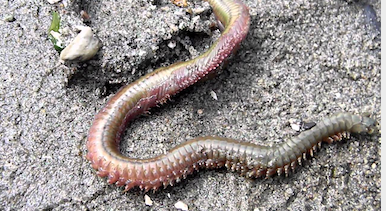
Sand worm
Sand Worm Nereis vexillosa
One of our largest worms (to 6 inches or more). Found on or just below surface of muddy beaches, or under rocks, or crawling through mussel beds. Jaws, when everted, are sharp, black pincers. Used for ripping seaweeds and for grabbing small creatures, including other worms. Periodically during summer, the sand worm's paddle like parapodia expand, and it swims to the surface at night to mate in huge swarms. (Marine Wildlife of Puget Sound, the San Juans, and the Strait of Georgia)

New drone, underwater footage of orcas stuns researchers, gives intimate look at killer whales' family life 
Who knew orcas were so playful, so full of affection, so constantly touching one another? New footage taken by drone as well as underwater stunned researchers who spent two days with the southern resident orca J pod off the British Columbia coast, including with the newest baby, and more time with northern resident killer whales in B.C.’s Johnstone Strait. The footage taken during three weeks in August and early September was filmed in collaboration with the Hakai Institute, a science research nonprofit. “It took our breath away,” said Andrew Trites, professor at the Institute for the Oceans and Fisheries Department of Zoology and director of the Marine Mammal Research Unit at the University of British Columbia in Vancouver. Trites is co-lead researcher on a study that over five years is taking a close look at resident killer whales and their prey. Lynda Mapes reports. (Seattle Times)


'Highly stressed': Parts of B.C.'s gas fields may be more prone to fracking quakes, scientists finding
Scientists are delving four kilometres beneath the earth's surface to find out why hydraulic fracturing triggered a 4.5 magnitude earthquake in northeastern B.C in 2018. The quake was felt in 14 different places, including the construction site of the massive Site C dam, where B.C. Hydro temporarily halted work. There were no injuries and no damage, but fracking operations were also temporarily halted. Soon after, B.C.'s energy regulator determined the quake and several other smaller ones were induced after fracking fluid was injected into a Canadian Natural Resources well site, south of Fort St John. Betsy Trumpner reports. (CBC)

Washington State Ferries plans for an electric-hybrid flee
A quieter, cleaner ride may be in store for people and marine life as Washington State Ferries embarks on an experimental plan to transition the fleet from diesel to electric power. (Everett Herald)

Public officials faced ‘organized and sustained’ oil and gas lobbying on pipelines in recent years: study 
Oil and gas industry lobbying in recent years intensified when public servants and politicians were considering pipelines to pump fossil fuels from Alberta to B.C.’s coast, according to a new report from the Canadian Centre for Policy Alternatives. Those projects included the since-scrapped Northern Gateway pipeline and the expansion of the Trans Mountain pipeline, a piece of infrastructure that Canada ultimately purchased from Kinder Morgan, according to the report, titled Big Oil’s Political Reach. The report looked at 11,452 lobbying efforts by 46 oil and gas companies and associations from 2011 to 2018 under prime ministers Justin Trudeau and Stephen Harper. Its authors found that “strategic, organized and sustained lobbying” helped to explain “the past and continuing close coupling of federal policy to the needs of the fossil fuel industry.” Matt Robinson reports. (Vancouver Sun)


Now, your tug weather--

West Entrance U.S. Waters Strait Of Juan De Fuca-  225 AM PST Tue Nov 5 2019   
TODAY
 Light wind. Wind waves less than 1 ft. W swell 3 ft at  12 seconds. Areas of fog in the morning. 
TONIGHT
 Light wind becoming E to 10 kt after midnight. Wind  1 ft or less. SW swell 3 ft at 13 seconds.


--
"Salish Sea News & Weather" is compiled as a community service by Mike Sato. To subscribe, send your name and email to msato (@) salishseacom.com. Your email information is never shared and you can unsubscribe at any time.

Salish Sea News: Communicate, Educate, Advocate

Follow on Twitter. 

Salish Sea Communications: Truth Well Told
Monday, November 4, 2019

11/4 Loon, B'ham hatchery, Cyrpess sanctuary, Rayonier cleanup, Sound eco-riddles, Snoqualmie Tribe, Duwamish people, murmuration, Bering Sea starvation

Common loon [Andrew Reding/BirdNote]
If you like to listen: The Haunting Voice of the Common Loon
The call of the Common Loon brings to mind a summer visit to northern lakes. A "yodel" call is given by a male on his breeding territory. With his neck outstretched, the male waves his head from side to side, sending his eerie calls across forests and open water. The yodel entices females and asserts a claim of territory. Nothing common about this bird! (BirdNote)

This Bellingham waterfront proposal could help save the orca population
In an attempt to bring salmon numbers back to 1985 levels, ultimately helping the local orca population, plans are in the works to bring a large fish hatchery to Bellingham’s waterfront. A nonprofit organization called the San Juan AREA Sea Life is working to gather local support before looking for funding. If it gets the support it needs, the waters around Bellingham Bay and the San Juan Islands could start seeing more salmon in the next five or six years, said Doug Thomas, chairman of the organization. For Thomas, who is also president of Bellingham Cold Storage, it’s about creating a community legacy centered around restoring the salmon and the whales in this area. Dave Gallagher reports. (Bellingham Herald)

Cypress Island eyed as potential site for whale sanctuary
An international nonprofit with the goal of establishing the first whale sanctuary in the world is eyeing a location in Skagit County. Here, in Deepwater Bay on the east side of Cypress Island, Whale Sanctuary Project partners envision building a sanctuary for orca whales released from entertainment facilities...The idea is to enclose about 100 acres of Deepwater Bay in two sets of mesh netting anchored to the bottom and attached to buoys at the top. That space would be expected to accommodate up to six released orcas permanently, as well as have space that could be used to rehabilitate wild Southern Resident orcas. Kimberly Cauvel reports. (Skagit Valley Herald)

State agrees to extend comment period on Rayonier site cleanup
The state Department of Ecology has agreed to extend the comment period on a proposed $24 million cleanup plan for the long-dormant Rayonier pulp mill site at the urging of an environmental activist, an Ecology official said last week. Rebecca Lawson, the agency’s southwest region manager, said the comment period was extended from Monday to Nov. 26 at the request of Sequim resident and cleanup-plan critic Darlene Schanfald of the Olympic Environmental Council Coalition. Lawson said that as of last week, only about 12 comments had been received on the proposal, available for review at tinyurl.com/PDN-RayonierCleanup, where people can also post comments. Paul Gottlieb reports. (Peninsula Daily News)

From climate mysteries to dead zones, an evolving computer model tackles Puget Sound’s eco-riddles
Puget Sound — Washington’s inland sea — is a mysterious place. It’s the southern-most fjord in the lower 48 states. It’s fed by rivers that create shallow, mucky tideflats. In other spots it plunges more than 900 feet deep, giving it oceanic traits, but it doesn’t flow freely in and out of the Pacific Ocean. The main entrance and exit into the Sound is relatively narrow and shallow, creating a sort of bathtub that curtails the exchange of seawater and wildlife. The Sound is facing serious challenges. The beloved local orcas are in alarming decline, the human population and its polluting cars, roadways and buildings is growing, and the damaging effects of climate change loom large. But scientists are employing a sophisticated computer modeling tool to unravel some of the Puget Sound’s complex puzzles and trigger actions that can help safeguard the iconic Northwest waterway. Lisa Stiffler reports. (GeekWire)

Snoqualmie Tribe buys land around Snoqualmie Falls for $125M
The Snoqualmie Tribe announced Friday that it has purchased the land surrounding Snoqualmie Falls, its traditional territory. The tribe made the purchase — which includes the surrounding land and nearby hotel —from the Muckleshoot Tribe for $125 million. The falls are sacred to the Snoqualmie people, and their traditional burial site is right above the falls. The Snoqualmie lost their land in the 1800s, when white settlers moved in and took over Snoqualmie lands. Eilis O'Neill reports. (KUOW)

Duwamish people get a little overdue respect from Seattle's Landmarks Preservation Board
Nearly hidden among sword ferns, vine maples and poplars off a quiet residential street in North Seattle is a small clearing, and nestled within is a circular ring filled with spring water and a spout draining red ochre mud in the ground below. To the original inhabitants of our land, it’s a sacred place. This site, called líq’tÓ™d (pronounced LEE’kteed) in the Lushootseed language of the Coast Salish people, is part of líq’tÓ™d (Licton) Springs Park, Seattle’s newest designated city landmark. A sacred site for the Duwamish people for thousands of years, líq’tÓ™d has served as a place for indigenous ceremonies, healing, prayer and for its namesake red iron oxide. The landmark designation — which was the culmination of a multiyear, hard fought, grassroots effort — raises important questions about what we value as a city, what deserves protection and why. Naomi Ishisaka reports. (Seattle Times)

Starlings' 'murmuration' is a delight in the sky over Bremerton's Warren Avenue Bridge
John Farley writes in the Kitsap Sun: "Life, like the traffic that streams across the Warren Avenue Bridge, moves pretty fast. And — as pointed out by Ferris Bueller, that famous truant played by Matthew Broderick in that 1986 movie — if you don’t look around once in a while, you might miss it.  As I walked across the bridge this past week, it was my intention to look around. After all, this fall has brought some beautiful weather to go with the bright colors of autumn. But I was not prepared for the show I was just about to see right at sunset, as cars continued to whoosh by. With a backdrop of the Olympic Mountains, packs of small birds began flying in unison, altogether, in zigzagging patterns as one force. There must have been thousands of them. I was transfixed." (Kitsap Sun)

Why are birds and seals starving in a Bering Sea full of fish?
The shipment arrived airfreight: 47 seabird carcasses collected by the Bering Strait villagers of Shishmaref. Marine biologist Gay Sheffield drove to the airport on an August day to pick up the grisly cargo and bring it back to a laboratory just off the main street of this northwest Alaska town. Inside a cardboard box, Sheffield found mostly shearwaters, slender birds with narrow wings — also kittiwakes, crested auklets, thick-billed murres, a cormorant and a horned puffin. Most were painfully skinny, bones protruding like knife-edged ridges. “They starved to death,” Sheffield said. “Why?” Hal Bernton reports. (Seattle Times)


Now, your tug weather--

West Entrance U.S. Waters Strait Of Juan De Fuca-  213 AM PST Mon Nov 4 2019   
TODAY
 E wind 5 to 15 kt. Wind waves 2 ft or less. W swell 4 ft  at 11 seconds. Patchy fog in the morning. 
TONIGHT
 Light wind. Wind waves less than 1 ft. W swell 3 ft at  10 seconds. Patchy fog after midnight.


--
"Salish Sea News & Weather" is compiled as a community service by Mike Sato. To subscribe, send your name and email to msato (@) salishseacom.com. Your email information is never shared and you can unsubscribe at any time.

Salish Sea News: Communicate, Educate, Advocate

Follow on Twitter. 

Salish Sea Communications: Truth Well Told