Wednesday, April 17, 2019

4/17 Cascara, orca bills, WA salmon season, Fraser season, whale watch, melting glaciers, PT Marine Science Center

Cascara [Jesse Taylor]
Cascara Rhamnus purshiana
Cascara ... is a species of buckthorn native to western North America from southern British Columbia south to central California, and eastward to northwestern Montana. The dried bark of cascara has been used for centuries as a laxative, first by American Indians in the Pacific Northwest, and then by White settlers.... Historically, cascara was used in traditional medicine as a laxative, and in the late 20th century, the United States Food and Drug Administration approved its use for this purpose. In the early 21st century, however, the FDA withdrew its approval, citing the absence of evidence for efficacy and safety. Cascara remains available in the United States as an unregulated dietary supplement. (Wikipedia)

State lawmakers pass sweeping protections for Puget Sound orcas
The Washington state House and Senate passed four bills this month providing sweeping protections for Puget Sound’s ailing orca population. The quartet of bills were passed between April 10 and April 15, and cover a variety of measures, including whale watching, pollution, and more. Each legislative body passed amendments which need to be approved by their counterparts before heading to the governor’s desk for final approval. The first to get the OK from the House and Senate was HB 1579, providing aid to the endangered Chinook salmon population, the primary prey for Puget Sound’s orcas. [The other bills are HB 1578, SB 5577, and SB 5135] (MyNorthwest)

2019 salmon seasons set
State and tribal fishery co-managers reached an agreement Monday, setting the general salmon fishing seasons for the remainder of 2019. The seasons include increased opportunity to fish for coho salmon but less opportunity to fish for chinook salmon, in part due to efforts to conserve fish for the endangered Southern Resident orca whales that eat chinook. Pink salmon fisheries will also be limited in Puget Sound. Limiting salmon fisheries could also help the orcas by reducing the number of fishing boats, which create noise that interferes with the whales’ ability to communicate and hunt, according to a state Department of Fish & Wildlife news release. Kimberly Cauvel reports. (Skagit Valley Herald)

Fraser River chinook fishery closed through most of the summer
Commercial and recreational fisheries for Fraser River chinook will be closed for much of the summer, Fisheries and Oceans Canada announced Tuesday. First Nations food, social and ceremonial fisheries for chinook salmon will be closed until July 15, while recreational anglers will face tight restrictions on chinook in waters on the south coast through the entire season. The annual limit for chinook retention by recreational anglers will also be reduced from 30 fish per person to just 10. Fisheries Canada will provide some fishing opportunities later in the summer, said regional director Rebecca Reid. Randy Shore reports. (Vancouver Sun)

Killer whales spotted in Vancouver harbour
A pod of killer whales was spotted swimming in the waters of the Vancouver harbour Tuesday afternoon. The Vancouver Police Department posted photos to social media of at least three orcas under the Ironworkers Memorial Bridge, deep in the inner harbour. (CBC) See also: WATCH: Baby orca and pod splashing around Salish Sea  A whale watching group got a special treat when they witnessed a family of orcas with a young calf hunting and playing in the Salish Sea. (KING)

‘When the Glaciers Disappear, Those Species Will Go Extinct’
When it was built in the early 1900s, the road into Mount Rainier National Park from the west passed near the foot of the Nisqually Glacier, one of the mountain’s longest. Visitors could stop for ice cream at a stand built among the glacial boulders and gaze in awe at the ice. The ice cream stand is long gone. The glacier now ends more than a mile farther up the mountain. As surely as they are melting elsewhere around the world, glaciers are disappearing in North America, too. This great melting will affect ecosystems and the creatures within them, like the salmon that spawn in meltwater streams. This is on top of the effects on the water that billions of people drink, the crops they grow and the energy they need. Glacier-fed ecosystems are delicately balanced, populated by species that have adapted to the unique conditions of the streams. As glaciers shrink and meltwater eventually declines, changes in water temperature, nutrient content and other characteristics will disrupt those natural communities. Henry Fountain, Max Whittaker and Jeremy White report. (NY Times)

Marine Science Center planning future renovation
The Port Townsend Marine Science Center is working together with the Fort Worden Public Development Authority and Washington State Parks to come up with a long-term vision for the rehabilitation of marine facilities at Fort Worden. These facilities include the boat launch, pier, aquarium and museum located at the beach at Fort Worden. Washington State Parks has received funding to replace the boat launch and pier, said Michael Hankinson, a planner with State Parks. The Marine Science Center is planning to update their facilities at the same time, to create a unified waterfront area and expand their marine education programs. State Parks will hold a public meeting at 6 p.m. on April 18 at the Fort Worden Commons to hear input on the possible rehabilitation designs of that area. (Port Townsend Leader)


Now, your tug weather--

West Entrance U.S. Waters Strait Of Juan De Fuca-  247 AM PDT Wed Apr 17 2019   
TODAY
 W wind to 10 kt becoming NW 5 to 15 kt in the afternoon.  Wind waves 2 ft or less. W swell 7 ft at 14 seconds. Showers in  the morning then a chance of showers in the afternoon. 
TONIGHT
 NW wind 10 to 20 kt becoming E to 10 kt after  midnight. Wind waves 1 to 3 ft subsiding to 1 ft or less after  midnight. W swell 8 ft at 14 seconds. Showers likely in the  evening then rain likely after midnight.


--
"Salish Sea News & Weather" is compiled as a community service by Mike Sato. To subscribe, send your name and email to msato (@) salishseacom.com. Your email information is never shared and you can unsubscribe at any time.

Salish Sea News: Communicate, Educate, Advocate

Follow on Twitter. 

Salish Sea Communications: Truth Well Told

Tuesday, April 16, 2019

4/16 Vole, orca habitat, WA climate laws, Roberts Bank Terminal 2, protesters freed, pinto abalone, water plant cleanup, David Bernhardt, alpine microplastics

Vole
Vole
Voles are small rodents that are relatives of the mouse, but with a stouter body, a shorter, hairy tail, a slightly rounder head, smaller ears and eyes, and differently formed molars (high-crowned and with angular cusps instead of low-crowned and with rounded cusps). There are approximately 155 species of voles. They are sometimes known as meadow mice or field mice in North America and Australia. Vole species form the subfamily Arvicolinae with the lemmings and the muskrats. (Wlkipedia)


Northwest orcas to get expanded habitat protection, feds say
The federal government says that by October it will propose expanded habitat protections off Washington, Oregon and California for Pacific Northwest orcas. The announcement comes in response to a lawsuit filed by the Arizona-based Center for Biological Diversity, which sued in 2018 to make officials move more quickly to protect the endangered orcas. The whales spend their summers in the waters between Washington state and Canada, but about two-thirds of the year they migrate and forage for salmon off the West Coast. The conservation group said the National Marine Fisheries Service had been dragging its feet in designating "critical habitat" for the whales in those foraging and migration areas. Under the Endangered Species Act, federal agencies must ensure that activities they pay for, permit or carry out do not harm such habitat. (Associated Press) See also: Few fish mean no summer chinook season on the Columbia River. Fall fishing forecast in flux  (Tri-City Herald)

Legislature is delivering on climate protection just in time for Inslee’s presidential bid
Democratic lawmakers are finding success in moving a raft of clean-energy bills through the Washington Legislature this session, benefiting from the seats they picked up in 2018 and using a new strategy to attract support by moderates in their own party. The sweeping bills would make Washington the fourth state to require a phaseout of fossil-fueled electricity; mandate energy overhauls for larger, old buildings; and join California, Oregon and British Columbia in reducing the climate-harming effects of car and truck fuels. The fate of three lesser bills to protect the climate is less certain, as lawmakers hurtle toward their scheduled April 28 adjournment. Those would promote the use of electric vehicles, crack down on climate-harming refrigeration gasses and require more energy-efficient electrical appliances. Rachel Nielsen reports. (Investigate West)

It’s not just pipelines: Sea ports could see marine traffic reviews after Ottawa’s directive on $2B Vancouver terminal
In an echo of the criticisms that stalled the Trans Mountain pipeline expansion, opponents of a $2-billion container terminal near Vancouver are calling on the federal government to delay hearings on the project, arguing regulators have failed to account for the environmental effects of increased tanker traffic that would result from the development. Several First Nation communities and one private-sector firm are calling on regulators to delay hearings scheduled to begin May 14 after Environment Minister Catherine McKenna issued a directive last month that ordered officials to include marine shipping activity in their review of Roberts Bank Terminal 2, a roughly $2-billion project planned for construction on a sprawling man-made island off the coast of Vancouver. The proposal is led by the Vancouver Fraser Port Authority, and is currently under environmental review by a federal panel. The directive by McKenna could raise concerns that the broader environmental considerations applied to Trans Mountain may also be extended to projects such as sea ports and rail lines, in turn diminishing Canada’s ability to build major infrastructure projects. Jesse Snyder reports (Vancouver Sun)

Charges dropped against 14 protesters blocking B.C. pipeline project
All contempt charges have been dropped against 14 people who were arrested at a blockade in northern British Columbia in January for barring access to a pipeline company. "I felt like there was a little bit of justice today," said Molly Wickham, one of the 14, outside the Prince George, B.C., courthouse Monday. "Relief, huge, huge relief."  "They have wisely decided not to proceed," said lawyer Martin Peters, who was acting for Wickham and several others. "I'm delighted … they saw the wisdom of stepping aside."... The arrest of Wickham and 13 others by heavily armed RCMP officers sparked protests in cities across Canada and made international headlines. Betsy Trumpener reports. (CBC)

WDFW seeks final public input on listing pinto abalone as endangered 
The Washington Department of Fish and Wildlife  is seeking public comment on its final report and recommendation to list the pinto abalone as endangered in Washington state. The pinto abalone (Haliotis kamtschatkana), a native mollusk historically prized as food and for its beautiful shell, has experienced a drastic reduction in population in recent decades. From 1992-2017, the population fell by an estimated 97 percent, putting the species at risk of local extinction.... The public is now invited to comment on the final status report for the Pinto Abalone in Washington, which can be found on the WDFW website at https://wdfw.wa.gov/publications/02031 (Chinook Observer)

Ecology taking comment on cleanup of former Anacortes water plant
The public can comment through May 14 on documents related to the cleanup of the former Anacortes water treatment plant. Polychlorinated biphenyls, or PCBs, were found in building materials and soil during a demolition assessment of the plant in 2015, according to the state Department of Ecology. No chemicals were found in drinking water based on routine sampling records, documents state. The old plant, which was decommissioned in 2013, is next to the current Anacortes water treatment plant on the Skagit River in Mount Vernon..... Documents, a comment form and more information can be found at bit.ly/Ecology-AnacortesFWTP Jacqueline Allison reports. (Skagit Valley Herald)

Interior Dept. Opens Ethics Investigation of Its New Chief, David Bernhardt
The Interior Department’s internal watchdog has opened an investigation into ethics complaints against the agency’s newly installed secretary, David Bernhardt. Mr. Bernhardt, a former lobbyist for the oil and agribusiness industries, was confirmed by the Senate last week to head the agency, which oversees the nation’s 500 million acres of public land and vast coastal waters. He has played a central role in writing policies designed to advance President Trump’s policy of “energy dominance” and expanding fossil fuel exploration. He has been dogged by allegations of ethics violations since joining the Trump administration as the Interior Department’s deputy secretary in 2017. Eight senators, all Democrats, and four government ethics watchdog groups have requested that the Interior Department’s inspector general open formal investigations into various aspects of Mr. Bernhardt’s conduct. Among the chief complaints have been allegations, revealed by three separate New York Times investigations, that Mr. Bernhardt used his position to advance a policy pushed by his former lobbying client; that he continued working as a lobbyist after filing legal paperwork declaring that he had ceased lobbying; and that he intervened to block the release of a scientific report showing the harmful effects of a chemical pesticide on certain endangered species. Coral Davenport reports. (NY Times)

Microplastic Found Even In The Air In France's Pyrenees Mountains
Surprisingly high amounts of microplastic are raining down on a remote and seemingly pristine part of France’s Pyrenees mountains, according to scientists who say such particles could potentially be floating everywhere. Microplastic — fragments smaller than a fifth of an inch that have broken down from larger pieces of plastic — has been found in rivers, lakes, the oceans and in agricultural soil. But very few studies of wind-borne microplastic have ever been done. This one found that the air over these mountains has about as much floating plastic pollution as the air over Paris or Dongguan, a large industrial city in China. Christopher Joyce reports. (NPR)


Now, your tug weather--
West Entrance U.S. Waters Strait Of Juan De Fuca-  242 AM PDT Tue Apr 16 2019   
TODAY
 W wind to 10 kt becoming NW in the afternoon. Wind waves  1 ft or less. W swell 6 ft at 12 seconds. 
TONIGHT
 SW wind 5 to 15 kt becoming S 10 to 20 kt after  midnight. Wind waves 1 to 3 ft. W swell 7 ft at 16 seconds. A  chance of showers.


--
"Salish Sea News & Weather" is compiled as a community service by Mike Sato. To subscribe, send your name and email to msato (@) salishseacom.com. Your email information is never shared and you can unsubscribe at any time.

Salish Sea News: Communicate, Educate, Advocate

Follow on Twitter. 

Salish Sea Communications: Truth Well Told

Monday, April 15, 2019

4/15 Herring spawn, killing seals, Whale Trail, Bigg's orcas, Tim Ragan, WA clean energy, David Attenborough, big quake, Adventuress

Herring spawn, Discovery Bay [Jeff Taylor/CWI]
Discovery Bay spawning 2019
Ann Shaffer of Coastal Watershed Institute writes: "Another example of herring-and others- spawning. This one is the closest to home-the east side of Discovery Bay, eastern Strait of Juan de Fuca. The photos of white 'foam' and eggs deposited on eelgrass and Gracilaria spp ... and characteristic conflagration of eagles, sea lions, harbor seals, and sea ducks are unmistakable. It seems like a much smaller event than those we've seen in Hood Canal and BC. The Discovery Bay stock has decreased precipitously over the decades and has been observed for the first time in decades only the last few years-an encouraging trend in troubling times. Spawning along our shorelines may continue for a few more weeks. If you see these wildlife 'parties' and whitish water (less obvious) call WDFW forage fish program to let them know. And drop us a note too....A fascinating place and time, and a critical process that defines the health of our marine coastal system."

Hey, seals and sea lions! Quit eating so much endangered orca food... or else.
Politicians and wildlife managers are engaged in a fresh debate about whether to intervene in nature to save an imperiled species. The question is whether humans can get seals and sea lions to lay off Chinook salmon so there's more for killer whales to eat. Chinook — or king — salmon are the preferred food of the critically-endangered Pacific Northwest orcas. But growing numbers of sea lions and the robust population of harbor seals eat Chinook too. "This is that classic mix of the predators being a protected species and the prey being a protected species," said Nate Pamplin, policy director for the Washington Department of Fish and Wildlife. "We don't know the level of consumption in terms of whether or not humans should intervene." Tom Banse reports. (NW News Network)

Whale watching by land and by boat sparks 'sheer joy,' inspiring lifelong orca advocates
xperts and enthusiasts agree, whether on water or on land: it’s difficult to describe the feeling people get in the presence of orcas. “I wish you could bottle what happens when people see whales,” said Donna Sandstrom, while passing out binoculars to passersby in West Seattle. “The sheer joy and the awe is always moving.” Sandstrom founded the Seattle-based nonprofit The Whale Trail, in partnership with several state and regional agencies and organizations, in 2008. It includes more than 100 sites for whale watching from British Columbia to California, aimed at building community and stewardship around orcas and other marine life. Bellamy Pailthorp and Kari Plog report. (KNKX)

New pictures show how Bigg's killer whales are thriving, even as southern resident population declines
Simon Pidcock has been watching whales for the past 17 years. In all that time, he's never seen anything like what he witnessed last Sunday off B.C.'s Sunshine Coast. "[It] was one of those amazing days that we all live for," said Pidcock, owner of Cowichan Bay-based Ocean Eco Ventures. An estimated 41 Bigg's killer whales were socializing together in the Salish Sea, right in front of Pidock's boat. Joel Ballard reports. (CBX)

Event-- Recovering the Southern Residents: lessons learned from other populations
With just 75 individuals in the population, the southern resident orcas are in danger of going extinct. Is it too late? What will it take to recover the southern residents, and what can we learn from similar efforts with other populations? Retired marine mammal scientist Dr. Tim Ragen will review the status of the southern resident killer whale population and then review conservation efforts for other marine mammals to highlight lessons learned and relevant to killer whale conservation. Whale Trail Director Donna Sandstrom will also give an update on orca legislation, and Governor Inslee's Task Force on SRKW Recovery. April 18, 7 pm, C&P Coffee Company, 5612 California Ave SW, Seattle; $5 suggested donation; kids free; Brown Paper Tickets

House OKs 100 percent clean energy in Washington by 2045
The Washington House passed a measure Thursday that seeks to eliminate fossil fuels like natural gas and coal from the state’s electricity supply by 2045. The measure — a key piece of Democratic Gov. Jay Inslee’s climate agenda — passed on a 56-42 vote. It passed the Senate last month on a 28-19 vote, on the same day that Inslee announced he was running for president. Because the bill was amended by the House, it heads back to the Senate for a final vote. Rachel La Corte reports. (Associated Press)

David Attenborough gave the natural world a voice. Now he’s talking about climate change like never before.
Sir David Attenborough has been documenting nature for more than six decades. His various television series — such as “Life on Earth,” “The Living Planet” and “Planet Earth” — have taken viewers to every corner of the globe, capturing the beauty and complexity of the natural world. At 92, the renowned British naturalist is hardly finished. In recent years, Attenborough increasingly has used his spellbinding whisper of a voice not only to describe the courtship rituals of birds of paradise or the mass migration of millions of Christmas Island red crabs, but also to repeatedly sound the alarm about climate change. Brady Dennis reports. (Washington Post) See also: With the Netflix Series “Our Planet,” David Attenborough Delivers an Urgent Message (New Yorker)

It’s been 70 years since the earth shook for an entire minute. Are we due for a repeat?
The earth rocked for an entire minute, starting at 11:55 a.m. on April 13, 1949. A second wave came 18 seconds later, felt across more than 150,000 square miles from British Columbia to Salem, Oregon, and over to Idaho and Montana. Even though the needle was knocked off the seismograph at the University of Washington, it recorded vibrations for 21 minutes. Four people in Washington state died of heart attacks brought on by the earthquake. Four others, including an 11-year-old Tacoma boy, were killed by falling rubble. It was the largest earthquake to hit the state since 1872. Officials say the next big one could hit in the next 50 years. Stacia Glenn reports. (Tacoma News Tribune)

Adventuress launched again after decade of work finished
The 106-year-old schooner Adventuress is back in the water after spending another winter on land while a 10-year restoration was completed. Dozens of people watched the historic 133-foot vessel as it made its way across the Port Townsend Boat Haven hanging from a 300-ton travel lift Friday morning before being lowered into the water. Jesse Major reports. (Peninsula Daily News)


Now, your tug weather--
West Entrance U.S. Waters Strait Of Juan De Fuca-  301 AM PDT Mon Apr 15 2019   
TODAY
 SE wind 5 to 15 kt. Wind waves 2 ft or less. W swell  7 ft at 13 seconds. 
TONIGHT
 E wind to 10 kt in the evening becoming light. Wind  waves 1 ft or less. W swell 6 ft at 13 seconds.

--
"Salish Sea News & Weather" is compiled as a community service by Mike Sato. To subscribe, send your name and email to msato (@) salishseacom.com. Your email information is never shared and you can unsubscribe at any time.

Salish Sea News: Communicate, Educate, Advocate

Follow on Twitter. 

Salish Sea Communications: Truth Well Told

Friday, April 12, 2019

4/12 Osoberry, China crude, Vic sewer, Bowser sewer, J17 offering, Monsanto ruling, clean water cost, Fort Worden, raspberry woes, Nooksack water, Marblemount mining, rockfish robotics

Indian plum [Lainey Piland]
Indian plum Oemleria cerasiformis
Indian plum, known as osoberry, is native to the Pacific coast and ranges of North America, from British Columbia, Canada to Santa Barbara County, California. it is among the first plants to leaf out and flowers early in the spring. It reaches a height of 1.5–5 m and has lance-shaped leaves 5–12 cm long. The fruits of osoberry are edible and resemble small plums which are dark blue when ripe. Indigenous peoples of the Americas include osoberry in their diets, make tea of the bark, and chew its twigs to use as a mild anesthetic and aphrodisiac. (Wikipedia)

First crude oil shipment of the year bound for China has left Vancouver
The first B.C. shipment of Alberta crude oil to China in 2019 is on its way. The large tanker Erik Spirit left Burnaby’s Westridge Terminal (the end point of the Trans Mountain pipeline) on April 4, after a two-day loading, and is expected to arrive in Qingdao, China, on April 23.... According to records kept by David Huntley — a professor emeritus in physics at Simon Fraser University who monitors tanker traffic at Westridge — the Erik Spirit was the fourth tanker to load crude oil at Westridge so far this year, and the first to go to China.... That number is significant given the twinning of the Trans Mountain pipeline could get the go ahead as early as next month. The National Energy Board’s recommended approval of the project — which would increase oil flow from 300,000 barrels a day to 890,000 barrels a day — was based on 2016 statements from Trans Mountain that it loaded on average five tankers a month at the terminal. If approved by the federal government, which also owns Trans Mountain, that number could go up to 34 tankers a month. David Carrigg reports. (Vancouver Sun)

Greater Victoria's sewage treatment system could be at least $10M over budget
Construction of Victoria's long-awaited sewage treatment system is on time, but may not be on budget. The team behind the $765 million project is forecasting it could cost at least $10 million more than expected. In a report to the board overseeing construction, the project team says a hot construction market on Vancouver Island has pushed up the price of materials and labour. Megan Thomas reports. (CBD)

RDN director conflicted after $10.7M Bowser project cancelled
Regional District of Nanaimo Electoral Area H (Deep Bay, Bowser and Qualicum Bay) director Stuart McLean had mixed feelings about the cancellation of the $10.7-million Bowser Village Sewer Project. McLean is pleased the area prevented an environmental dilemma but he was also unhappy about losing the $7.6-million joint Federal and Provincial Clean Water and Wastewater Fund grant that was awarded to the project.... The plan was to build a collection system, wastewater treatment and effluent disposal for the Bowser Village Centre to support future growth in the Bowser Village area. It was to service 99 parcels. There was opposition to the project but mainly on the plan to discharge treated wastewater into the Salish Sea and Baynes Sound. Two groups — the Stop Ocean Sewage Bowser and Area H Residents Association — led the fight against the marine outfall option of the proposed sewage services. Michael Briones reports. (Parksville Qualicum Beach News)

‘Our relatives under the water.’ Lummi release salmon to ailing orcas
Lummi tribal members released one live chinook salmon into the Salish Sea on Wednesday as a spiritual offering to J17, an orca matriarch who has been ailing. Caroline Chamberlain Gomez reports. (KUOW)

Monsanto liable for French farmer’s ill health
US biotech giant Monsanto is legally responsible for the ill health of a farmer who ingested its weedkiller product, a French court has ruled. A French appeals court ruled in favour of 55-year-old Paul Francois, who has fought a decade-long legal battle against the firm. He fell ill after inhaling vapour from Lasso, a now banned herbicide, in 2004. Mr Francois blames Monsanto, accusing it of not giving sufficient safety warnings. (BBC)

Semiahmoo First Nation charges non-band residents $50K for water
Naomi Mitchell has lived on Semiahmoo First Nation land for decades, but if the 79-year-old doesn't come up with at least $50,000 by mid-June, she'll be kicked out. The Indigenous community is in the midst of installing a clean water system that would lift its longstanding boil water advisory. The project is being done in partnership with the City of Surrey, the provincial Transportation Ministry and the federal government. The clean water system will potentially serve about 100 people who live in the community. But for the more than 30 residents who aren't band members, including Mitchell, connecting to the new line will cost them tens of thousands of dollars. Those who don't pay will be forced to leave. Jon Hernandez reports. (CBC)

State eyes options for Fort Worden’s shore
The state Parks and Recreation Commission is inviting the public to provide input on a project aimed at improving the marine area at Fort Worden. The project aims to replace the existing boat launch area with one that is more ecologically compatible with the shoreline and its natural processes and to also consider alternatives to either rehabilitate, remove, or remove and replace the pier. Because the Port Townsend Marine Science Center is located on the pier, a new location will be considered in the mix of options, according to State Parks. Jesse Major reports. (Peninsula Daily News)

B.C. farmers ripping out raspberries as industry faces high costs, cheap competition
B.C. raspberry production was at its peak in late 1980s and early 1990s, when around 42 million pounds per year were picked. Last year, production dropped to less than 17 million pounds.  Peter Thind used to have 140 acres of raspberries on his Abbotsford, B.C., farm. But he's now scaled back to 20 acres, ripping out the crop to plant blueberries instead. "It's not profitable anymore," he says. "Raspberry wasn't paying us to pay the mortgage."  Growers say high costs of labour, land and supplies have made it difficult for local farmers to compete with cheaper imports of the berry from countries like Mexico, Chile and Serbia. Tina Lovgreen reports. (CBC)

Ecology opens comment on Nooksack water use
The state Department of Ecology has opened the first comment period on a streamflow rule change that will accommodate rural growth and protect water supply needs for fish in the Nooksack River watershed. The comment period is part of the rulemaking process on streamflow restoration efforts. The watershed includes most of western Whatcom County and a small portion of Skagit County. Under the 2018 state streamflow law SB 6091 — considered legislators’ “fix” of the Hirst state Supreme Court ruling of October 2016 — a Nooksack watershed plan was due by Feb. 1, 2019. However, despite the diligent work of local planning groups, the plan for the Nooksack watershed was not completed in time, and the state took over the effort. Now Ecology is asking for feedback on the preliminary drafts of the rule amendment language and the document supporting the rule. (Lynden Tribune)

Skagit County reopens Marblemount mine permits for comment
Skagit County reissued Thursday its Notice of Development Application for the rock mine proposed in the Marblemount area. The new notice reopens public comment on various permits for the proposed project until 4:30 p.m. May 13. Kiewit Infrastructure Co. and Cunningham Crushing propose mining 3.8 million cubic yards of rock from a 79-acre portion of a rock hill southwest of Marblemount. The proposal has been met with opposition from many who live in the vicinity and are worried about their safety and the environment should the mine be approved. Kimberly Cauvel reports. (Skagit Valley Herald)

Falcon Helps Endangered Rockfish
Delicious to eat, the rockfish in Washington’s Puget Sound were being fished to levels that threatened extinction. Now scientists at the Washington Department of Fish and Wildlife are undertaking an important conservation study into the threatened rockfish species using a Saab Seaeye Falcon underwater robotic vehicle. Senior Marine Fish Research Scientist, Dr. Dayv Lowry, explains that managing the conservation and recovery of rockfish populations in Washington’s Puget Sound, depends on the accurate monitoring of rockfish populations, depleted through overfishing and ecological degradation.... Until deployment of the Falcon, population studies were imprecise as trawl surveys were better suited to sampling mud than the rockfish’s rocky habitat, and many rockfish occur too deep for scuba divers. Michelle Howard writes. (Marine Technology News)


Now, your weekend tug weather--

West Entrance U.S. Waters Strait Of Juan De Fuca-  256 AM PDT Fri Apr 12 2019   
SMALL CRAFT ADVISORY IN EFFECT FROM SATURDAY MORNING THROUGH
 SATURDAY AFTERNOON   
TODAY
 SE wind to 10 kt becoming NW in the afternoon. Wind  waves 2 ft or less. W swell 9 ft at 12 seconds. 
TONIGHT
 W wind 5 to 15 kt becoming SW to 10 kt after midnight.  Wind waves 2 ft or less. W swell 9 ft at 13 seconds. Rain likely  after midnight. 
SAT
 S wind 15 to 25 kt becoming SW in the afternoon. Wind  waves 2 to 4 ft. W swell 10 ft at 15 seconds. Rain. 
SAT NIGHT
 W wind 15 to 25 kt. Wind waves 2 to 4 ft. W swell  11 ft at 15 seconds. 
SUN
 W wind 15 to 20 kt easing to 5 to 15 kt in the afternoon.  Wind waves 1 to 3 ft. W swell 11 ft at 13 seconds.


--
"Salish Sea News & Weather" is compiled as a community service by Mike Sato. To subscribe, send your name and email to msato (@) salishseacom.com. Your email information is never shared and you can unsubscribe at any time.

Salish Sea News: Communicate, Educate, Advocate

Follow on Twitter. 

Salish Sea Communications: Truth Well Told

Thursday, April 11, 2019

4/11 Greenling, BC pipe, workers' climate, Trump's pipes, save orcas, rabbit virus, fisheries open & close, oil change

Kelp greenling [Janna Nichols/WDFW]
Kelp greenling Hexagrammos decagrammus
Kelp greenling range from the Aleutian Islands, Alaska to La Jolla, California. They are rare in southern California, but common northward. They are found in rocky inshore areas and are common in kelp beds and on sand bottoms at depths up to 46 m (150 ft). Kelp greenling can grow up to 53 cm (21 in) in length, and 2.1 kg (4.6 lbs) in weight. Maximum age is 18 years old (Northern SE Alaska) and 25 years old (Oregon). (WDFW)

B.C. Green leader agrees Trans Mountain pipeline approval could come as soon as May
B.C. Green party leader Andrew Weaver says Alberta Premier Rachel Notley may be right with her claim the controversial twinning of the Trans Mountain pipeline will get the go ahead in May. “Trudeau has essentially been saying the pipeline will be approved all along,” Weaver told Postmedia News on Wednesday. “Cabinet has 90 days to make a decision after the NEB made their (February) recommendation and that brings it to May 22. “(Rachel) Notley put two and two together. I suspect she is adding up what’s publicly available.” On Monday, while campaigning for the April 16 provincial election, the Alberta premier said she expected the $9.3 billion twinning of the Trans Mountain pipeline to be approved by the federal government by the end of May. David Carrigg reports. (Canadian Press)

More than 3,500 Amazon employees challenge company to lead on climate-change policies
In an unprecedented public push to change Amazon policies, more than 3,540 employees have put their names to a letter asking CEO Jeff Bezos and the commerce giant’s board of directors to become global leaders in fighting climate change. The letter, posted Wednesday to Medium, is the latest step up in an internal drive by employees for a comprehensive corporate climate strategy. The group is asking Amazon to set timelines that keep pace with the scientific consensus to avoid ever-greater climate catastrophes, and commensurate with the company’s industry-leading position. Benjamin Romano reports. (Seattle Times)

Trump's order would make it harder to block pipelines, and projects such as Longview coal-export terminal
President Donald Trump signed an executive order Wednesday that could make it harder for state governments to block energy-development projects such as a proposed coal-export terminal in southwest Washington that has failed to get a permit because of environmental concerns. In making the announcement, Trump lashed out at “state-level abuse of water-quality certifications.” He signed the order in Crosby, Texas, in the heart of oil and gas country, touting what business groups have been urging: faster approval of major energy projects. Hal Bernton reports. (Seattle Times) See also: Trump Signs Orders to Speed Up Oil and Gas Pipeline Construction   Clifford Krauss reports. (NY Times)

Woman on a 17-day hunger strike to save Southern Resident orcas
Lanni Johnson is a 71-year-old woman who has been sitting in front of the Capitol Building in Olympia for the past 10 days on a hunger strike. Johnson said Tuesday that the government is taking too long to solve the problem of declining food supply for the Southern Resident orcas.... She sits outside from 10 a.m. to 4 p.m. every day with a sign that reads, “Solidarity with starving Southern Resident Orcas. Breach the Dams! Now!” Johnson and fellow supporters plan to host a larger event on the steps of the Capitol in Olympia on Friday, where they will have “ghost fins” representing the 53 orcas that have died since 2005.  Emma Epperly reports. (Peninsula Daily News)

Province warns rabbit owners as deadly virus returns on Vancouver Island
A highly infectious virus that affects rabbits has been found again on Vancouver Island, prompting a warning for people in the mid-Island to take precautions with their pet bunnies. The warning comes after the death of four feral rabbits in Parksville, B.C. Testing of the rabbits confirmed the presence of rabbit hemorrhagic disease, caused by a calicivirus. This marks the second year in a row that the virus has been found in mid-Island rabbits, but the source of the virus is unknown, said B.C.'s ministry of Forests, Lands, Natural Resource Operations and Rural Development. (CBC)

Marine salmon fisheries close Thursday
Salmon fishing in some Skagit County waters will close Thursday, 20 days earlier than planned, in order to ensure the conservation of wild chinook salmon. The fishery is closing in Skagit Bay and surrounding waters east of Fidalgo and Whidbey islands. Snohomish county waters east of Whidbey and Camano islands are also affected by the closure. State Department of Fish & Wildlife Puget Sound Salmon Manager Mark Baltzell said the agency decided to close the fishery based on the number of chinook caught, including hatchery fish that were kept and wild fish that were released. Kimberly Cauvel reports. (Skagit Valley Herald)

Recreational shrimp fishery to open May 11 in Puget Sound
The Washington Department of Fish and Wildlife announced Wednesday that recreational shrimp fishing will open May 11 in Puget Sound.  This year’s fishing season will begin a week later than in 2018 due to tidal conditions and is open to spot, pink and coonstripe shrimp. Department officials said spot shrimp, also known as prawns, are the largest shrimp in Puget Sound and can grow up to nine inches long. (KIRO) See also: Halibut fishing to open May 2 with bigger quotas  (Chinook Observer)

Changing your own oil? The biggest challenge may be finding somewhere to recycle it
Cole Montagano, 24, changes the oil in his 1997 Toyota Supra every couple of months. He does the job himself and, after the last couple of changes, had accumulated about 12 litres of old oil. The West Vancouver resident decided it was time to get rid of the engine oil and set out to find a place to discard it. "I thought it would be easy," said Montagano on Tuesday. "Boy, was I wrong." Rafferty Baker reports. (CBC)


Now, your tug weather--

West Entrance U.S. Waters Strait Of Juan De Fuca-  259 AM PDT Thu Apr 11 2019   
TODAY
 Light wind becoming E to 10 kt in the afternoon. Wind  waves 1 ft or less. W swell 7 ft at 10 seconds. Rain likely in  the morning then rain in the afternoon. 
TONIGHT
 SE wind to 10 kt in the evening becoming light. Wind  waves 1 ft or less. W swell 7 ft at 11 seconds. A chance of  showers in the evening then a slight chance of showers after  midnight.


--
"Salish Sea News & Weather" is compiled as a community service by Mike Sato. To subscribe, send your name and email to msato (@) salishseacom.com. Your email information is never shared and you can unsubscribe at any time.

Salish Sea News: Communicate, Educate, Advocate

Follow on Twitter. 

Salish Sea Communications: Truth Well Told

Wednesday, April 10, 2019

4/10 Pineapple weed, Dungeness water rule, snowpack, black hole, WA gas prices

Pineapple weed
Pineapple weed Matricaria discoidea
Pineapple weed has a definite pineapple scent when crushed, and it has been used as a fragrant stuffing for sachets and pillows by some aboriginal people in recent times. Matricaria means 'mother-care' from its former use in the treatment of uterine infections. The flower heads are disk-shaped-- hence discoidea. (Plants of the Pacific Northwest Coast)

Court rejects appeal of Dungeness Water Rule
The state Court of Appeals has reaffirmed much-debated six-year-old Clallam County regulations known as the Dungeness Water Rule that control water use in the Dungeness River watershed. Chief Judge Bradley A. Maxa and Judges Lisa R. Worswick and Rich Melnick on April 2 upheld a Thurston County Superior Court decision, handing a victory to the state Department of Ecology, which approved the restrictions. They rejected an appeal of the 2016 ruling on what is known as the Dungeness Rule that governs water use in 215-square-mile Dungeness River watershed, or basin. The basin includes the 32-mile Dungeness River and its tributaries. Paul Gottlieb reports. (Peninsula Daily News)

Less snowpack may impact region this summer
Despite snowstorms in Skagit County in early February and a flurry in March, there’s less snowpack than normal in the North Cascades. That means summer streamflows could reach lows last seen during the snowpack drought of 2015, said water supply specialist Scott Pattee with the Washington Snow Survey Office. According to the Washington Water Supply Outlook Report released April 1, of which Pattee is a major contributor, snowpack in the Skagit River watershed is at 71% of normal. Kimberly Cauvel reports. (Skagit Valley Herald)

Watch: Earth Gets Its First Look At A Black Hole
The world is seeing the first-ever image of a black hole Wednesday, as an international team of researchers from the Event Horizon Telescope project released their look at the massive black hole at the center of galaxy Messier 87 (M87). The image shows a dark disc "outlined by emission from hot gas swirling around it under the influence of strong gravity near its event horizon," the consortium said. Bill Chappell reports. (NPR)

Why Washington gas prices are expected to peak in April, May
The cheapest day, on average, to fill up on gas across the State of Washington is Monday. And the priciest day for gas is Friday. Of course, Seattle has to do things its own way — Sunday is the cheapest day for gas in Seattle, while Thursday is the most expensive. That’s just a couple takeaways from a recent study by GasBuddy, a gas price watch dog. What holds true for most places, according to the study, is that filling up earlier in the week is generally cheaper. That’s good information to have as gas prices are expected to peak in the coming weeks, adding 10-20 cents more per gallon, according to GasBuddy’s head of petroleum analysis Patrick DeHaan. It brings the potential for $4-per-gallon gas closer than it has been for quite a while in Western Washington. (MyNorthwest)


Now, your tug weather--

West Entrance U.S. Waters Strait Of Juan De Fuca-  233 AM PDT Wed Apr 10 2019   
TODAY
 W wind 5 to 15 kt. Wind waves 2 ft or less. W swell 6 ft  at 11 seconds. Showers. 
TONIGHT
 W wind 5 to 15 kt becoming to 10 kt after midnight.  Wind waves 2 ft or less. W swell 6 ft at 11 seconds. Showers  likely.


--
"Salish Sea News & Weather" is compiled as a community service by Mike Sato. To subscribe, send your name and email to msato (@) salishseacom.com. Your email information is never shared and you can unsubscribe at any time.

Salish Sea News: Communicate, Educate, Advocate

Follow on Twitter. 

Salish Sea Communications: Truth Well Told

Tuesday, April 9, 2019

4/9 Red-winged blackbird, seawall rules, plastics, recycling, restaurant waste, crab dump

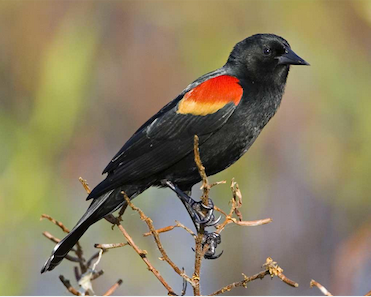
Red-winged blackbird [Greg Lasley/VIREO]
Red-winged Blackbird Agelaius phoeniceus
Among our most familiar birds, Red-wings seem to sing their nasal songs in every marsh and wet field from coast to coast. They are notably bold, and several will often attack a larger bird, such as a hawk or crow, that flies over their nesting area. The red shoulder patches of the male, hidden under body feathers much of the time, are brilliantly displayed when he is singing. Outside the nesting season, Red-wings sometimes roost in huge concentrations. (Audubon Field Guide)

Tougher rules aim to save salmon habitat for the good of Puget Sound orcas
It might soon be more difficult to build a seawall on Puget Sound. The state legislature is considering a bill that aims to help southern resident killer whales by protecting shoreline salmon habitat. Single-family homeowners who want to build a seawall could face a longer permit process under the bill. The Department of Fish and Wildlife would thoroughly review every proposed seawall for its potential effect on salmon habitat. The bill would also give the agency the authority to issue stop-work orders as well as civil penalties of up to $10,000 to property owners who don’t comply with the law. Eilis O'Neill reports. (KUOW)

Are Plastic Bag Bans Garbage?
It was only about 40 years ago that plastic bags became standard at U.S. grocery stores. This also made them standard in sewers, landfills, rivers, and the Great Pacific Garbage Patch. They clog drains and cause floods, litter landscapes, and kill wildlife. The national movement to get rid of them is gaining steam — with over 240 cities and counties passing laws that ban or tax them since 2007. Last week, New York became the second U.S. state to ban them. But, these bans may be hurting the environment more than helping it. University of Sydney economist Rebecca Taylor started studying bag regulations because it seemed like every time she moved for a new job — from Washington, D.C., to California, to Australia — bag restrictions were implemented shortly after. “Yeah, these policies might be following me,” she jokes. Taylor recently published a study of bag regulations in California. It’s a classic tale of unintended consequences. Greg Rosalsky reports. (NPR) See also: Why B.C. is better at recycling than most other places  B.C. has one of the most efficient recycling programs in Canada. Here are 3 reasons why it works  Jesse Johnston reports. (CBC) And also: Reducing waste at restaurants  Restaurants across the south sound are joining the growing fight to keep plastics out of the ocean. Jenna Hanchard reports. (KING)

250 Dungeness crabs dumped beside highway in Northern B.C.
A massive dump of dead crabs along a main northern highway has triggered a major investigation. The 250 male Dungeness crabs were found rotting beside a Highway 16 rest stop, west of Smithers, B.C., last week. Officials believe it's linked to ongoing illegal seafood sales along B.C.'s North Coast. Betsy Trumpener reports. (CBC)


Now, your tug weather--

West Entrance U.S. Waters Strait Of Juan De Fuca-  236 AM PDT Tue Apr 9 2019   
SMALL CRAFT ADVISORY IN EFFECT THROUGH LATE TONIGHT
  
TODAY
 W wind 15 to 25 kt. Wind waves 2 to 4 ft. W swell 8 ft  at 12 seconds. 
TONIGHT
 W wind 15 to 25 kt easing to 10 to 20 kt after  midnight. Wind waves 2 to 4 ft. W swell 8 ft at 11 seconds. A  slight chance of showers after midnight.


--
"Salish Sea News & Weather" is compiled as a community service by Mike Sato. To subscribe, send your name and email to msato (@) salishseacom.com. Your email information is never shared and you can unsubscribe at any time.

Salish Sea News: Communicate, Educate, Advocate

Follow on Twitter. 

Salish Sea Communications: Truth Well Told