Thursday, May 19, 2016

5/19 Transients, BC oil port, BC LNG, hungry bears, Salish Sea Stewards, BC rats, 'saving' wildlife

Transient orca (Heather MacIntyre/Maya's Whale Watching)
Transient orcas visiting northwest waters in record number
Now deemed “resident transients,” mammal-eating orcas are becoming familiar visitors to northwest waters. "I remember Dr. John Ford (head of the Cetacean Research Program at the Pacific Biological Station) telling me at least 10 years ago that by this time we’d start seeing an influx of transient killer whales in the Salish Sea, and he was right,” explained Capt. Mark Malleson, of Prince of Whales Whale Watching. Scientists and whale watchers report that a boom in the pinniped population -- seals and sea lions --means a set table for the orcas. (KIRO)

U.S. tribes mobilize against giant proposed Canadian pipeline, oil export terminal
An oil pipeline bigger than Keystone XL, which would put 40 tankers a month into waters shared by the U.S. and Canada, is expected to get a green light -- with conditions -- Thursday afternoon by Canada's National Energy Board. But the battle over Kinder Morgan Inc.'s proposed expansion of its Trans Mountain pipeline system is far from over.  Four Puget Sound Native American tribes have joined with aboriginal First Nations in British Columbia and climate activists to resist the proposed project.  The pipeline would carry up to 890,000 barrels of oil a day from Alberta's tar sands to Burnaby, just east of Vancouver. Joel Connelly reports. (SeattlePI.Com)

Central Saanich says no to Malahat LNG proposal
The District of Central Saanich has expressed strong opposition to the proposed Malahat Liquefied Natural Gas (LNG) project being touted by company Steelhead LNG and members from the community were right behind them. On May 9, President of Steelhead LNG Victor Ojeda gave a presentation to the municipality, with technical advisor Ian Hill and the CEO of the Malahat First Nation, Renee Racette. Carlie Connolly reports. (Peninsula News Review)

Low salmon stocks cause increased interactions between bears and humans: study
Low salmon stocks in B.C. waterways cause an increase in conflicts between humans and bears, and killing problem bears doesn't actually reduce the frequency of human-bear interactions. That's according to a new study by B.C. researchers — published in Scientific Reports — which looked at 35 years of data relating to conflicts between humans and grizzly bears in B.C. For bear populations that feed on spawning salmon, the study found that for every 50-per-cent decrease in salmon populations, the annual number of bears killed per square kilometre increased by an average of 20 per cent. Gavin Fisher reports. (CBC)

B.C. premier says it’s time Ottawa approves LNG, but denies linkage to oil pipelines
B.C. Premier Christy Clark says it’s long past time for the federal government to issue environmental permits for a multibillion-dollar liquefied natural gas terminal in Prince Rupert. Clark’s demand ups the pressure on the Trudeau Liberals, who have so far avoided hard decisions on resource projects that are being squeezed between pro-development premiers and environmental and indigenous opponents. But the B.C. premier isn’t laying the blame at the feet of the Liberal government elected last October, saying the bid by Indonesian giant Petronas for its Pacific NorthWest LNG terminal began more than three years ago. (Canadian Press)

Third class of Salish Sea Stewards ready for summer
The third class of Salish Sea Stewards is ready to hit area beaches in the name of citizen science, after graduating Tuesday from the program. The Salish Sea Stewards is a one-of-a-kind program in the region dedicated to educating and training volunteers to help with area research, outreach and events. The work the stewards do to help nonprofit and government agencies collect data is important in the efforts to protect and restore Puget Sound, Northwest Straits Commission Director Ginny Broadhurst said during the graduation. Kimberly Cauvel reports. (Skagit Valley Herald)

Parks Canada airbombs poison pellets to wipe out rats in B.C. national park
Parks Canada says it has wiped out invasive rats on two islands in Haida Gwaii, B.C., helping important seabirds species recover by doing so…. The news comes on the heels of the first State of North America's Birds report, that found one third of birds in North America are threatened with extinction, especially ocean birds. The rats threaten seabirds like ancient murrelets — a species at risk that is culturally significant to the Haida Nation — by eating their eggs and chicks. Maryse Zeidler reports. (CBC)

‘Save’ a baby bison? Visitors to our coast once ‘rescued’ a seal pup
The recent incident at Yellowstone has tongues wagging about tourists’ naiveté. Park rangers and wilderness experts in the Northwest try to be sympathetic to people who are perhaps new to the outdoors. But still, they’re sometimes left shaking their heads. Eric Lacitis reports. (Seattle Times)

Now, your tug weather--
WEST ENTRANCE U.S. WATERS STRAIT OF JUAN DE FUCA-  300 AM PDT THU MAY 19 2016  

TODAY
 W WIND 10 TO 20 KT. WIND WAVES 1 TO 3 FT. W SWELL 8 FT AT  12 SECONDS. CHANCE OF SHOWERS. 
TONIGHT
 W WIND 5 TO 15 KT...BECOMING SE AFTER MIDNIGHT. WIND  WAVES 2 FT OR LESS. W SWELL 7 FT AT 10 SECONDS. A CHANCE OF  SHOWERS.

--
"Salish Sea News & Weather" is compiled as a community service by Mike Sato. To subscribe, send your name and email to msato@salishseacom.com. Your email information is never shared and you can unsubscribe at any time.

Salish Sea News: Communicate, Educate, Advocate

Follow on Twitter.

Salish Sea Communications: Truth Well Told

Wednesday, May 18, 2016

5/18 Dungeness crabs, BC pipe panel, sea noise, spot prawns, Polley mine, Humboldt squid, Break Free...

Mount St. Helens, May 18, 1980 (Gary Rosenquist)
NOAA: Dungeness crab in peril from acidification
The Dungeness crab fishery could decline West Coastwide, a new study has found, threatening a fishing industry worth nearly a quarter-billion dollars a year. Scientists at the Northwest Fisheries Science Center in Seattle found that pH levels likely in West Coast waters by 2100 at current rates of greenhouse-gas pollution would hurt the survivability of crab larvae. Increasing ocean acidification is predicted to harm a wide range of sea life unable to properly form calcium carbonate shells as the pH drops. Now scientists at the NOAA’s Northwest Fishery Science Center of Seattle also have learned that animals with chiton shells — specifically Dungeness crabs — are affected, because the change in water chemistry affects their metabolism. Lynda Mapes reports. (Seattle Times)

Trudeau government names Trans Mountain environmental review panel
The federal government has announced the first of its promised additional environmental reviews of two pipeline projects that are already before the National Energy Board. The new, three-member panel will look into the proposed expansion of Kinder Morgan's Trans Mountain Pipelines. The members announced by Natural Resources Minister Jim Carr Tuesday are: Annette Trimbee, the president of the University of Winnipeg and a former deputy finance minister in Alberta…. Tony Penikett, the former premier of Yukon and the author of Reconciliation: First Nations Treaty Making in British Columbia…. Kim Baird, former elected chief of B.C.'s Tsawwassen First Nation, who now runs her own consulting firm specializing in indigenous policy, governance and development issues. Chris Hall reports. (CBC)

‘Sonic Sea’ movie takes us to the underwater world of sound
Chris Dunagan in Watching Our Water Ways writes: "“Sonic Sea,” which will air Thursday on Discovery Channel, will take you down beneath the ocean waves, where sounds take on new meaning, some with dangerous implications. Humans spend most of their time in air, a medium that transmits light so well that we have no trouble seeing the shapes of objects in a room or mountains many miles away. In the same way, water is the right medium for sound, which shapes the world of marine mammals and other species that live under water. The hour-long documentary film reveals how humpback whales use low-frequency sounds to communicate with other whales across an entire ocean and how killer whales use high-frequency sound to locate their prey in dark waters…."

Ten things you need to know about British Columbia spot prawns
A decade ago, British Columbia spot prawns were a bottom-of-the-barrel seafood product – the mushy filler for chowder and fortifier of cheap fish stock. Last weekend, the luxury crustaceans were toasted with Moët & Chandon champagne. To celebrate its 10th anniversary, the B.C. Spot Prawn Festival kicked off Friday night with a black-tie gala at the tony, private Vancouver Club. The splashy fete featured the delicacy in six courses – melted into “liquid gold,” smoked over rosemary, poached with grand-fir tips and chopped into XO sauce – prepared by famous chefs from Vancouver and across the country. Gala guests wore ball gowns and tuxedos and the soaring calla lily floral arrangements were lavish. The scene was about as far removed from a dockside spot-prawn boil as one could imagine. So how did the humble B.C. spot prawn go from being an unappreciated toss-away ingredient to one of Canada’s signature seafood luxury products coveted in restaurants around the world? Here’s what you need to know. Alexandra Gill reports. (Globe and Mail)

Mount Polley expect to go into full production, use repaired dam next month
Imperial Metals, despite setbacks in dealing with mine waste while running at reduced capacity at its Mount Polley gold and copper mine, expects to have permits in place to go to full production next month. The company also expects to have approval from the B.C. government to begin depositing mine waste in June at its large storage facility for the first time since a catastrophic failure of a rock and earth dam nearly two years ago. Gordon Hoekstra reports. (Vancouver Sun)

Vicious, and delicious: Humboldt squid now sustainable Ocean Wise restaurant fare
First they invaded the waters off the West Coast of British Columbia. Now the feared Humboldt squid is landing on restaurant menus on Vancouver Island. The man-sized cephalopod — also known as the jumbo flying squid, diablo rojo — is known to attack divers and fishermen. It is usually found in South America, all the way up to California, but it began appearing on the B.C. coast several years ago. Victoria's Fish Hook restaurant serves the squid in dishes ranging from calamari-like pakoras to masala-corn curry. Deborah Wilson reports. (CBC)

Fossil fuels protest comes with hefty price tag
he Skagit County Sheriff’s Office said Tuesday that the preliminary costs for it to staff the Break Free PNW protest event this past weekend were $92,000. Of that, about $70,000 went to overtime, said Jackie Brunson, chief of administrative services at the office. Brunson estimated that final costs for the office will be about $100,000. (Skagit Valley Herald)

About a ton of debris left after climate protest near Anacortes
Authorities say about a ton of debris was left on the ground after weekend environmental protest in northwest Washington. The anti-oil protesters told KING-TV they were forced to leave the area and didn’t have time to grab all their belongings before being arrested. Local authorities say the debris they took to the dump included camping equipment left by people who slept on railroad tracks near Anacortes…. The Skagit County Public Works department hauled away 2,300 pounds of debris. The activists say those items were valuable gear, camping equipment and clothing they never wanted to leave behind. (Associated Press)

Is your favorite beach safe for swimming?
The water bubbles from the small plastic container in Jim Ellis' hands. He's holding it about six inches under the surface of the nearly totally clear water a few feet from shore at Bracket's Landing Beach in Edmonds…. Jim is knee-deep not only in the chilly Puget Sound water, but his WSU Beach Watcher volunteer hours, too.  He's one of more than a hundred volunteers that will take weekly water samples at 70 Puget Sound beaches this summer. Tim Joyce reports. (KCPQ)

Bigg's killer whales become regulars in Pacific Northwest water
Transient whales, also known as Bigg’s killer whales, were familiar visitors to Pacific Northwest waters this spring. “Sure enough, we’ve had record sightings of Bigg’s whales in these waters the last several years and we just may top that this year,” says Capt,. Mark Malleson of Prince of Whales Whale Watching in Victoria. “Some of the transients are almost becoming ‘resident transients’ – the T065As for example were reported over 40 days in the Salish Sea in both 2014 and 2015.” (KING)

Do call it a comeback — how the checkerspot butterfly found salvation in a women’s prison
You may have heard about how the honey bee’s decline is threatening the world’s food crops. Well they’re not the only pollinators in trouble. The Taylor’s checkerspot butterfly was also facing extinction in the face of its shrinking prairie habitat. But thanks to an innovative breeding program at a women’s prison outside Seattle, it’s making a comeback. Cat Wise reports. (PBS Newshour)

Big win for small mammal
Efforts to revive the Olympic Peninsula's fisher population have helped the furry mammal narrowly avoid listing under the Endangered Species Act. The U.S. Fish and Wildlife Service recently determined that the distinct population of West Coast fisher is not at risk for extinction and does not require ESA protections. The service praised the "proactive fisher conservation efforts" led by the state Department of Fish and Wildlife, which began a fisher reintroduction program on the peninsula in 2008 and is now expanding it to the Cascade Range. Tristan Baurick reports. (Kitsapp Sun)

Unexpected Edmonds Fishing Pier repairs to cost nearly $400K
Following news earlier in the day that completion of the Edmonds Fishing Pier Rehabilitation Project will take longer than expected due to “poor quality original construction,” the Edmonds City Council learned at its Tuesday night meeting that it will cost nearly $400,000 more than was budgeted to complete the work. The main focus of the project was to repair the underlying support beams, which were showing significant rust and oxidation. But when the contractors began work, they discovered unanticipated significant damage, City Engineer Rob English told the council. (My Edmonds)

Now, your tug weather--
WEST ENTRANCE U.S. WATERS STRAIT OF JUAN DE FUCA-  300 AM PDT WED MAY 18 2016  

TODAY
 W WIND 5 TO 15 KT...BECOMING 10 TO 20 KT IN THE AFTERNOON.  WIND WAVES 1 TO 3 FT. W SWELL 6 FT AT 12 SECONDS. A CHANCE OF  SHOWERS.

TONIGHT
 W WIND 10 TO 20 KT. WIND WAVES 1 TO 3 FT. W SWELL 9 FT AT  13 SECONDS. A CHANCE OF SHOWERS.

--
"Salish Sea News & Weather" is compiled as a community service by Mike Sato. To subscribe, send your name and email to msato@salishseacom.com. Your email information is never shared and you can unsubscribe at any time.

Salish Sea News: Communicate, Educate, Advocate

Follow on Twitter.

Salish Sea Communications: Truth Well Told

Tuesday, May 17, 2016

5/17 Rail spill, BC oil pipes, BC LNG, LIDAR, Columbia salmon, drought, marine safety

Newcastle, Australia (Saeed Khan/NPR/KUOW)
PHOTOS: Protesters Around The World Target Fossil Fuel Industry
They came on kayaks and on bikes. They hunkered down in hammocks and on train tracks. They marched at refineries and did morning yoga at mines. For nearly two weeks, demonstrators on six continents gathered to protest climate change — and, in particular, the fossil fuel industry. Camila Domonoske reports. (NPR)

Railroad says Washington worst-case oil spill could cost $775 million
If an oil train derailed in Washington and dumped most of its cargo, cleanup costs could exceed $775 million, according to documents BNSF Railway Co. provided to the state. But BNSF — the largest rail shipper of crude oil to Washington refineries — declined to provide information about its insurance coverage for releases of hazardous materials. Instead, company officials referred state regulators to BNSF’s annual report, which lists 2015 revenues of $22 billion but includes a risk statement that says the cost of a catastrophic event could exceed the railroad’s insurance limits. For the first time, railroads hauling crude oil through Washington were required to report the estimated cleanup cost for a “reasonable, worst case” spill and provide insurance information and other financial assurance of their ability to cover the costs. However, the state can’t force federally regulated railroads to comply with the new rule. Becky Kramer reports. (Spokesman-Review)

Trudeau government to kick off new pipeline reviews by naming Trans Mountain panel today
The federal government will announce on Tuesday the first of its promised additional environmental reviews of two pipeline projects that are already before the National Energy Board, CBC News has learned. The new, three-member panel will look into the proposed expansion of Kinder Morgan's Trans Mountain Pipelines. It will be announced by Natural Resources Minister Jim Carr. The company wants to add a second pipeline alongside the original that was built in 1953 to carry oil from Edmonton to Burnaby. If approved, the twin lines would carry nearly 900,000 barrels of crude a day starting in 2018. Chris Hall reports. (CBC)

Canada’s environment minister wants details of B.C. climate change plan
Canada’s Environment Minister wants to see significant action by the British Columbia government to combat climate change as Ottawa mulls approval of a giant project to export liquefied natural gas from the province’s northern coast. The federal cabinet expects to make a decision on the $36-billion Pacific NorthWest LNG project by late June. Backed by Malaysian giant Petronas, the LNG export terminal promises $2.5-billion in annual government tax revenue, but will generate some 5.7 million tonnes of carbon dioxide a year – enough to boost the province’s total emissions of greenhouse gases by 8.5 per cent. That makes it the most serious test so far of the federal Liberal government’s willingness to balance its ambitious climate-change agenda with a desire to rejuvenate a moribund economy. Nathan Vanderklippe and Justine Hunter report. (Globe and Mail)

Using Lasers to Map in Glorious Detail
Hakai Institute scientists working on the Central Coast of British Columbia, from archaeologists to forest ecologists, need high-quality maps of what ecosystems cover the islands. But islands in this part of BC are covered by impassable terrain—boot-snatching bogs, impenetrable thickets of salal bushes, and shifty sand dunes. Calvert Island and its neighbor, Hecate Island, together make up an area larger than the city of Montreal. Mapping it the conventional way, on foot, would be nearly impossible. High-tech strategies, such as aerial photos, are better, but still limited. Hakai researchers have spent the last four years taking it to the next level: lasers. Josh Silberg reports. (Hakai)

Judge: Failed salmon restoration has cost billions 
It’s Groundhog Day. Again. Or maybe not. On May 3, U.S. District Court Judge Michael Simon trashed the federal government’s plan for managing dams on the Columbia River and its tributaries, saying it leaves threatened and endangered salmon at risk of extinction. This makes the fifth time since the Columbia’s salmon were protected under the Endangered Species Act that a federal court has tossed a biological opinion on the dams. Daniel Jack Chasan reports. (Crosscut)

Droughtlandia
When climate change causes Californians to migrate north to Oregon and Washington. Jeremy Miller reports. (Pacific Standard)

Trudeau accused of breaking promise on West Coast marine safety
Longtime Quadra Island politician Jim Abram says he heard Justin Trudeau promise one thing before the election and something else after it. Abram, vice-chair of the Strathcona Regional District, said the prime minister has broken a “face-to-face” promise he made to Abram concerning commitments to marine safety on the West Coast…. The talk with Trudeau occurred in an Edmonton restaurant last June when the Liberal leader was hosting a reception to seek support for his election campaign. Abram said there was “no doubt” that Trudeau was promising support for the ferries, marine safety and marine communications…. Critics say Liberal cuts to maritime safety include the closure of an emergency Marine Communications and Traffic centre in Comox on May 10; reducing the number of “safety” desks at the remaining Canadian Coast Guard centres in B.C. from five to four; cutting the number of supervisors and trimming the national budget for the centres from $49 million to $42  million. Kent Spencer reports. (Vancouver Sun)

Now, your tug weater--
WEST ENTRANCE U.S. WATERS STRAIT OF JUAN DE FUCA-  300 AM PDT TUE MAY 17 2016  

TODAY
 W WIND TO 10 KT. WIND WAVES 1 FT OR LESS. W SWELL 2 FT AT  12 SECONDS.

TONIGHT
 W WIND 10 TO 20 KT...BECOMING 5 TO 15 KT AFTER MIDNIGHT.  WIND WAVES 1 TO 3 FT. W SWELL 3 FT AT 11 SECONDS...BUILDING TO 5 FT  AT 11 SECONDS AFTER MIDNIGHT.

--
"Salish Sea News & Weather" is compiled as a community service by Mike Sato. To subscribe, send your name and email to msato@salishseacom.com. Your email information is never shared and you can unsubscribe at any time.

Salish Sea News: Communicate, Educate, Advocate

Follow on Twitter.

Salish Sea Communications: Truth Well Told
Monday, May 16, 2016

5/16 Angel shark, Break Free, Tacoma LNG, whales, red tide, species at risk, archeological sites

Pacific angel shark (Mark Cantwell/Vancouver Sun)
Pacific angel shark documented for first time in B.C. waters
Mark Cantwell had anticipated another enjoyable day of free-dive snorkelling off Victoria’s Clover Point, photographing sea urchins and other common marine life. What the Environment Canada policy advisor got was the experience of a lifetime — a close encounter with a species never before documented in B.C. waters, the Pacific angel shark. Cantwell was swimming near shore in his wetsuit on April 30 when another diver, Henry Fisher, reported spotting an unidentifiable creature on the ocean bottom, about 10 metres down. Larry Pynn reports. (Vancouver Sun)

Fossil fuel protest ends peacefully; 52 arrested
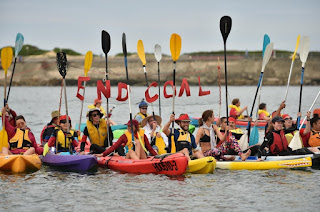
The three-day Break Free PNW protest wrapped up Sunday with a tally of 52 arrests, one successful water rescue and no injuries, authorities said. Protesters of fossil fuel use protested on land and sea over the weekend, waving flags and signs with messages of pushing for a fast transition to alternative fuels. The Sunday morning arrests were of protesters who were blocking railroad tracks at Farm to Market Road near Highway 20 to keep trains from reaching the two oil refineries at March Point. The Break Free PNW protest event was one of several occurring throughout the world, including several on Sunday. Protest sites included Albany, New York, Vancouver, British Columbia, Washington, D.C., Germany, Turkey, Nigeria, Australia and more. Brandon Stone reports. (Skagit Valley Herald)  See also: Break Free PNW protest photo gallery - Day 3  (Skagit Valley Herald) See also: Hundreds opposed to Trans Mountain pipeline rally at Kinder Morgan facility in Burnaby  Chad Pawson reports. (CBC)

Records on LNG plant in Tacoma should be disclosed, Pierce County judge rules
A Pierce County judge has ruled that records filed with Tacoma officials about a planned Port of Tacoma liquified natural gas plant should be made public, but he ordered the ruling shelved, pending a possible appeal. John Carlton, an activist with RedLine Tacoma, had requested the city turn over a set of records related to safety risks posed by the plant proposed by Puget Sound Energy. The utility claimed in court filings that what it told the city to help disaster preparedness planning could facilitate a terrorist attack. Puget Sound Energy also argued that some of the material was protected by state law that keeps trade secrets from public disclosure…. In the court case, Superior Court Judge Frank Cuthbertson found that Puget Sound Energy had not shown its city filings are “records assembled, prepared or maintained to prevent or respond to terrorist attacks” and failed to meet several other requirements that would shield them from public disclosure. Cuthbertson denied the utility’s request for an order keeping the records private, but his Friday order stayed their release in case the ruling is appealed. Derrick Nunnally reports. (Tacoma News Tribune)

Red tide shuts down shellfish harvest in parts of Strait of Georgia
Fisheries and Oceans Canada has closed large portions of the Strait of Georgia, from Victoria to Campbell River, to the harvest of clams, oysters, mussels and scallops due to red tide. Monitoring shows “unusually high levels” of paralytic shellfish poisoning toxins in the area. Cooking will not make the shellfish safe to eat. (Times Colonist)

More Salish Sea species at risk
The number of at-risk species in the Salish Sea is growing at an annual rate of nearly 3 percent, according to a new report that's giving a boost to the idea of greater cross-border coordination on conservation efforts in the shared waters of Washington and British Columbia. The report, released by the SeaDoc Society last month, indicates that ecosystem degradation is outpacing recovery efforts across the 6,900- square-mile Salish Sea, which includes Puget Sound, the Strait of Juan de Fuca and the Strait of Georgia…. The report identifies 12 Salish Sea species that have been added to Canadian and U.S. at-risk lists since 2013. These new "species of concern" include the Pacific lamprey and longfin smelt, a forage fish that serves as an important food source for marine predators. Seven birds were added: black scoter, black-legged kittiwake, long-billed dowitcher, eared grebe, parasitic jaeger, pectoral sandpiper and the semipalmated sandpiper. Tristan Baurick reports. (Kitsap Sun)

Hobby Drones Over Orca Whales: Legally Murky And A Potentially Bad Mix
Boats have to stay 200 yards away from the Northwest’s endangered resident killer whales. But what if one of those boaters launches an aerial drone to take better pictures from closer up? It’s not a theoretical question. And the answer is not as clear as law enforcement would like. “We have seen hobby drones being flown out there,” Pacific Whale Watch Association Executive Director Michael Harris said. “We have seen them being flown egregiously close to protected whales.” Tom Banse reports. (NW News Network)

Exam: Gray whale found dead in Seattle had air in chest
A juvenile gray whale found dead in Seattle’s Elliott Bay over the weekend had air in its chest cavity that likely prevented it from diving for food, according to exam results released Friday. A necropsy conducted by biologists with the Cascadia Research Collaborative confirmed what scientists observed when they assessed the whale a couple of days before it died. At the time, they suspected the animal was suffering from an infection or a collapsed lung that had filled its chest cavity with air, which would have made the animal too buoyant to dive. (Associated Press)

How Climate Change Threatens Coastal Archeological Sites
It’s the kind of foggy day you’d expect at Redwood National Park on the Northern California coast. The headlands are shrouded in mist and the gray-blue ocean churns against the shore.  “This place is called Shin-yvslh-sri~ – the Summer Place,” says Suntayea Steinruck a member of the Tolowa Dee-ni’ Nation and Tribal Heritage Preservation Officer for Smith River Rancheria.  Her ancestors lived, hunted and fished around what used to be a small village on this site…. Erosion has been happening all along the Northwest coast for thousands of years. But recently there’s been a change in the intensity and frequency of coastal storms.  “The whole acceleration has increased, and we’re definitely losing sites more rapidly,” says Rick Minor, an archeologist with Heritage Research Associates in Eugene, Oregon.  Jes Burns reports. (OPB/EarthFix)


 Now, your tug weather--

WEST ENTRANCE U.S. WATERS STRAIT OF JUAN DE FUCA-  250 AM PDT MON MAY 16 2016  

TODAY
 W WIND 5 TO 15 KT...BECOMING 10 TO 20 KT IN THE AFTERNOON.  WIND WAVES 1 TO 3 FT. W SWELL 4 FT AT 12 SECONDS.

TONIGHT
 W WIND 10 TO 20 KT...BECOMING 5 TO 15 KT AFTER MIDNIGHT.  WIND WAVES 1 TO 3 FT. W SWELL 4 FT AT 12 SECONDS.

--
"Salish Sea News & Weather" is compiled as a community service by Mike Sato. To subscribe, send your name and email to msato@salishseacom.com. Your email information is never shared and you can unsubscribe at any time.

Salish Sea News: Communicate, Educate, Advocate

Follow on Twitter.

Salish Sea Communications: Truth Well Told

Friday, May 13, 2016

5/13 Ag pollution, fishing season, Ray Hilborn, BC fossil fuels, birds at risk, Roberts Bank, derelict boats, sanctuary

Northern red-legged frog (Laurie MacBride)
Red-Legged Days
Laurie MacBride in Eye on Environment writes: "The water level in our pond is going down rapidly as summer approaches, but so far there’s still enough to support a healthy colony of northern red-legged frogs (Rana aurora). For the past couple of weeks, we’ve been seeing these reclusive amphibians all around the banks of the pond, wherever a patch of sunshine can be found. But it requires some serious searching. Even though the adults can be up to 3 inches long, they’re hard to spot, as they blend in so well with the vegetation…."

Report faults state on groundwater pollution
In a stinging look at industrial agricultural practices that may contribute to degrading water quality and steep declines in Puget Sound salmon, a new report places responsibility squarely on weak environmental enforcement. The report from the Western Environmental Law Center calls for dramatic strengthening of regulations and enforcement, long a hot political issue, with a particular call for leadership by the state Department of Ecology. State administrations, led by Democratic governors, and the Legislature under both parties have long shied away from offending farmers. The focus of the report, Agricultural Pollution in Puget Sound, is on what the authors sees as unsustainable practices that lead to contaminated runoff, such as cows grazing too closely to streams, a lack of buffers between agriculture lands and waterways, or chemical fertilizers washing from croplands into waterways. Martha Baskin reports. (Crosscut)

State fisheries director Jim Unsworth issues statement on salmon season breakdown 
…. “Some people have suggested that anglers should break the law and go fishing in closed areas, or interfere with tribal fisheries. We strongly disagree. Such actions would do far more harm than good. And, in fact, the state agrees that tribal fisheries in Puget Sound this spring will not threaten ESA-listed fish stocks. For those reasons, I urge everyone to follow current rules and to avoid interfering with tribal fisheries. Breaking state fishing laws or interfering with treaty fishing would only complicate the process of opening state fisheries and most certainly would impair our ability to work with the tribes in the future…." Posted by Mark Yuasa (Seattle Times)

Port Angeles man reels in behemoth halibut in Freshwater Bay
Catching a 177-pound halibut might seem like a fish tale to some, but Mike Constant of Port Angeles had the proof Thursday swinging from a scale in the parking lot of Swain’s General Store. Constant, 58, said he caught the halibut after a 45-minute struggle with the behemoth in Freshwater Bay. “We ripped one harpoon out and got him with a second one,” a beaming Constant said while onlookers admired his catch as it was being weighed at the store at 602 E. First St. Chris McDaniel reports. (Peninsula Daily News)

Greenpeace files complaint about UW fishery professor
Ray Hilborn, a prominent University of Washington fishery scientist, is under attack from Greenpeace for sometimes leaving out mention of industry funding he receives in articles published in academic journals and elsewhere. In a letter sent Wednesday to university President Ana Mari Cauce, Greenpeace filed a complaint against Hilborn’s research practices, and asked for an investigation. Hilborn, over the years, has been a critic of Greenpeace as well as other environmental groups and researchers he accuses of overstating the impacts of fishing on marine resources. Hal Bernton reports. (Seattle Times)

Kinder Morgan pipeline, tankers endanger thousands of B.C. outdoor jobs and potentially billions in future revenue
On May 14, when a fleet of kayaks sets out across the Burrard Inlet to paddle in front of Kinder Morgan’s Westridge tanker terminal, they will represent more than just a rejection of the proposed tarsands pipeline and a demand for bold climate action. These “kayaktivists” will reflect a defence of one of Metro Vancouver's, and the entire coast’s, most important natural resources: the outdoors. Candace Campo writes. (The Georgia Straight)

B.C. LNG: First Nations appeal to UN to help stop Petronas project
First Nations leaders from northwestern British Columbia have taken their battle against a Petronas-backed LNG project to the United Nations. The group was scheduled to travel to New York Thursday to seek UN support for a demand that the Canadian government reject the LNG project proposed just south of Prince Rupert. Opponents say the $36-billion Pacific Northwest plant, slated for Lelu Island at the mouth of the Skeena River, threatens wild salmon habitat on the second largest salmon bearing river in B.C. (Canadian Press)

B.C. birds in decline: 5 to watch
Publication of the BC Breeding Bird Atlas is raising alarms about the decline of several species across the province. The atlas is one of the largest citizen-science initiatives in B.C. history. More than 1,300 volunteers contributed some 60,000 hours of their time over eight years to document the status of birds. Larry Pynn reports. (Vancouver Sun)

Oil, gas industry challenges efforts to protect Western bird
The oil and gas industry on Thursday challenged in federal court drilling restrictions imposed by the Obama administration to protect a struggling bird that ranges across 11 Western states. The Western Energy Alliance and North Dakota Petroleum Council said they would ask a U.S. District judge in North Dakota to block sweeping land use plans for the region adopted in September by the Interior Department. The groups said local and state efforts to prop up populations of greater sage grouse have been effective. Sweeping changes to U.S. Interior Department policies were not needed to ensure the chicken-sized bird's long-term survival, they said. Matthew Brown reports. (Associated Press)

Group encourages planning for clean energy future
Is the end approaching for oil refineries in northwest Washington, much the way it did for the cement, timber and cannery industries? A group that convened Wednesday at the Anacortes Depot Arts and Community Center said with the world looking for solutions to climate change, such an end may be approaching, but is not likely coming quickly. The future of oil refineries has been discussed at recent events in Skagit County. Speakers at the Wednesday event, which was called “Charting our course: A conversation about our energy future,” said it’s a discussion that should continue. Kimberly Cauvel reports. (Skagit Valley Herald)

Water's Edge: Like a flea among elephants at Roberts Bank
Larry Pynn writes: "If we just left things alone, Canoe Pass wouldn’t be the quiet little backwater that it is, all but forgotten next to the other three arms of the Fraser River. That’s not how it works on the industrial lower Fraser. Some 14 federal structures, including the Steveston and north arm jetties, are located in the lower Fraser to stabilize the course of the river and help maintain channel depths for navigation past communities such as Steveston. One study by GeoSea Consulting Canada Ltd. estimated that 16 per cent of the Fraser’s flow goes through the north and middle arms around Sea Island, 70 per cent through the south arm, and 14 per cent through Canoe Pass. It’s fine with me that Canoe Pass is runt of the litter on the sprawling delta. On this clear, crisp morning, it emerges as a bucolic and beautiful stretch of shoreline devoid of the larger vessels so menacing to paddlers on other stretches of the lower Fraser…." (Vancouver Sun)

Victoria aims to begin clearing Gorge of derelict boats by fall
Victoria expects to begin the process of removing liveaboards and derelict boats from the Gorge waterway in September. Councillors agreed Thursday to hold a public hearing May 26 on zoning bylaw changes in the waterway that would allow for short-term anchoring of up to 48 hours, to a maximum of 72 hours in a 30-day period. The current bylaw prohibits anchoring in the Gorge Waterway from Selkirk Trestle to about Gorge Road Hospital. But following a recent B.C. Court of Appeal decision regarding anchoring in West Kelowna, Victoria council, worried a blanket prohibition would exceed municipal jurisdiction, changed course. The federal government has jurisdiction over navigation. Bill Cleverey reports. (Times Colonist)

Island coves eyed to shelter whales retired from aquariums
One of Vancouver Island’s coves, bays and inlets could become a refuge for orcas retired from aquarium life. The Whale Sanctuary Project, launched last week, is in the early stages of identifying potential sites along the coast of southern B.C. and Washington state. The sanctuary would allow retiring, injured or ill cetaceans — whales, dolphins and porpoises — to swim in a cordoned-off ocean environment close to their natural habitat. “A lot of us in the marine mammal community have known for a long time that, if there was any kind of move to phase out having these animals in entertainment in concrete tanks, there’s nowhere to go,” said project president Lori Marino, an expert in animal behaviour and executive director of the Utah-based Kimmela Center for Animal Advocacy. The project has raised an initial $1 million US toward a $20-million startup budget, Marino said. Amy Smart reports. (Times Colonist)

Now, your weekend tug weather--
WEST ENTRANCE U.S. WATERS STRAIT OF JUAN DE FUCA-  239 AM PDT FRI MAY 13 2016  

TODAY
 SE WIND 5 TO 15 KT. WIND WAVES 2 FT OR LESS. W SWELL 3 FT  AT 11 SECONDS.

TONIGHT
 NW WIND TO 10 KT...BECOMING SW AFTER MIDNIGHT. WIND  WAVES 1 FT OR LESS. W SWELL 2 FT AT 11 SECONDS.

SAT
 W WIND 5 TO 15 KT...RISING TO 15 TO 25 KT IN THE AFTERNOON.  WIND WAVES 2 FT OR LESS...BUILDING TO 2 TO 4 FT. W SWELL 2 FT AT  11 SECONDS. A SLIGHT CHANCE OF SHOWERS.

SAT NIGHT
 W WIND 5 TO 15 KT. WIND WAVES 2 FT OR LESS. W SWELL  3 FT AT 12 SECONDS.

SUN
 W WIND 5 TO 15 KT...BECOMING 10 TO 20 KT IN THE AFTERNOON.  WIND WAVES 1 TO 3 FT. W SWELL 3 FT AT 13 SECONDS.

--
"Salish Sea News & Weather" is compiled as a community service by Mike Sato. To subscribe, send your name and email to msato@salishseacom.com. Your email information is never shared and you can unsubscribe at any time.

Salish Sea News: Communicate, Educate, Advocate

Follow on Twitter.

Salish Sea Communications: Truth Well Told


Thursday, May 12, 2016

5/12 Break Free, coal ports, Vic sewer, fish season, snowpack, Colstrip, spot prawn, land use code

Tesoro at March Point (John Hagen/ZUMA)
Protestors To Converge On Anacortes For Direct Action Against Fossil Fuels
Hundreds of activists are gathering in Anacortes this weekend for protests aimed at keeping fossil fuels in the ground. The Pacific Northwest “Break Free from Fossil Fuels” event is part of two weeks of actions that have been taking place in dozens of cities all over the globe. Other U.S. cities on the list include Denver, Los Angeles, Washington, D.C. and Chicago. Local authorities are warning residents to prepare for congestion. Anacortes is home to two oil refineries that are the focal point of the protests. Bellamy Pailthorp reports. (KPLU) See also: Anacortes Climate Protest Clashes With Heron Nesting Season  Cassandra Profita reports. (EarthFix)

Environmentalists worry more U.S. coal will come through B.C. after Wash. port proposal rejected
Local environmentalists are worried more coal could end up coming through B.C. after the U.S. government rejected a proposed coal terminal near Bellingham, Washington on Monday. The rejection came after the U.S. Army Corps of Engineers determined the terminal would negatively impact the treaty-based fishing rights of the Lummi Nation. "We're excited for our allies in the United States," says Arie Ross, a Beyond Coal campaigner for the Dogwood Initiative. But Ross is worried that the decision could mean a renewed reliance on B.C. terminals by U.S. coal companies: "[They] are looking to export through whatever means they can, and the fact that another coal port has been cancelled means that there's [only] two more opportunities to get their coal to market." Ross is referring to proposed coal terminals in Fraser-Surrey and Longview, Washington. (CBC)

Politicians bow to pressure, accept independent sewage board
Greater Victoria politicians bowed to provincial pressure Wednesday and agreed to set up an independent panel of experts to oversee sewage treatment plans for the region. The Capital Regional District board made the decision following a private meeting with B.C. Community Minister Peter Fassbender, who essentially told the politicians to get moving or risk losing more than $500 million in federal and provincial money this fall. “The minister made it very clear that there was just too many committees, too many interests and what we need to do is focus,” said Oak Bay Mayor Nils Jensen, a CRD board director. “So what we’ve done today is essentially accepted the recommendation of a very lean, very pointed governance structure which will come up with recommendations.” Lindsay Kines reports. (Times Colonist) See also: B.C. makes offer the CRD board couldn’t refuse  The politicians might paint it in prettier colours but have no doubt, this was the day the provincial government lost patience with Dysfunction-by-the-Sea…. Jack Knox writes. (Times Colonist)

State fishery submits proposal back to tribes hopefully ending stalemate on setting salmon seasons 
State Fish and Wildlife submitted their fishing proposal late Wednesday afternoon back to tribal fishery managers, and many in the sport-fishing industry are hopeful that an agreement on the 2016-17 salmon fishing seasons will be announced in the next day or two. On May 6, the Puyallup Tribe submitted a proposal letter to Michael S. Grossman, the Washington State Attorney General’s Office with a list of agreed fisheries for sport and tribes. This comes after talks failed during a meeting on April 27 in Fife with around 60 representatives from state, tribal, NOAA Fisheries, and officials from the governor’s and attorney general’s office. The positive signs in recent days will hopefully end a month-long dispute on how to share the burden of forecasted poor Puget Sound coho and Puyallup River chinook returns. Mark Yuasa reports. (Seattle Times) See also: Halibut opener a bumpy ride in windy weather for most anglers  Michael Carman reports. (Peninsula Daily News)

B.C. snowpack reaches record low for May
Snow in B.C. has melted early and quickly this spring, leaving a record-low amount of snowpack on B.C. mountains for May. Many regions have snow levels less than half of normal for this time of year, according to the latest bulletin from the River Forecast Centre, released this week. The provincial average is 53 per cent of normal — the lowest level since 1980 when record-keeping began…. Overall, conditions as of May 1 look more like June 1 — meaning snow is disappearing three or four weeks early, the report said. It's largely gone from low and mid-elevations already. Lisa Johnson reports. (CBC) See also: Specialist: Rapid melt of Olympic snowpack could prompt water worries in late summer  Arwyn Rice reports. (Peninsula Daily News)

Bullock meets with Colstrip stakeholders about fate of coal-fired plant
Three owners of Montana’s much-discussed Colstrip coal-fired power plant sat down with Gov. Steve Bullock in Helena on Wednesday to start talking about what happens to the aging power plant as forces seem to push the eventual closure of its two older units. Kimberly Harris, CEO of Puget Sound Energy in Washington; Paul Farr, CEO of Pennsylvania-based Talen Energy; and Bob Rowe, CEO of NorthWestern Energy discussed the future of the plant, which sits about two hours east of Billings. The ownership picture in Colstrip is complex. Six companies have a stake in the plant. Talen owns 50 percent of Units 1 and 2, a 30 percent share of Unit 3 and also operates the entire four-unit Colstrip complex. The plant and the town that exists mostly because of it and a nearby coal mine face challenges from laws passed in Washington and Oregon to push utilities based in those states with ownership in Colstrip to drop coal from their portfolio. The market is also favoring the low price of natural gas. Holly Michels reports. (Independent Record)

B.C. spot prawn numbers could fall with loss of kelp as starfish die off
About half of all the kelp in Howe Sound has disappeared, thanks to the starfish die-off over the past two or three years, and that could affect the spot prawn harvest in future. As prawn lovers await the first batch of B.C.’s tasty, short-lived B.C. shellfish delicacy — expected to hit the shore Friday, a day after the 2016 fishing season opens — a Vancouver Aquarium researcher is warning the current loss of kelp could hurt baby prawns in future years. The size of this year’s harvest won’t be known until Friday, according to Steven Richards of the Pacific Prawn Fishermen’s Association, but “it’s looking good, everyone’s pumped.” But the depleted kelp beds are “nursery habitat” for the reddish-brown shrimp known for its sweet flavour and firm texture, and popular around the world. Susan Lazaruk reports. (Vancouver Sun)

Anacortes looking to streamline land use code 
The city of Anacortes is looking to clean up its messy land use code within the next several years, a move city officials say will create a less confusing, more streamlined process. In its current state, the code is divided into multiple sections, called titles. The proposed change would gradually move all the provisions from those titles into one title, called Title 19. During that process, the city will fix confusing and redundant provisions. Aaron Weinberg reports. (Skagit Valley Herald)

Now, your tug weather--
WEST ENTRANCE U.S. WATERS STRAIT OF JUAN DE FUCA-  236 AM PDT THU MAY 12 2016  

TODAY
 W WIND TO 10 KT...BECOMING NW 10 TO 20 KT IN THE  AFTERNOON. WIND WAVES 1 FT OR LESS...BUILDING TO 1 TO 3 FT.  W SWELL 4 FT AT 9 SECONDS. PATCHY FOG IN THE MORNING.

TONIGHT
 NW WIND 10 TO 20 KT...BECOMING W TO 10 KT AFTER  MIDNIGHT. WIND WAVES 1 TO 3 FT...SUBSIDING TO 1 FT OR LESS.  W SWELL 3 FT AT 12 SECONDS.

--
"Salish Sea News & Weather" is compiled as a community service by Mike Sato. To subscribe, send your name and email to msato@salishseacom.com. Your email information is never shared and you can unsubscribe at any time.

Salish Sea News: Communicate, Educate, Advocate

Follow on Twitter.

Salish Sea Communications: Truth Well Told

Wednesday, May 11, 2016

5/11 Fishing season, oil spill, pollution suit, Comox CG, GBH, Enetai Cr., bag ban, Shell drill, dead zones

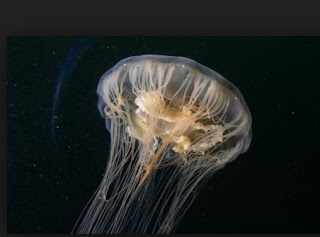
Chinese police uncover huge fake jellyfish 'scam'
Police in eastern China have raided two fake jellyfish workshops, saying more than 10 tonnes is thought to have made its way into local food markets. Police said the fake jellyfish had been made by mixing chemicals, adding that checks showed high levels of aluminum. The syndicates made more than 170,000 yuan (£18,100; $26,100) in profits in a year of production, they added. Jellyfish is very popular sliced and served as salad, particularly along China's southern and eastern coasts. Martin Yip reports. (BBC China)

Positive move in right direction made on possibly saving salmon fishing seasons
Coming to an agreement on the 2016-17 salmon fishing seasons has taken a small step in the right direction, but to say state and tribal fishery managers are close might still be a reach at this point…. This is a sign of hope as talks fell apart during a meeting on April 27 in Fife – where around 60 representatives from state, tribal, NOAA Fisheries, and officials from the governor’s and attorney general’s office. The problem now lies with how to cut-back on the catch and split it between sport and tribal fisheries of an expected poor return of Puyallup River chinook. Mark Yuasa reports. (Seattle Times)

Esquimalt Harbour closed to fishing after spill
Fisheries and Oceans Canada is prohibiting the harvesting of all fish species in Esquimalt Harbour after a barge ran aground and dumped about 27,000 litres of diesel into Plumper Bay on Sunday. Island Health and the First Nations Health Authority are also advising people and pets to stay clear of the water and shoreline. Vancouver Pile Driving said its construction barge broke loose in high winds early Sunday morning. The barge, which carries a crane, ran aground on the flat, sandy and rock-strewn beach, which is ringed by Esquimalt Nation on one side and Songhees Nation on the other. Cleanup crews were on scene by 1 p.m. Sunday and skimmed the water’s surface throughout the night. By Monday afternoon, about 27,000 litres of diesel had been recovered and the marine portion of the cleanup was deemed complete. Cindy E. Harnett reports. (Times Colonist)

Port of Seattle, environment group settle clean-water lawsuit
The Port of Seattle has agreed to follow certain practices to prevent stormwater pollution at Pier 66 as part of a settlement of an environmental lawsuit. The port, Puget Soundkeeper Alliance and Cruise Terminals of America, a former tenant at the cruise terminal in downtown Seattle, filed an agreement in federal court on Monday. The port and its new tenant will follow best management practices in fueling, maintenance and other operations. The environmental group sued the port and Cruise Terminals in 2014, alleging they violated the Clean Water Act by allowing stormwater runoff into Elliott Bay without a proper permit. The port and the cruise terminal operator did not admit to wrongdoing. But they each agreed to pay Puget Soundkeeper $250,000 for legal and other fees. The group will allocate $50,000 to a fund that provides money to improve water quality in Puget Sound. (Associated Press)

Comox coast guard closing today despite communications concerns
The Comox Coast Guard Communications station is slated to close today — a move the union claims will put lives at risk. With the closure, the coast guard in B.C. will now be staffed in three places —  a communications station in Prince Rupert and another in Victoria, as well as a base in Vancouver that has two inflatable rescue vessels. But coast guard workers say running two communication stations is not enough to ensure the waters are safe…. The decision to close the station, along with others, was made by the previous Conservative government. The federal Liberals reopened the Kitsilano base in May 2016 after winning the election, but say they will not be doing the same with the Comox station. Wanyee Li and Farrah Merali report. (CBC)

Group surveys Skagit County's herons
From a beach on east March Point, Sue Ehler scanned the shallow waters of an ebbing Padilla Bay on Friday morning, tallying the number of great blue herons standing in the eelgrass beds. At about 9:30 a.m., Ehler reporter to Matt Kerschbaum that she saw 182 of the region’s iconic birds foraging for food. Ehler, Kerschbaum and Bonnie Kerschbaum are part of a 19-member team of volunteer citizen scientists working on a survey of herons in Skagit County. Kimberly Cauvel reports. (Skagit Valley Herald)

New test might clear the water on mystery
The tiny jar Shawn Ultican dips into Enetai Creek might solve one of the longest-running stream pollution mysteries in Kitsap. That's because Ultican, a water-quality investigator with the Kitsap Public Health District, has a new water-testing technology at his disposal, one that could help track down the root causes of fecal pollution plaguing Enetai and several other creeks…. The Health District's new testing method can detect hundreds of chemical compounds found in human waste, including antibiotics, painkillers and other drugs. These compounds can serve as markers, indicating that human urine and feces is seeping into streams from failed septic systems or leaking sewer pipes. Finding the compounds helps rule out nonhuman causes, such as pet and wildlife waste. Tristan Baurick reports. (Kitsap Sun)

Tacoma’s plastic bag ban inches forward, but with new questions from City Council
Tacoma’s proposed ban on plastic grocery bags is moving forward, but a City Council meeting Tuesday revealed tough questions about the ordinance that could lead to its rejection. So far, three City Council members are on the record supporting a measure that would prohibit stores from handing out free, disposable plastic bags while charging customers at least a nickel if they want to use a paper bag. That group is Keith Blocker, Anders Ibsen and Ryan Mello. Two other council members — Conor McCarthy and Joe Lonergan — are critical of it. McCarthy thinks it’s moving too fast and would benefit from more discussion; Lonergan questions whether it would place a burden on the city’s lower-income neighborhoods while yielding minimal environmental benefits. Adam Ashton reports. (Tacoma News Tribune)

Five Pacific islands disappear as sea levels rise
Five tiny Pacific islands have disappeared amid rising seas and erosion, Australian researchers say. The missing islands, part of the Solomon Archipelago, were not inhabited by human beings. But six other islands were found to have seen swathes of land turn into sea, destroying entire villages. The researchers say it is the first scientific confirmation of the impact of climate change on Pacific coastlines. (BBC)

Shell relinquishes offshore leases in Alaska's Chukchi Sea
The only company to drill an exploratory oil well in Alaska's Chukchi Sea following a 2008 federal lease sale confirmed Tuesday it has relinquished nearly all of its leases. Royal Dutch Shell PLC formally relinquished all but one of its leases in the waters off Alaska's northwest coast, spokesman Curtis Smith said Tuesday. The news was not a complete surprise. An exploratory well drilled in 2015 did not find commercial quantities of oil. Shell announced in September it was suspending exploration in Alaska waters. Dan Joling reports. (Associated Press)

Suffocating the Ocean
Oxygen-depleted oceans have preceded many mass extinctions in Earth’s past, including the worst one of all 252 million years ago. Are hypoxic dead zones from California to Namibia a harbinger of the next extinction? Moises Velasquez-Manoff reports. (Pacific Standard)

Now, your tug weather--
WEST ENTRANCE U.S. WATERS STRAIT OF JUAN DE FUCA-  240 AM PDT WED MAY 11 2016  

TODAY
 W WIND TO 10 KT...BECOMING NW 10 TO 20 KT IN THE  AFTERNOON. WIND WAVES 1 FT OR LESS...BUILDING TO 1 TO 3 FT IN THE  AFTERNOON. W SWELL 4 FT AT 12 SECONDS. PATCHY FOG IN THE MORNING.

TONIGHT
 W WIND 10 TO 20 KT...EASING TO 10 KT AFTER MIDNIGHT.  WIND WAVES 1 TO 3 FT...SUBSIDING TO 1 FT OR LESS AFTER MIDNIGHT. W  SWELL 4 FT AT 9 SECONDS.
--
"Salish Sea News & Weather" is compiled as a community service by Mike Sato. To subscribe, send your name and email to msato@salishseacom.com. Your email information is never shared and you can unsubscribe at any time.

Salish Sea News: Communicate, Educate, Advocate

Follow on Twitter.

Salish Sea Communications: Truth Well Told