Monday, February 3, 2020

2/3 Feather duster worm, Navy water, B'ham climate, new ollsands mine, LNG footprint, Point Elliott Treaty, wolverines, Trump's weather, Victoria, hunting, octopus

Feather duster worm [Nick Hobgood/Slater Museum]
Feather Duster Worm Eudistylia vancouveri
This conspicuous and beautiful species is a prominent part of the diverse fauna encrusting the sea bottom in the Pacific Northwest. They may also be seen growing on pilings and floats, where their activities can be watched without the need of a wet suit and scuba tanks. The visible part of the worm consists of a ring of feathery, brightly colored, tentacles that wave gently in the current. Below that is a calcareous tube that may be as much as 45 cm long. When a potential predator such as a fish or diver comes near, the tentacles disappear in a flash, pulled inside a calcareous tube, which then closes over them. (Slater Museum)

Navy to test drinking water from wells bordering Bangor for contamination
The Navy will test the drinking water of residents whose homes border Naval Base-Kitsap to determine whether there are dangerous levels of contamination from firefighting foam once used at Bangor.  If any homes in areas bordering the base are found to have what are commonly called PFAS in dangerous concentrations, they will receive bottled water indefinitely, "until a long-term solution is implemented," the Navy told the Kitsap Sun. Josh Farley reports. (Kitsap Sun)

City of Bellingham takes first steps to meet its climate-change goals  (Paywall)
Bellingham City Council members have started looking at ways that the city can meet its goal of using 100% renewable energy in the next 10 to 15 years. In addition, the city has hired a climate and energy manager for issues related to the Climate Action Task Force recommendations presented in December and the city’s efforts to meet goals set in its 2018 Climate Action Plan. And, council members are now focusing on climate change as they decide how to build a new wastewater treatment plant to replace an aging one at Post Point...All seven members of the City Council attended the new Climate Action Committee’s first meeting Jan. 13, even though only Hannah Stone, Dan Hammill and Pinky Vargas serve on that panel. At that meeting, Stone said the committee was setting priorities and she encouraged residents to stay informed. Robert Mittendorf reports. (Bellingham Herald)

Can a massive new oilsands mine be reconciled with Trudeau's 'net-zero' promise?
The political complexity of the challenge facing Justin Trudeau as the federal cabinet prepares to make a decision on Teck Frontier — a proposed large new oilsands mine in northern Alberta — is underlined by the categorical statements of the project's loudest proponents and opponents. "If this project does not proceed, it would be a clear indication that there is no way forward for this country's largest natural resource," Alberta Premier Jason Kenney declared in a speech in Ottawa in December. A day later, the Canadian environmentalist Tzeporah Berman wrote in The Guardian that "approving Teck Resources' Frontier mine would effectively signal Canada's abandonment of its international climate goals." Aaron Wherry reports. (CBC)

New Study Casts Shadow on LNG Fuel’s Climate Footprint
One of the shipping industry’s great hopes for improving its environmental performance — engines powered by liquefied natural gas — won’t offer the benefits that many vessel owners are hoping for. That’s the conclusion of a nonprofit that analyzed the emissions from different types of vessels that use the fuel. Some types of LNG-powered ships leak so much methane — a contributor to global heating — that the environmental damage they cause over a 20-year period is far more acute than equivalent vessels run on conventional fuels. Jack Wittels and Akshat Rathi report. (Bloomberg)

Point Elliott Treaty returns to tribes here, 165 years later
Their ancestors had signed it generations before. About 150 tribal members gathered to inspect the Treaty of Point Elliott in January, on the anniversary of its creation. Nearly all were seeing it for the first time. After 165 years, the treaty has returned to the land where it was signed. It’s now on display at the Hibulb Cultural Center on the Tulalip Indian Reservation, one of the reservations established by the treaty. On Jan. 22, 1855, thousands were drawn to the shores of what is now Mukilteo to witness the signing of the Treaty of Point Elliott. Today it’s considered one of the most important documents to Native American tribes around the Puget Sound. Stephanie Davey reports. (Everett Herald)

Fight re-emerges over protecting wolverines
Amid discussions about restoring grizzly bears to the North Cascades and the recent reintroduction of cat-like creatures called fishers to the region, conservation groups are seeking protection for another elusive carnivore that was historically more common in area mountains. Nine groups are calling on the federal government to list the wolverine as threatened under the Endangered Species Act. The wolverine is a creature between about 20 and 40 pounds, with a bushy tail and white markings on its otherwise dark brown body, according to the U.S. Fish & Wildlife Service. They will hunt small animals, scavenge what’s left of carcasses hunted by other predators, and eat fruit when available. Kimberly Cauvel reports. (Skagit Valley Heald)

NOAA Leaders Privately Disowned Agency’s Rebuke of Scientists Who Contradicted Trump
Senior officials with the National Oceanic and Atmospheric Administration privately disavowed an unsigned statement issued by the agency last year that rebuked its own weather forecasters for contradicting President Trump’s false warnings that Hurricane Dorian would most likely hit Alabama, new documents show. Lisa Friedman, John Schwartz and Mark Walker report. (NY Times)

Like Its 2 Royal Guests, Canada’s Most English City Reinvents Itself 
Prince Harry and his wife, Meghan, have retreated from royal life to Victoria, which has long embraced its queenly name. But the city, like the duke and duchess, is breaking with tradition. Dan Bilefsky reports. (NY Times)

Hunting is ‘slowly dying off,’ and that has created a crisis for the nation’s many endangered species
....Americans’ interest in hunting is on the decline, cutting into funding for conservation, which stems largely from hunting licenses, permits and taxes on firearms, bows and other equipment. Even as more people are engaging in outdoor activities, hunting license sales have fallen from a peak of about 17 million in the early ’80s to 15 million last year, according to U.S. Fish and Wildlife Service data. The agency’s 2016 survey suggested a steeper decline to 11.5 million Americans who say they hunt, down more than 2 million from five years earlier. Frances Stead Sellers reports. (Washington Post)

If you like to watch: Why an octopus might think like an alien
Researcher Dominic Sivitilli goes to the bottom of the sea to study the bizarre mind of the giant pacific octopus. Sarah Hoffman and Ted Alvarez report. (Crosscut)


Now, your tug weather--

West Entrance U.S. Waters Strait Of Juan De Fuca-  256 AM PST Mon Feb 3 2020   
SMALL CRAFT ADVISORY IN EFFECT THROUGH THIS AFTERNOON
  
TODAY
 NW wind 15 to 20 kt easing to 5 to 15 kt in the  afternoon. Wind waves 2 to 3 ft subsiding to 2 ft or less in the  afternoon. W swell 9 ft at 12 seconds. 
TONIGHT
 SW wind 5 to 15 kt. Wind waves 2 ft or less. W swell  8 ft at 11 seconds subsiding to 6 ft at 11 seconds after  midnight.


--
"Salish Sea News & Weather" is compiled as a community service by Mike Sato. To subscribe, send your name and email to msato (@) salishseacom.com. Your email information is never shared and you can unsubscribe at any time.

Salish Sea News: Communicate, Educate, Advocate

Follow on Twitter. 

Salish Sea Communications: Truth Well Told

Friday, January 31, 2020

1/31 Daffodils, weekend weather, snowpack, BC LNG, L41, ghost nets

Rijnveld daffodil
Early spring’s sprung on English Bay with 30,000 blooming daffodils
At English Bay, more than 30,000 daffodils are trumpeting the arrival of spring. They’ve started blooming bright yellow on two south-facing hillsides. One is close to the Inukshuk and the other, farther east near Sunset Beach. The star-shaped flowers are known as Rijnveld Early Sensation. They’re called trumpet daffodils because of their big, six-sided, star-shaped petals and dramatic funnel cup. Howard Normann, director of parks at the Vancouver Board of Parks and Recreation, loves them. “These ones are just so special because they’re out in January. I love them,” he said. Kevin Griffin reports. (Vancouver Sun)

Intense rain expected for Lower Mainland, much of Vancouver Island
A number of weather warnings are in effect across the B.C. South Coast, with heavy downpours in the forecast from the western coast of Vancouver Island through the eastern Fraser Valley. Up to 120 millimetres of rain are expected for much of the Island and the Valley, as well as Metro Vancouver and the Sunshine Coast. Howe Sound could see up to 130 millimetres before the weather system moves away on Saturday, according to Environment Canada.(CBC) Seattle broke a rain record this month, and we’re in for a blustery, wintry weekend Get ready for another little taste of winter this weekend, as winds whip through with gusts of up 60 miles per hour in some areas, temperatures tumble into the 30s and two rainy systems pass through the Puget Sound region.Christine Clarridge reports. (Seattle Times)

Olympic snowpack above normal at end of January
Heavy precipitation in January has bolstered a once-diminutive Olympic Mountain snowpack. Snowpack was 120 percent of normal in the Olympics as of Thursday, up from 48 percent on New Year’s Day, according to the U.S. Department of Agriculture. Rob Ollikainen reports. (Peninsula Daily News)

Coastal GasLink opponents build new camp near pipeline route
Supporters of Wet'suwet'en hereditary chiefs blocking a pipeline route near Houston, B.C., have built a third camp on disputed land covered by a court order. The camp's location — about 500 metres before an RCMP checkpoint — means visitors, including activists, can enter the area without being questioned or turned away by police. It's the third such site built by a group of people who call themselves "land defenders." All three camps were set up by the Gidimt'en clan. There are also several other camps around the contested land that have been set up by different clans. Betsy Trumpener reports. (CBC)

“He had a good life” – the story of a magnificent orca
Ken Balcomb, Founder and Senior Scientist, Center for Whale Research, writes: “My first acquaintance with the Southern Resident killer whale (SRKW) we designated L41 was in 1977, the year after we began the annual Orca Survey of this population that continues to this day. His mother was L11, who was one of nine females to produce new babies that year following the cessation of captures in 1976. We watched the energetic young male baby as he grew up, and we had great hopes that he and his companions would fill in the youthful cohorts of the population that had been decimated by captures between the mid-1960s and mid-1970s...." (SeattlePI)

Helicopter Fishing For Ghost Nets In Hawaii
Nonprofits have banded together to explore a new way of removing abandoned fishing gear before it damages reefs or ensnares whales, dolphins, seals and turtles. Nathan Eagle reports. (Honolulu Civil Beat)


Now, your weekend tug weather--

West Entrance U.S. Waters Strait Of Juan De Fuca-  241 AM PST Fri Jan 31 2020   
GALE WARNING IN EFFECT FROM 6 AM PST THIS MORNING THROUGH  SATURDAY MORNIN    TODAY  SE wind 15 to 25 kt becoming S 25 to 35 kt in the  afternoon. Combined seas 11 to 13 ft with a dominant period of  13 seconds. Rain. 
TONIGHT
 SW wind 30 to 40 kt. Combined seas 15 to 18 ft with a  dominant period of 12 seconds. Rain. 
SAT
 W wind 25 to 35 kt easing to 20 to 30 kt in the afternoon.  Combined seas 15 to 16 ft with a dominant period of 13 seconds.  Rain in the morning then a chance of rain in the afternoon. 
SAT NIGHT
 W wind 25 to 35 kt becoming SW 15 to 25 kt after  midnight. Combined seas 13 to 16 ft with a dominant period of  13 seconds. 
SUN
 SW wind 15 to 25 kt becoming NW in the afternoon. Wind  waves 2 to 4 ft. W swell 11 ft at 12 seconds.


--
"Salish Sea News & Weather" is compiled as a community service by Mike Sato. To subscribe, send your name and email to msato (@) salishseacom.com
Your email information is never shared and you can unsubscribe at any time.

Salish Sea News: Communicate, Educate, Advocate

Follow on Twitter. 

Salish Sea Communications: Truth Well Told

Thursday, January 30, 2020

1/30 Italian arum, Navy hull scraping, BC pipes, Google AI tracking, Trump's bird kills, Trump's water rule, Pt Angeles clean up, Oly oysters, Miller Peninsula, no plastic

Italian arum [WA State NWCB]
Italian Arum Arum italicum
Italian arum is a nonnative perennial that was originally introduced as an ornamental plant. It has now naturalized in a number of counties in Western Washington and appears to be spreading more rapidly as additional infestations are being discovered. Due to it establishing in riparian areas and other habitats, its toxicity, and being very difficult to control once established, it is a Class C noxious weed to raise awareness and promote its control. Leaves emerge in the fall to late winter and die back in the summer. Leaf blades are arrowhead-shaped, green and may have cream, silver-gray or other colored veins and markings. Leaves on young plants may be more oval in shape. (WA State Noxious Weed Control Board)

Navy settles lawsuit, won't scrape ship hulls in Puget Sound
The U.S. Navy on Wednesday agreed to a 10-year moratorium on scraping the hulls of decommissioned vessels in Puget Sound. The deal, filed in U.S. District Court in Tacoma, settles a lawsuit filed by the Suquamish Tribe and two environmental groups, Washington Environmental Council and Puget Soundkeeper Alliance. Washington Attorney General Bob Ferguson joined the lawsuit. In the settlement agreement, the Navy said it would not conduct further hull cleaning in Sinclair Inlet except to the extent it is required for hull integrity tests or to prepare the vessel to be put in dry-dock. It agreed the preferred method for cleaning vessel hulls is to do so in dry-dock where the pollution can be contained. (Associated Press)

B.C. Premier says court rulings on pipelines should be respected
Premier John Horgan has linked the battles over two major pipeline projects through British Columbia, saying once the legal fight is over, court decisions should be respected. Speaking at a news conference Wednesday in Prince George, Horgan said he accepts that the Trans Mountain pipeline expansion has been approved by the courts after the province's recent defeat at the Supreme Court of Canada. In the case of Coastal GasLink's plans for a natural gas pipeline through northern B.C., he says he thinks hereditary chiefs of the Wet'suwet'en nation will come to the same realization on that project. (Canadian Press)

Google’s new AI model ‘listens’ to killer whales to help protect the species
Google‘s AI team has developed a new model to protect the endangered species of killer whales known as orcas in the Salish Sea. According to the Center for Whale Research, there are only 73 Southern Resident orcas — a subspecies of the killer whale — left in the world. So Google has teamed up with Fisheries and Oceans Canada (DFO) to monitor their condition and alert experts in the event of sickness or accidents across 12 locations. Google‘s team trained its AI model using 1,800 hours of underwater audio and 68,000 labels that identified the origin of the sound. When the model “hears” sound of a whale, it displays its location on Rainforest Connection, an acoustic monitoring system for animals. Ivan Mehta reports. (The Next Web)

Trump Administration Moves to Ease Rules Against Killing Birds
The Trump administration will move as early as Thursday to weaken a century-old law protecting migratory birds by dropping the threat of punishment to oil and gas companies, construction crews and other organizations that kill birds “incidentally” in the course of their operations. The proposed regulation, if finalized, would cement a legal opinion that the Department of Interior issued in 2017. The agency’s top lawyer argued that previous administrations had interpreted the Migratory Bird Treaty Act of 1918 too broadly, and that only actions explicitly intended to kill birds should be forbidden under the federal law. The death of a bird from an oil slick, the blade of a wind turbine or the spraying of illegal pesticides would no longer trigger penalties. Lisa Friedman reports. (BY Times)

Trump’s new water rule: What it means for mines and pollution
Less federal oversight often means more local jobs. But it could also mean more water pollution. Whether that’s progress may depend on whether you live upstream or downstream from a project. Patrik Jonsson reports. (Christian Science Monitor)

Port Angeles Harbor cleanup discussed
Sediment cleanup in west Port Angeles Harbor will cost $34.4 million and take six years to complete under a proposal shared during an open house. State Department of Ecology officials presented recommended alternatives contained in a 941-page remedial investigation/feasibility study for the long-planned cleanup of toxic materials during a two-hour open house at Olympic Medical Center on Tuesday. The recommended alternatives for the three sediment management areas — or cleanup sites — would be a combination of dredging and capping and enhanced monitored natural recovery of the seafloor. Rob Ollikainen reports. (Peninsula Daily News)

Native oysters make comeback, thrive again in Puget Sound
After more than a century of overharvesting and industrial pollution, the Pacific Northwest's only native oyster is making a comeback in Washington's Puget Sound. The tiny, but resilient, Olympia oyster, or "Oly," is becoming a delicacy again at seafood restaurants after almost being wiped out from 95 percent of its habitat along 2,500 miles of estuary shoreline...A 25-year restoration plan is attempting to bring back some of the dense, foot-deep oyster beds that once thrived over about 10,000 acres along the inlet bays of Puget Sound. Oyster bed ecosystems filter algae from seawater and provide habitat for numerous sea creatures...The Puget Sound Restoration Fund set a goal by 2020 to restore 100 acres of dense oyster bed habitat, and it has restored 84 acres so far. Jean Lotus reports. (UPI)

State resurrects Miller Peninsula plans
A proposal to create a destination park on Miller Peninsula is back on the planning table. Staff with the Washington State Parks system are moving forward with a master plan to develop a state park on more than 2,800 acres on the peninsula between Sequim and the Clallam/Jefferson county boundary. In 2005, the Washington State Parks system began a six-year project to establish one of Washington’s next destination state parks, shelved those plans with a lack of secure funding. Michael Dashiell reports. (Peninsula Daily News)

Scientists Managed to Find Marine Animals that Weren’t Contaminated by Plastic
Whales, seabirds, turtles, crabs, and worms—all kinds of marine animals are afflicted with plastic pollution. But seals living in the eastern Canadian Arctic seem to have so far escaped this modern plight. When scientists examined the stomach contents of the Arctic’s ringed, bearded, and harbor seals, they found krill, fish, kelp, roundworms, and even rocks. But not plastic.  Richa Malhotra reports. (Hakai Magazine)


Now, your tug weather--

West Entrance U.S. Waters Strait Of Juan De Fuca-  237 AM PST Thu Jan 30 2020   
SMALL CRAFT ADVISORY IN EFFECT THROUGH LATE TONIGHT
 
GALE WATCH IN EFFECT FROM FRIDAY MORNING THROUGH LATE FRIDAY
 NIGHT   
TODAY
 E wind 5 to 15 kt. Wind waves 2 ft or less. W swell  15 ft at 16 seconds subsiding to 13 ft at 15 seconds in the  afternoon. A slight chance of rain in the morning then rain in  the afternoon. 
TONIGHT
 S wind 20 to 30 kt becoming SW 5 to 15 kt after  midnight. Wind waves 3 to 5 ft subsiding to 2 ft or less after  midnight. W swell 12 ft at 13 seconds. Rain in the evening then  rain likely after midnight.


--
"Salish Sea News & Weather" is compiled as a community service by Mike Sato. To subscribe, send your name and email to msato (@) salishseacom.com. Your email information is never shared and you can unsubscribe at any time.

Salish Sea News: Communicate, Educate, Advocate

Follow on Twitter. 

Salish Sea Communications: Truth Well Told

Wednesday, January 29, 2020

1/29 Caspian tern, L41 feared dead, TMX opposition, kids climate, B'ham salmon hatchery

Caspian tern [Jeff Poklan/BirdWeb]
Caspian Tern Hydroprogne caspia
Caspian Terns use fresh- and saltwater wetlands, especially estuaries, coastal bays, and beaches. They are not usually found on open ocean, but prefer protected waters. Nesting usually takes place on low sand or gravel islands with sparse vegetation. In Washington, the birds have shifted their preferred habitat from natural sites inland to coastal, human-altered sites (often islands made from dredged material). They have also shifted from nesting in small groups mixed with gulls to large colonies of only Caspian Terns. (Seattle Audubon]

Another southern resident orca feared dead
Another southern resident orca, L41, is feared dead, according to the Center for Whale Research. The whale, born in 1977, was not seen during an encounter with its family by the center’s researchers on Friday. Because of his age, and the fact that he was thin when he was seen a year ago, “we fear he may be gone and will consider him missing unless he shows up unexpectedly in an upcoming encounter,” the center reported. If L41 remains missing, that would bring the population of southern resident orcas to only 72, the second-lowest since the center first began its population census 45 years ago. There were 71 southern residents in 1976 at the end of the capture era, when a third of the pods were taken for sale to aquariums around the world. Lynda Makes reports. (Seattle Times)

Opposition to Trans Mountain pipeline expansion spikes 11 percentage points, survey suggests
A new poll suggests that an increasing number of Canadians are opposed to the Trans Mountain pipeline expansion. The Angus Reid Institute poll found that opposition has risen 11 percentage points since June 2018, shortly after the Liberal government purchased TMX from Kinder Morgan. Shortly after the purchase, support for TMX was 57 per cent, while 26 per cent were opposed. Now, opposition sits at 37 per cent. A slight majority (55 per cent) of Canadians still profess to support the $7.4-billion project, which would ship 890,000 barrels of crude per day from Alberta to the British Columbia coast. But in Quebec and Ontario and B.C., public opinion seems to have turned sharply against the pipeline. Over the past 18 months, opposition has risen by 18 percentage points in Quebec (from 37 to 55 per cent), by 13 points in Ontario (from 23 to 36 per cent) and by 13 points in B.C. (from 28 to 41 per cent). (CBC)

The kids who sued the U.S. over climate change and lost aren't giving up
Despite setbacks, the young activists behind the landmark suit say they'll continue their court battle to enforce climate mitigation. Hannah Weinberger reports. (Crosscut)

Pilot salmon hatchery project in Bellingham to aid orcas supported by this proposal
Republican state legislators have introduced a bill, which includes a pilot hatchery project in Bellingham, that they believe will help increase the salmon population and help the orca whales. Called the Salmon Repopulation Act, Senate Bill 6509 and House Bill 2741 were recently introduced and referred to committees. The bills would attempt to bring a public-partnership in state-approved hatcheries, and potentially build a new hatchery on Bellingham’s waterfront. In a news conference held in Olympia on Tuesday, Jan. 28, several Republican legislators talked about the need for this public-private model to get more fish in local waters.... The bill is being met with skepticism from some Democratic legislators. House Rep. Sharon Shewmake, D-Bellingham, wrote in a statement that while no doubt well-intentioned, the proponents of this project are asking for more than $500,000 in funding without addressing major questions about where it would even fit within the legal or scientific framework for fish management in Washington. Dave Gallagher reports (Bellingham Herald)


Now, your tug weather--

West Entrance U.S. Waters Strait Of Juan De Fuca-  623 AM PST Wed Jan 29 2020   
SMALL CRAFT ADVISORY IN EFFECT THROUGH THURSDAY AFTERNOON
  
TODAY
 S wind 20 to 30 kt becoming W 15 to 20 kt in the  afternoon. Wind waves 3 to 5 ft subsiding to 1 to 3 ft in the  afternoon. W swell 11 ft at 13 seconds building to 13 ft at  13 seconds in the afternoon. Rain. 
TONIGHT
 W wind 5 to 15 kt becoming E after midnight. Wind  waves 2 ft or less. W swell 13 ft at 13 seconds building to 16 ft  at 18 seconds after midnight.


--
"Salish Sea News & Weather" is compiled as a community service by Mike Sato. To subscribe, send your name and email to msato (@) salishseacom.com. Your email information is never shared and you can unsubscribe at any time.

Salish Sea News: Communicate, Educate, Advocate

Follow on Twitter. 

Salish Sea Communications: Truth Well Told

Tuesday, January 28, 2020

1/28 Splitnose rockfish, trees for salmon, New Jersey climate, Milwaukie OR climate, hard-to-recycle

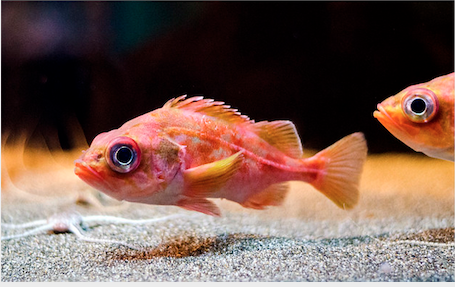
Splitnose rockfish [Seattle Aquarium]
Splitnose rockfish Sebastes diploproa
Splitnose rockfish are distributed from the northern Gulf of Alaska (Prince William Sound) to central Baja California and occur at depths between 91-795 meters. Adults are the most abundant between British Columbia and southern California at depths from 215 to 350 meters (Fishsource)

Fallen trees sought to help restore salmon streams
A Vancouver Island non-profit society is looking for more than 1,000 pieces of wood and fallen trees in its project to restore salmon habitat in rivers around the island. Megan Francis, operations manager with Central Westcoast Forest Society, says natural timber that falls into rivers is an extremely important part of fish habitat... The non-profit is working on placing timber pieces in specific streams throughout Clayoquot and Barkley Sounds with the intention of increasing salmon habitat quality. They're seeking conifers like western hemlock, Sitka spruce, balsam fir, Douglas fir, and cedar between five to 12 metres long, and greater than 20 centimetres in diameter. (CBC)

With 130-Mile Coast, New Jersey Marks a First in Climate Change Fight
New Jersey will become the first state to require that builders take into account the impact of climate change, including rising sea levels, in order to win government approval for projects, Gov. Philip D. Murphy announced on Monday. The move by Mr. Murphy, a Democrat, is part of a widening effort by states to use regulations to address worsening climate conditions and to aggressively counteract the Trump administration’s push to roll back environmental regulations. New Jersey’s initiative is believed to be the broadest, and most specific, attempt to leverage land-use rules to control where and what developers can build, and to limit the volume of emissions that are spewed into the air. Tracey Tully reports. (NY Times)

Milwaukie Becomes 1st City In Oregon To Declare A Climate Emergency
Milwaukie has become the first city in Oregon to declare a climate emergency. Mayor Mark Gamba and city council members unanimously passed the resolution last week. Among other things, it speeds up by five years the city’s timeline for achieving the goals it previously adopted in its Climate Action Plan. The resolution also calls for the city to become carbon neutral by 2045. Monica Samayoa reports. (OPB)

How a Seattle startup is revolutionizing recycling
What started as a father-and-son recycling project between Ryan Metzger and his 8-year-old son, Owen, has now turned into Ridwell, a recycling collection service used by over 4,500 Seattleites and counting. The company found its niche by collecting hard-to-dispose-of items that are not accepted in the city's curbside collection like light bulbs, electronics, plastic wrap and single-use plastic bags, which the city stopped accepting as of Jan. 1. For $10-14 each month, customers are given a bin, reusable bags, and access to biweekly pickups of their items. The items are then distributed to the appropriate source where they can take on a new life. For example, Styrofoam and plastic film gets taken to a plant in Kent to make composite decking and new trash cans. Electronics get taken to 1 Green Planet in Renton for recycling or destruction. Callie Craighead reports. (SeattlePI)


Now, your tug weather--

West Entrance U.S. Waters Strait Of Juan De Fuca-  247 AM PST Tue Jan 28 2020   
SMALL CRAFT ADVISORY IN EFFECT THROUGH WEDNESDAY AFTERNOON
  
TODAY
 SE wind 5 to 15 kt becoming E to 10 kt in the afternoon.  Wind waves 2 ft or less. SW swell 10 ft at 11 seconds. Showers  and a slight chance of tstms in the morning then a chance of  showers in the afternoon. 
TONIGHT
 SE wind to 10 kt becoming 5 to 15 kt after midnight.  Wind waves 2 ft or less. W swell 10 ft at 12 seconds. A slight  chance of rain in the evening then rain likely after midnight.


--
"Salish Sea News & Weather" is compiled as a community service by Mike Sato. To subscribe, send your name and email to msato (@) salishseacom.com. Your email information is never shared and you can unsubscribe at any time.

Salish Sea News: Communicate, Educate, Advocate

Follow on Twitter. 

Salish Sea Communications: Truth Well Told
Monday, January 27, 2020

1/27 Giant wrymouth, Green Apple, sewage spill, Big Bar clean up, orca research, Duwamish people, sand mine danger, BC fish farm certification, BC LNG protest, Trump's raw sewage

Giant wrymouth [Seatte Aquarium]
Giant wrymouth Cryptacanthodes giganteus
The Giant wrymouth, is a species of wrymouth found in the northeastern Pacific Ocean from the Bering Sea to northern California where it is believed to spend most of its life buried in soft areas at the bottom of the ocean at depths of from 6 to 128 metres(20 to 420 ft). This fish can reach a length of 117 centimetres (46 in). Like the wolf eel, giant wrymouths are easily mistaken for eels but are considered fish instead because of their lack of pectoral fins. (Wikipedia)

Whatcom County, Ericksen push to revive proposed renewable diesel plant near Ferndale
Whatcom County is reaching out to the companies behind a proposed, but recently scrapped, renewable diesel plant near Ferndale to see if the project can be revived. Phillips 66 and Renewable Energy Group Inc. announced on Tuesday, Jan. 21, that they were withdrawing from the project, surprising regulators and an environmental group. A release blamed “permitting delays and uncertainties” for the decision. Phillips 66 and Renewable Energy Group had formed Green Apple Renewable Fuels to build the plant...Newly elected County Executive Satpal Sidhu indicated in a release on Friday, Jan. 24, that the county has reached out to both companies to see if there is anything it can do to help resolve those uncertainties.... “We appreciate the many efforts that folks are taking to look for some resolution. We’ll certainly be open to those conversations,” Tim Johnson, director of Public and Government Affairs for the Phillips 66 refinery near Ferndale, said to The Bellingham Herald on Friday. In a previous interview, Johnson said what was at issue was the determination of significance recently issued by the Washington State Department of Ecology and Whatcom County government, which in turn triggered a requirement for an environmental impact statement. Kie Relyea reports. (Bellingham Herald)

82,000-gallon sewage spill reported in Bremerton
An 82,000-gallon combined sewage spill resulted in a no-contact advisory for the Port Washington Narrows and Sinclair Inlet on Thursday — the latest in a series of waste spills reported in Bremerton this winter.  The Kitsap Public Health District is advising residents to avoid contact with water in the affected area, recommending against swimming, wading or direct skin contact with water. The no-contact advisory remains in effect through Wednesday, according to a press release Thursday afternoon. Bremerton Public Works reported the sewage spill involves approximately 82,400 gallons. Austin Macalus reports. (Kitsap Sun)

Cold weather both helping and hindering Big Bar landslide clean up
Winter weather has proven to be both advantageous and problematic as crews work to clean up the Big Bar landslide site. Cold temperatures have meant less water coming down from the mountains, so lower water levels on the site, making it easier for excavators to work in the river. That said, the cold snap B.C. experienced mid-January meant it was too cold for equipment or people to function. "We're through some of that really, really cold weather and people are on the site now working," B.C. Forest Minister Doug Donaldson told Daybreak Kamloops host Shelley Joyce. Right now, crews are working to clear enough of the fallen rock to create a passage for fish before spring freshet and rising river levels in March. Donaldson said workers will be drilling into rock and moving it elsewhere to allow water to flow more easily, without creating such a dramatic drop that the fish aren't able to manoeuver it. Courtney Dickson reports. (CBC)

Orca research extends lower into food chain
In an effort to identify more pieces of the puzzle affecting endangered Southern Resident orca whales, a nonprofit research group is looking to examine the stomach contents of chinook salmon caught in areas of the Salish Sea. For the third year, the group, Kwiaht: Center for the Historical Ecology of the Salish Sea, will have a presence at the annual Resurrection Derby in Anacortes to help clean fish in exchange for obtaining stomach samples and other data for ongoing research. The derby is scheduled for Feb. 1-2, with weigh-ins at the Cap Sante Marina. “The fishing derbies in particular are a great resource for collecting scientific data,” Kwiaht wildlife biologist Christian Oldham said, explaining that the researchers would rather use fish being caught for consumption than catch and harm more fish for their work. “The salmon derbies that are already happening offer a great opportunity to partner with local fishermen. The fish are going to be consumed, so they are going to be used anyway.” Kimberly Cauvel reports. (Skagit Valley Herald)

The Duwamish people were here first. Should Seattleites pay them rent?
To help right the wrongs of history, thousands of people are paying rent each month to the Duwamish Tribe. Called “Real Rent Duwamish,” the all-volunteer effort — in partnership with the tribe — facilitates monthly “rent” payments to the tribe. Launched in 2017, Real Rent Duwamish has had 4,524 donors so far, now totaling around $20,000 a month. The struggles of the Duwamish Tribe, Seattle’s original people, are a microcosm of the experience of many Native tribes in the U.S. Naomi Ishisaka reports. (Seattle Times)

Triangle trouble: Neighbors worry Bainbridge sand mine endangers their water
As the rain dumps on them, islanders Nick Masla and Mike Sherry stand along Fletcher Bay Road and peer at a muddy property a short walk from their homes. They can only shake their heads at it. The site is known, appropriately, on the island as the “triangle property,” with its three boundaries the portions of Bucklin Hill Road, Fletcher Bay Road and Lynwood Center Road. In recent months, it's been activated as a small sand mine. Heavy equipment rumbles there. Trucks roll in with fill material and roll out laden with sand, according to neighbors. “It’s ugly,” Masla said. “And it’s a residential zone.” Over the last few months the activity has drawn the attention of neighbors like Masla and Sherry concerned about their drinking water, which comes from a well drawing on an aquifer estimated to sit about 50 feet beneath the surface of the site. Nathan Piling reports. (Kitsap Sun)

Green collaboration nets B.C. fish farm certification milestone
Every active Atlantic salmon farm in B.C. is either certified by the Aquaculture Stewardship Council or in the assessment process, putting the industry on the verge of meeting its pledge to certify every farm in the province. The milestone is the result of a unique made-in-B.C. collaboration between the aquaculture industry, First Nations, and environmental organizations to create a standard that is being adopted worldwide. ASC certification requires that each farm meet 150 criteria from sustainable feed composition and minimizing use of antibiotics and pesticides to preventing escapes and protecting the marine environment. Randy Shore reports. (Vancouver Sun)


Indigenous youth chant 'stand up, fight back' at B.C. anti-pipeline protest
Chanting Indigenous youth gathered at the British Columbia legislature in support of hereditary Wet'suwet'en chiefs who oppose a natural gas pipeline project running through their traditional territory. The protest comes two days after Indigenous youth occupied a B.C. government Energy and Mines Ministry office that ended when Victoria police arrested 13 people...About 100 people attended the legislature protest urging Prime Minister Justin Trudeau and B.C. Premier John Horgan to respect Wet'suwet'en laws. Horgan has said the 670-kilometre Coastal GasLink pipeline project has the approval of the courts, the province and elected Indigenous governments along the route and it will be built. (Canadian Press)

E.P.A. Is Letting Cities Dump More Raw Sewage Into Rivers for Years to Come
The Environmental Protection Agency has made it easier for cities to keep dumping raw sewage into rivers by letting them delay or otherwise change federally imposed fixes to their sewer systems, according to interviews with local officials, water utilities and their lobbyists. Cities have long complained about the cost of meeting federal requirements to upgrade aging sewer systems, many of which release untreated waste directly into waterways during heavy rains — a problem that climate change worsens as rainstorms intensify. These complaints have gained new traction with the Trump administration, which has been more willing to renegotiate the agreements that dictate how, and how quickly, cities must overhaul their sewers. The actions are the latest example of the Trump administration’s efforts to roll back nearly 95 environmental rules that it has said are too costly for industry or taxpayers. Christopher Flavell reports. (NY Times)


Now, your tug weather--
West Entrance U.S. Waters Strait Of Juan De Fuca-  252 AM PST Mon Jan 27 2020   
SMALL CRAFT ADVISORY IN EFFECT THROUGH LATE TONIGHT
  
TODAY
 S wind 5 to 15 kt becoming SE 10 to 20 kt in the  afternoon. Wind waves 1 to 3 ft. W swell 12 ft at 15 seconds. A  chance of showers in the morning then showers likely in the  afternoon. 
TONIGHT
 E wind 20 to 30 kt becoming SE 10 to 20 kt after  midnight. Wind waves 3 to 5 ft subsiding to 1 to 3 ft after  midnight. W swell 10 ft at 14 seconds. Rain.


--
"Salish Sea News & Weather" is compiled as a community service by Mike Sato. To subscribe, send your name and email to msato (@) salishseacom.com. Your email information is never shared and you can unsubscribe at any time.

Salish Sea News: Communicate, Educate, Advocate

Follow on Twitter. 

Salish Sea Communications: Truth Well Told

Friday, January 24, 2020

1/24 Salamander, crab acid, mussel water, Jordan Cove, Pebble Mine fight, Trump's San Juans, Trump's science, doomsday clock, financial meltdown

Western red-backed salamander [Gary Nafis]
Western red-backed salamander Plethodon vehiculum
The western red-backed salamander is a species of salamander in the family Plethodontidae. The species is found in extreme southwestern Canada and the northwestern United States. The western red-backed salamander is found in temperate rainforests of the Pacific Northwest. It is considered widespread in the region and is not strictly associated with a specific habitat type. (Wikipedia)

Crab larvae off Oregon and Washington suffering shell damage from ocean acidification, new research shows
Ocean acidification is damaging the shells of young Dungeness crab in the Northwest, an impact that scientists did not expect until much later this century, according to new research. A study released this week in the journal Science of the Total Environment is based on a 2016 survey of Oregon, Washington and British Columbia coastal waters that examined larval Dungeness. The findings add to the concerns about the future of the Dungeness as atmospheric carbon dioxide — on the rise due to fossil-fuel combustion — is absorbed by the Pacific Ocean and increases acidification. “If the crabs are affected already, we really need to make sure we start to pay attention to various components of the food chain before it is too late,” said Nina Bednarsek, the lead author among 13 contributing scientists. The study was funded by the National Oceanic and Atmospheric Association (NOAA). Hal Bernton reports. (Seattle Times)

Mussels provide insight to marine water quality
With headlamps glowing and rubber boots crunching across the beach, a group of four volunteers led by the state Department of Fish & Wildlife’s Mariko Langness ventured in the darkness Monday night toward the Guemes Channel shoreline at N Avenue Park. “Let’s see what we’ve got,” Langness said as they set out. The group was retrieving a cage holding 100 native bay mussels that had been in the water since the last week of October. The cage was one of dozens put out in the fall in an ongoing effort to learn more about water contamination along the state’s marine shorelines. Kimberly Cauvel reports. (Skagit Valley Herald)

Jordan Cove Energy Project Withdraws Application For Key Oregon Permit
The Jordan Cove Energy Project has abruptly withdrawn its application for a key permit from the state of Oregon. In a letter dated Jan. 23, the project told the Oregon Department of State Lands that the company was withdrawing the application effective Friday. No reason was given, but earlier this week, the department had denied Jordan Cove’s request for a fifth deadline extension for the application. It’s not immediately clear what the withdrawal means for the Jordan Cove project. Liam Moriarty reports. (Jefferson Public Radio)

Tribes stand united in fight to protect Bristol Bay from Pebble Mine
Leaders from five Coast Salish tribes joined a delegation from the United Tribes of Bristol Bay in Seattle this week to formally unveil a Bristol Bay Proclamation. It demands that the U.S. government protect the tribes' way of life, as “people of the salmon,” by halting the permitting process for the so-called Pebble Mine in Southeast Alaska. And it’s a pledge of unity in a fight that has been an uphill battle. The tribes say the land and water of three native peoples near the proposed mining area could be devastated by the Pebble Partnership’s efforts to extract copper, gold and other minerals.   Bellamy Pailthorp reports. (KNKX)

Recreation over preservation? Residents and Natives worry the San Juan Islands could be ‘loved to death’
The federal government helped make the islands a national monument. But locals worry a Trump-era focus on making public lands productive could be their undoing. Levi Pulkkinen reports. (Crosscut)

Science ranks grow thin in Trump administration
Dozens of government computers sit in a nondescript building here, able to connect to a data model that could help farmers manage the impact of a changing climate on their crops. But no one in this federal agency would know how to access the model, or, if they did, what to do with the data. That’s because the ambitious federal researcher who created it in Washington quit rather than move when the Agriculture Department relocated his agency to an office park here last fall. He is one of hundreds of scientists across the federal government who have been forced out, sidelined or muted since President Trump took office. The exodus has been fueled broadly by administration policies that have diminished the role of science as well as more specific steps, such as the relocation of agencies away from the nation’s capital. Annie Gowen, Juliet Eilperin, Ben Guarino and Andrew Ba Tran report. (Washington Post)

Squamish lands low-carbon startup Nexii to bolster clean-tech cred
Nexii Building Solutions, the Vancouver-headquartered startup selling the construction sector on an alternative, lower-carbon building system, is proposing to produce its materials in Squamish, the company said Thursday. That is a welcome development for the District of Squamish, home to clean-tech poster case Carbon Engineering and a growing cluster of environmentally friendly businesses. “Squamish is clearly charting a future to reach carbon neutrality, so I believe these companies want to be part of that journey with us,” said Squamish Mayor Karen Elliott. “There is a lot of alignment with the vision were creating and people like Carbon Engineering and Nexii see for their companies.” Derrick Penner reports. (Vancouver Sun)

The End May Be Nearer: Doomsday Clock Moves Within 100 Seconds Of Midnigh
Two years after moving the metaphorical minute hand of its Doomsday Clock to within two minutes to midnight — a figurative two-minute warning for all humanity — the science and security board of the Bulletin of Atomic Scientists
revealed Thursday that it has moved that minute hand another 20 seconds closer to the midnight hour. “It is 100 seconds to midnight,” declared the Bulletin‘s president and CEO, Rachel Bronson, at a Washington, D.C., news conference as a black cloth was lifted to reveal the clock. Never since the clock’s 1947 Cold War debut has it come so close to the putative doomsday annihilation represented by the 12 a.m. hour. David Welna reports. (NPR)

Climate Change Could Cause the Next Financial Meltdown
Climate change has already been blamed for deadly bush fires in Australia, withering coral reefs, rising sea levels and ever more cataclysmic storms. Could it also cause the next financial crisis? A report issued this week by an umbrella organization for the world’s central banks argued that the answer is yes, while warning that central bankers lack tools to deal with what it says could be one of the biggest economic dislocations of all time. The book-length report, published by the Bank for International Settlements, in Basel, Switzerland, signals what could be the overriding theme for central banks in the decade to come. Jack Ewing reports. (NY Times)


Now, your weekend tug weather--

West Entrance U.S. Waters Strait Of Juan De Fuca-  229 AM PST Fri Jan 24 2020   
SMALL CRAFT ADVISORY IN EFFECT THROUGH THIS AFTERNOON
  
TODAY
 SE wind 10 to 20 kt becoming SW 15 to 25 kt in the  afternoon. Wind waves 1 to 3 ft. W swell 10 ft at 10 seconds.  Showers in the morning then showers likely in the afternoon. 
TONIGHT
 S wind 5 to 15 kt becoming SE after midnight. Wind  waves 1 to 3 ft. W swell 10 ft at 15 seconds. A chance of showers  in the evening then rain likely after midnight. 
SAT
 SE wind 10 to 20 kt becoming W to 10 kt in the afternoon.  Wind waves 1 to 3 ft. W swell 8 ft at 14 seconds. Rain in the  morning then rain likely in the afternoon. 
SAT NIGHT
 E wind to 10 kt rising to 15 to 20 kt after  midnight. Wind waves 1 to 2 ft building to 3 to 5 ft after  midnight. W swell 8 ft at 13 seconds. 
SUN
 NW wind 5 to 15 kt becoming SW 20 to 25 kt in the  afternoon. Wind waves 4 to 5 ft building to 5 to 7 ft in the  afternoon. W swell 8 ft at 17 seconds.


--
"Salish Sea News & Weather" is compiled as a community service by Mike Sato. To subscribe, send your name and email to msato (@) salishseacom.com. Your email information is never shared and you can unsubscribe at any time.

Salish Sea News: Communicate, Educate, Advocate

Follow on Twitter. 

Salish Sea Communications: Truth Well Told